The Canadian dollar plummeted to a 19-month low of 1.43 against the US dollar on November 16, 2026. This decline followed an October inflation report that showed prices rising by 3.1%, missing the anticipated 3.2% mark.
This shift highlights a growing divergence between the Bank of Canada and the Federal Reserve, leaving the currency vulnerable to global economic pressures. For investors and consumers, this creates a period of heightened uncertainty regarding future interest rate paths.
Inflation Data Sparks Market Repricing
The latest inflation data from Statistics Canada revealed that the annual CPI held steady at 3.1% in October 2026. This figure fell short of the 3.2% consensus estimate held by market analysts. Source: Trading Economics.
The market reaction was swift as traders adjusted their expectations for the bank of canada. The probability of a December interest rate hike plummeted to 38%, down from 54% prior to the data release.
This repricing reflects a belief that the central bank will prioritize economic stability over aggressive tightening. The Bank of Canada had previously raised its policy rate to 2.50% in October to combat energy-driven inflation.
While headline inflation remains a concern, the central bank’s preferred core measures provide a more nuanced picture. CPI-trim and CPI-median were reported at 1.8% and 2.0% respectively, suggesting that underlying price pressures are not as broad-based as some feared.
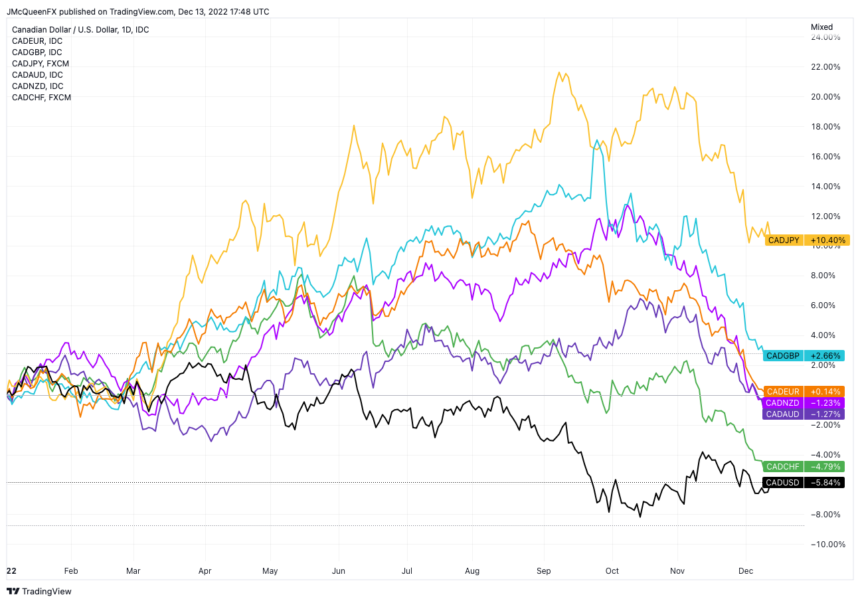
The Canadian dollar hit a 19-month low of 1.43 against the USD on November 16, 2026.
Trading Economics

The Mechanics of the Currency Divergence
The weakness in the Canadian dollar is largely a function of the relative strength of the US dollar. The US Dollar Index (DXY) recently reached its highest level since April 2025.
This surge in the DXY is driven by hawkish expectations surrounding the Federal Reserve. As the US maintains a more aggressive stance, the yield differential between US and Canadian assets widens.
Investors seeking higher returns are increasingly shifting capital toward US-denominated assets. This capital flight puts persistent downward pressure on the Loonie.
The divergence in monetary policy is the primary driver of this trend. While the Bank of Canada is signaling caution, the Federal Reserve remains focused on curbing inflation through sustained high rates.
Strategic Options for Investors
Investors navigating this environment have several options to manage currency risk and exposure. These strategies focus on balancing the benefits of a weaker dollar against the risks of imported inflation.
Diversifying into US-denominated assets can provide a hedge against further depreciation of the Canadian dollar. This approach allows investors to capture gains from the strength of the US currency while maintaining a global portfolio.
Hedging strategies using currency derivatives can protect businesses that rely on imported goods. By locking in exchange rates, these entities can mitigate the impact of price volatility on their bottom lines.
Export-oriented companies may see improved margins due to the weaker currency. Investors looking for growth might focus on sectors that derive a significant portion of their revenue from international sales.
- US-denominated index funds to capture USD strength.
- Currency hedging instruments for businesses with high import costs.
- Export-focused equities that benefit from a competitive currency advantage.
- Fixed-income assets with exposure to US treasury yields.
- Diversified portfolios that reduce reliance on the domestic currency.
Analysis of the Current Economic Stance
Launch Len Media views the current decline of the Canadian dollar as a direct consequence of the Bank of Canada’s cautious monetary policy. By signaling a potential pause, the bank has inadvertently signaled to the market that it is less concerned with inflation than the Federal Reserve.
This stance is not without its critics. Some analysts argue that the weaker currency provides a necessary competitive boost to Canadian exports. They suggest that this depreciation will help offset the increased costs of imported goods by making Canadian products cheaper abroad.
However, the risk of imported inflation remains a significant concern for the central bank. If the Loonie continues to slide, the cost of essential imports will rise, potentially fueling further inflation.
Ultimately, the Bank of Canada faces a difficult balancing act. It must decide whether to support the currency through higher rates or prioritize domestic growth by holding steady.
Next Steps for Market Participants
For those monitoring the Canadian dollar, the immediate priority is to track upcoming central bank communications. Any shift in rhetoric regarding inflation targets will be critical for future price action.
Review your current exposure to foreign currencies. If you hold significant assets in Canadian dollars, consider whether your portfolio is adequately diversified against further currency volatility.
Businesses should evaluate their supply chains for vulnerabilities related to import costs. If your operations rely on foreign inputs, now is the time to assess your hedging strategies.
Stay informed on the latest economic indicators. Employment data and wage growth figures will provide further clues as to whether the central bank will maintain its current path or adjust its strategy in the coming months.
Frequently Asked Questions
Why did the Canadian dollar drop after the inflation report?
The dollar dropped because the 3.1% inflation rate missed market expectations, leading investors to believe the Bank of Canada will be less likely to raise interest rates in December.
What is the significance of the 1.43 level?
The 1.43 level represents the lowest point for the Canadian dollar against the US dollar since April 2025, indicating a significant loss of value over the past 19 months.
How does the US dollar affect the Canadian dollar?
The US dollar’s strength, driven by hawkish Federal Reserve expectations, creates a yield gap that encourages investors to move capital out of Canada and into the US, weakening the Loonie.
Related reading: Canadian Dollar Pulls Back as Oil Softens Ahead of Jobs Data, Bank of Canada.