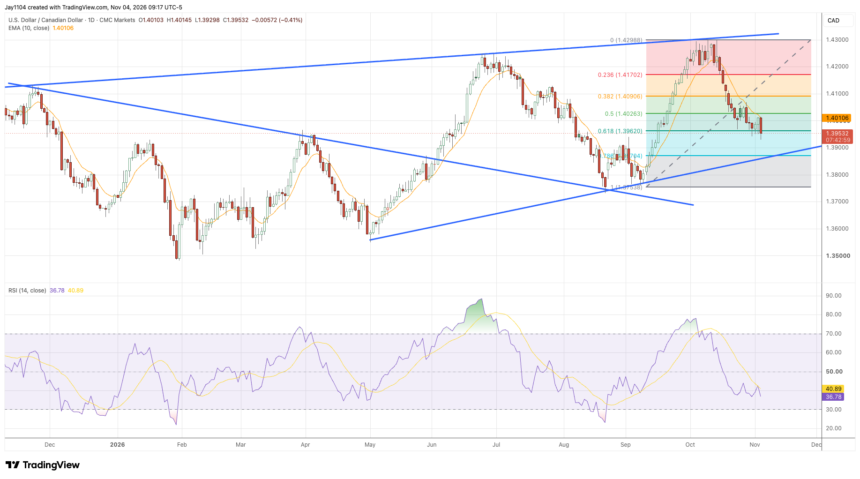
The Canadian dollar traded at 1.3985 per US dollar on November 5, 2026, retreating from a seven-week high of 1.3927 reached just one day earlier. This pullback reflects growing investor caution as the market prepares for the release of crucial October employment data.
This shift matters because the currency’s performance remains tethered to volatile energy exports and shifting central bank policy, creating a precarious environment for investors. LaunchLen Media argues that this dependence on external factors leaves the loonie vulnerable to sudden reversals despite domestic stability.
The mechanics of the current pullback
The recent decline in the Canadian dollar is largely attributed to downward pressure on crude oil prices. As a major Canadian export, oil prices serve as a primary driver for the currency’s valuation on the global stage. (Reuters).
According to market analysis from Investing.com, crude oil prices have faced significant headwinds following the latest US midterm election results. This geopolitical shift has altered expectations for energy demand and trade policy, directly impacting the loonie.
Traders are now focused on the Canadian employment report scheduled for release on November 6, 2026. Economists expect the data to show the addition of 13,600 new jobs, with the unemployment rate holding steady at 6.5%.
A result that deviates significantly from these expectations could trigger further volatility. Markets are currently assessing whether the domestic labor market can withstand the existing interest rate environment.

Bank of Canada policy and interest rate expectations
The Bank of Canada maintained its policy rate at 2.5% on October 28, 2026, following a 25 basis point increase. This decision remains a central pillar of the current economic narrative surrounding the Canadian dollar.
Market pricing indicates a roughly 50/50 probability of further rate hikes at the next meeting, according to data from the JPMorgan FX desk. This uncertainty keeps investors on the sidelines as they wait for clearer signals from policymakers.
The bank of canada policy remains a critical focal point for those analyzing the currency’s long-term trajectory. Governor Tiff Macklem has emphasized the need for data-dependent decision-making, which keeps the market hyper-focused on every monthly release.
Investors who previously adjusted their portfolios following the last bank of canada rate hike are now re-evaluating their positions. The potential for additional tightening suggests that the central bank is not yet ready to signal a pivot toward easing.
Strategic options for currency exposure
Investors looking to navigate the current volatility in the Canadian dollar have several strategic options. These approaches focus on balancing risk against the potential for continued currency fluctuations.
The following list outlines common strategies used by market participants to manage exposure to the loonie during periods of uncertainty.
- Hedging with currency forwards: Locking in exchange rates to mitigate the risk of further depreciation against the US dollar.
- Diversifying into energy-linked equities: Investing in Canadian energy producers that may benefit if oil prices recover from recent lows.
- Monitoring employment data releases: Using the monthly jobs report as a trigger for tactical adjustments to currency holdings.
- Utilizing short-term GICs: Taking advantage of current interest rates while waiting for clearer signals from the central bank.
Analysis of the currency outlook
LaunchLen Media maintains that the Canadian dollar’s recent volatility highlights a dangerous reliance on external energy demand and shifting US political dynamics. When oil prices drop, the currency often loses its primary support mechanism, leaving it exposed to broader market sentiment.
A fair counterpoint, however, is that the currency has shown remarkable resilience. Supported by a stable domestic labor market and the Bank of Canada’s hawkish stance on inflation, the loonie may find a firm floor despite these external pressures.
The central bank’s commitment to maintaining higher rates for longer provides a yield advantage that could attract capital inflows. This internal strength may offset the negative impact of declining energy prices in the coming months.
Ultimately, the currency’s path will depend on whether the domestic economy can maintain its momentum. If the upcoming jobs data surprises to the upside, the case for a stronger Canadian dollar will gain significant traction.
The Canadian dollar has faced downward pressure following US midterm election results.
Investing.com
Next steps for investors
You should first review your current exposure to the Canadian dollar within your broader portfolio. If you hold significant assets denominated in CAD, consider whether your current hedging strategy is sufficient to protect against potential downside volatility.
Next, pay close attention to the November 6, 2026, employment report. If the reported job growth falls below the expected 13,600, anticipate increased pressure on the currency as markets price in a lower probability of future rate hikes.
Finally, monitor statements from the Bank of Canada for any shifts in rhetoric regarding the neutral rate. Any indication that the bank is nearing the end of its tightening cycle will likely impact the Canadian dollar’s relative strength against the US dollar.
Frequently Asked Questions
Why is the Canadian dollar retreating from its recent high?
The retreat is primarily driven by falling crude oil prices and investor caution ahead of the upcoming October employment report.
What are the expectations for the November 6 jobs report?
Economists expect the report to show an addition of 13,600 new jobs and an unemployment rate of 6.5%.
What is the current market view on Bank of Canada rate hikes?
Market pricing currently indicates a 50/50 probability of further rate hikes at the next central bank meeting.
Source
Market moves and the near-term jobs-data setup referenced above draw on reporting from Reuters coverage of the Canadian dollar pullback ahead of jobs data. Figures and probabilities can change quickly; verify against primary market data before acting.
Our take
LaunchLen Media sees the loonie’s week as a reminder that Canadian dollar trades often price oil and U.S. policy first, with domestic labour data acting as a secondary catalyst. A soft jobs print can reinforce rate-cut odds, but energy swings still dominate short-term FX moves.
For households, headline CAD volatility matters mainly through imported goods, travel costs, and the mood around Bank of Canada decisions—not day-trading the pair. Keeping TFSA contributions on a plan usually beats reacting to every employment headline.
Investors should treat pre-jobs positioning as noise unless it changes a multi-month thesis. Cross-check oil, the Fed path, and official Statistics Canada releases rather than a single session’s quote.