The Canadian seniors housing market recorded more than $8 billion in transactions in the first nine months of 2026, shattering the previous 2007 record of $4.9 billion according to Cushman & Wakefield data.
This surge in activity highlights a tightening supply-demand imbalance that grants operators significant pricing power, though shifting federal policies and rising costs present long-term operational hurdles.
Record Transaction Volumes and Occupancy Gains
The seniors housing sector saw unprecedented investment activity in 2026. Cushman & Wakefield reported that transaction volumes reached more than $8 billion by September, far exceeding the $4.9 billion record set in 2007.
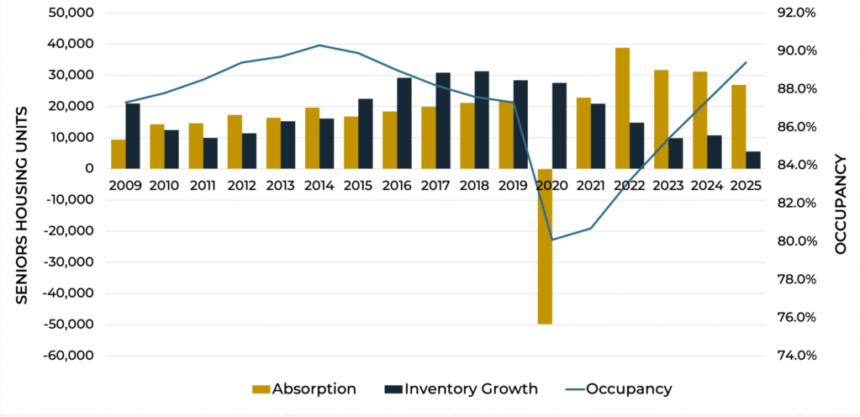
National occupancy rates reached 94% in the second quarter of 2026, with a forecast of 95% by year-end. This represents a 2.5% improvement over the previous year, according to Cushman & Wakefield. Source: Senior Housing News.
Regional performance varied, but the overall trend remained positive. Alberta saw occupancy grow by 25 percentage points since 2021, while Ontario, British Columbia, and Quebec improved by 13 percentage points.
These figures underscore the resilience of the seniors housing sector as a critical component of the broader real estate landscape. Investors are increasingly viewing these assets as stable, long-term income generators.

The Construction Slump and Supply Constraints
Despite the high demand, new supply has failed to keep pace. New construction starts are expected to fall to their lowest level in more than a decade, according to Cushman & Wakefield analysis reported by Senior Housing News.
High interest rates and elevated material costs have made new developments difficult to finance. This creates a bottleneck that limits the availability of modern facilities.
The resulting scarcity of units is a primary driver of the current pricing power held by operators. With fewer new buildings entering the market, existing operators can maintain high occupancy without aggressive discounting.
This supply constraint is expected to persist through 2027. Developers remain cautious about starting new projects until interest rates stabilize and construction costs become more predictable.
Projected Rent Growth and Financial Outlook
Operators are preparing for a period of sustained revenue growth. Cushman & Wakefield projects that resident rents will increase by 4% to 7% in 2027.
These rent hikes are necessary to cover rising operating expenses, including labor costs and facility maintenance. Operators are passing these costs to residents to protect profit margins. Source: Senior Housing News.
The financial outlook remains favorable for established providers with high-quality assets. However, smaller operators may struggle to absorb inflationary pressures without significant rent increases.
Investors should monitor how these rent increases impact resident retention and overall occupancy levels. While demand is currently high, there is a limit to how much the market can absorb.
- Rent growth projected at 4% to 7% for 2027.
- Increased focus on operational efficiency to manage rising costs.
- Strategic asset reinvestment to maintain occupancy levels.
- Leveraging the Canada Caregiver Credit to support resident affordability.
Policy Shifts and Federal Intervention
The federal government is attempting to address housing affordability through significant budget allocations. The 2026 Federal Budget proposes tripling the pace of non-market housing starts to 24,000 units annually over the next decade, according to the federal budget and the National Institute on Ageing. See also our look at the federal non-market construction strategy.
This policy shift aims to alleviate pressure on the broader housing market, including the seniors segment. By increasing the supply of non-market units, the government hopes to provide more options for lower-income seniors.
Additionally, the Canada Caregiver Credit will be transformed into a fully refundable benefit starting in the 2027 tax year. This change is intended to provide direct financial support to families caring for seniors.
These interventions represent a significant change in how the government approaches the aging population’s housing needs. The impact on private-sector operators remains to be seen.
The 2026 Federal Budget proposes tripling the pace of non-market housing starts to 24,000 units annually over the next ten years.
National Institute on Ageing
Analysis: The Case for Continued Growth
Launch Len Media believes the seniors housing market is entering a period of unprecedented pricing power for operators. The structural supply-demand imbalance, characterized by high occupancy and low new construction, creates a floor for rental income growth.
A fair counterpoint is that rising operating costs and potential regulatory shifts in non-market housing could temper profitability. If the government succeeds in significantly increasing non-market supply, it could create competition for private operators. Source: National Institute on Ageing.
Furthermore, broader economic uncertainty remains a risk. If inflation persists or interest rates stay higher for longer, the cost of capital for future developments will remain prohibitive.
Despite these risks, the demographic reality of an aging population supports a bullish outlook. The demand for specialized seniors housing is fundamentally tied to long-term population trends that are unlikely to reverse.
What Readers Can Do
If you are an investor, focus on operators with high-quality, well-located assets that can command premium rents. Look for companies that have demonstrated the ability to manage operating costs effectively in an inflationary environment.
For families, investigate the impact of the new refundable Canada Caregiver Credit on your financial planning. This benefit could significantly offset the costs associated with seniors housing and care services.
Stay informed about local zoning changes and non-market housing developments in your area. These projects may eventually change the competitive landscape for private seniors housing providers.
Review your long-term housing strategy if you are a senior or a caregiver. Early planning is essential to secure a spot in high-demand facilities as supply remains constrained.
Frequently Asked Questions
Why are seniors housing construction completions down?
New construction starts are expected to fall to their lowest level in more than a decade, as high interest rates and increased material costs have made new projects less financially viable.
What is the expected rent growth for 2027?
Operators are expected to increase resident rents by 4% to 7% in 2027 to keep pace with rising operating expenses.
How will the federal government impact the market?
The government plans to triple non-market housing starts to 24,000 units annually and transform the Canada Caregiver Credit into a fully refundable benefit starting in 2027.