The US Food and Drug Administration is now requiring every GLP-1 drug sold in the United States to warn about a rare eye condition that can cause sudden, sometimes permanent, vision loss. The agency announced on Nov. 9, 2026, that it sees a potential increased risk, not a proven cause, and that the risk for any one patient remains small.
The condition is called non-arteritic anterior ischemic optic neuropathy, or NAION. The new warning covers the best-known weight-loss and diabetes drugs, including Ozempic, Wegovy, Mounjaro and Zepbound.
For Canadian readers, the change matters because the same medicines are widely prescribed here, generic semaglutide is arriving, and Health Canada’s own review of the question has been open for more than a year.
What the FDA Announced
In a Drug Safety Communication dated Nov. 9, the FDA said it concluded there is a potential increased risk of rare NAION events in people taking GLP-1 receptor agonists. It is requiring the companies that hold approvals for all of these drugs to add the information to the Warnings and Precautions section of their labels. Source: US FDA.
The agency applied the change to the whole drug class rather than one product. It noted that NAION cases have been reported for every GLP-1 drug currently on the US market. Source: US FDA.
Reuters reported that the FDA’s review drew on clinical trial data, animal data and post-marketing information, including observational studies and case reports. Source: Reuters via Yahoo News.
- Semaglutide: Ozempic, Wegovy and Rybelsus (Novo Nordisk).
- Tirzepatide: Mounjaro and Zepbound (Eli Lilly), which also acts on a second hormone receptor called GIP.
- Liraglutide: Victoza and Saxenda, plus the insulin combination Xultophy.
- Dulaglutide (Trulicity), lixisenatide in Soliqua, generic exenatide, and Foundayo (orforglipron), approved in 2026.
What NAION Is and How It Shows Up
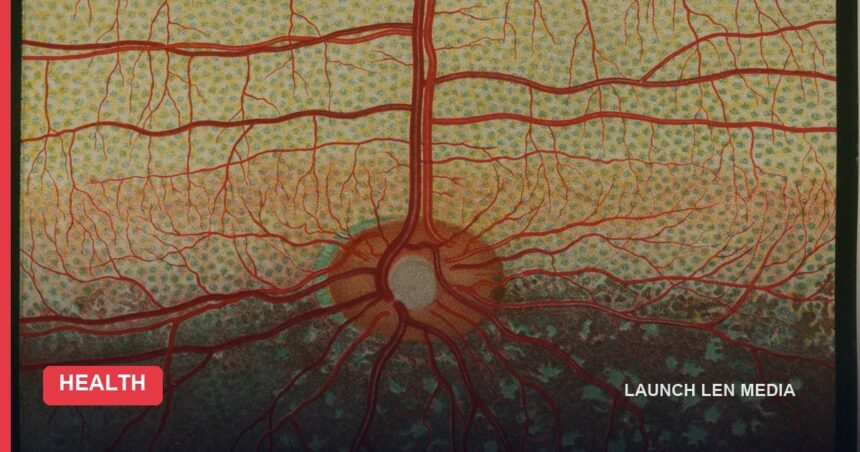
NAION is damage to the optic nerve caused by a drop in blood flow to the front of the nerve, which carries signals from the eye to the brain. The FDA says the underlying cause is not completely understood. Source: US FDA.
It typically causes sudden, painless vision loss in one eye, often noticed on waking. Other signs the FDA lists include blurred or missing areas of vision, such as blind spots or tunnel vision, colours that look washed out, and reduced sharpness in central vision. Source: US FDA.
Several known risk factors overlap heavily with the people who take these drugs. The FDA names diabetes, high blood pressure, sleep apnea, smoking, anemia and kidney disease. High blood pressure often goes unnoticed, as we reported in our story on a Google smartwatch study that flagged hidden hypertension. Once NAION has affected one eye, the other eye is at higher risk, the FDA adds. Source: US FDA.
The Numbers Behind the Warning
Person-years are the total years of follow-up added up across every patient in a study, so 1,000 people followed for two years count as 2,000 person-years. Rates per 100,000 person-years let studies of different sizes and lengths be compared.
The FDA pooled 126 clinical trials involving 134,253 patients and 288,879 person-years of follow-up. It found 15 probable NAION events in total: 10 among people on GLP-1 drugs and 5 among those on placebo. Source: US FDA.
126
Clinical trials in the FDA meta-analysis
134,253
Patients in those trials
6.4 vs 3.8
NAION per 100,000 person-years, GLP-1 vs comparator
1 in 10,000
EMA's upper estimate of semaglutide users affected
That works out to 6.4 cases per 100,000 person-years on a GLP-1 drug versus 3.8 on comparators. By our arithmetic, the gap is about 2.6 extra cases per 100,000 person-years, though 15 events is a small base for firm conclusions. Source: US FDA.
Published literature puts the background rate at 2.3 to 10.2 cases per 100,000 adults over 50 each year, according to the FDA. Source: US FDA.
What the Real-World Data Show
The FDA also ran a study in its Sentinel system, which draws on US health records. Among adults with type 2 diabetes from 2019 to 2024, NAION rates on GLP-1 drugs were 26 to 32 per 100,000 person-years. Source: US FDA.
The results depended on the comparison. A hazard ratio is a measure of how often an event happens in one group relative to another, where 1.0 means no difference. Against SGLT-2 inhibitors, another diabetes class, the hazard ratio was 1.19 and was not statistically significant. Against DPP-4 inhibitors it was 1.43, which was significant. Source: US FDA.
Larger outside studies have pointed the same way. Reuters cited a 2025 study of nearly 175,000 diabetic patients on semaglutide and the same number on other drugs, which found NAION risk more than doubled after two years of GLP-1 treatment. Source: Reuters via Yahoo News.
The FDA said its review of adverse-event reports was hard to interpret, because the risk factors for NAION are common among GLP-1 users. Its animal studies did not identify a biological mechanism. Source: US FDA.
| Comparison (FDA Sentinel, type 2 diabetes, 2019-2024) | Hazard ratio | 95% confidence interval | Statistically significant? |
|---|---|---|---|
| GLP-1 drugs vs SGLT-2 inhibitors | 1.19 | 0.91 to 1.54 | No |
| GLP-1 drugs vs DPP-4 inhibitors | 1.43 | 1.02 to 2.01 | Yes |
How Other Regulators Have Handled It
Europe moved first. On June 6, 2025, the European Medicines Agency’s safety committee concluded that NAION is a very rare side effect of semaglutide, meaning it may affect up to 1 in 10,000 users. It said large studies link semaglutide in type 2 diabetes to roughly a two-fold higher risk, about one extra case per 10,000 person-years. Source: European Medicines Agency.
The EMA’s figure of about one extra case per 10,000 person-years equals 10 per 100,000, which is larger than the gap seen in the FDA’s pooled trials. The difference reflects different data: the EMA leaned on observational studies in people with diabetes, while the FDA’s lower number comes from controlled trials with few events.
The UK followed on Feb. 5, 2026. The Medicines and Healthcare products Regulatory Agency told prescribers to stop semaglutide if NAION is confirmed. It had received three UK reports suggestive of NAION with semaglutide between 2018 and Aug. 1, 2025. Source: UK MHRA.
In Denmark, where Novo Nordisk is based, the national patient compensation body granted payments last year to four people who lost vision after using Novo’s GLP-1 drugs, Reuters reported. Source: Reuters via Yahoo News.
Consider discontinuing the GLP-1 RA in patients who develop NAION.
US FDA guidance to health care professionals, Nov. 9, 2026
Where Canada Stands
Health Canada has not issued a NAION warning of its own. Its public list of safety reviews shows a review of Ozempic, Rybelsus and Wegovy for NAION initiated in October 2025, triggered by scientific literature. Source: Health Canada.
The department stresses that a listing means it has flagged a potential issue, not that it has found a causal link. It publishes a summary once a review is complete; we could not find one for this review as of Nov. 9. Source: Health Canada.
The timing matters because semaglutide is becoming cheaper and more widely available here. On May 1, 2026, Health Canada approved a second generic version of Ozempic, from Canadian drugmaker Apotex, for type 2 diabetes, and said seven more generic submissions were under review. Source: Health Canada.
The department said it will keep monitoring the safety of all generic semaglutide products. Generics contain the same active ingredient, so the outcome of the review is relevant to them as well.
A Fair Counterpoint
The drugmakers dispute that the evidence proves harm. Novo Nordisk told Reuters the data do not establish a cause-and-effect relationship. Eli Lilly said the FDA update does not reference any findings specific to Lilly medicines and that it is evaluating the change. Source: Reuters via Yahoo News.
The FDA’s own wording is cautious. It describes a potential increased risk, one comparison in its Sentinel study was not statistically significant, and it found no mechanism in animals. Source: US FDA.
Analysts expect limited impact on prescribing. Citi analyst Geoff Meacham said the action may temporarily raise patient and investor concern, but argued that NAION’s rarity and the drugs’ benefits for weight, blood sugar, the heart, kidneys and sleep apnea should keep the balance favourable. Source: Reuters via Yahoo News.
Scale is the other side of the ledger. A KFF poll published Nov. 14, 2025, found 12% of US adults said they were currently taking a GLP-1 drug and 18% had taken one at some point. Even a very rare side effect can touch many people when use is that broad. Source: KFF.
What Readers Can Do
This is reporting on regulators’ guidance, not medical advice. None of the agencies cited here has told patients to stop these drugs pre-emptively, and decisions about treatment belong in a conversation with a prescriber.
- Know the warning sign. The FDA says sudden, painless loss or blurring of vision in one eye should prompt a call to a health care professional right away; the UK advises going to eye casualty or an emergency department.
- Mention your risk factors. Diabetes, high blood pressure, sleep apnea, smoking, anemia and kidney disease all raise NAION risk independently, so they are worth raising when starting or reviewing a GLP-1 drug.
- Ask about a prior episode. Anyone who has already had NAION in one eye faces a higher risk in the other, according to the FDA.
- Report side effects. In Canada, suspected adverse reactions can be reported to Health Canada through MedEffect Canada; in the US, through the FDA’s reporting system.
- Watch for Health Canada’s conclusion. The outcome of its open review will determine whether Canadian labels change.
Frequently Asked Questions
Does Ozempic cause blindness?
Regulators say semaglutide, the ingredient in Ozempic, may very rarely be linked to NAION, which can cause sudden and sometimes permanent vision loss in one eye. Europe estimates it may affect up to 1 in 10,000 users. The FDA calls it a potential increased risk, and Novo Nordisk says cause and effect has not been established.
Which drugs does the FDA warning cover?
All GLP-1 receptor agonists sold in the US, including Ozempic, Wegovy and Rybelsus (semaglutide), Mounjaro and Zepbound (tirzepatide), Victoza and Saxenda (liraglutide), Trulicity (dulaglutide) and Foundayo (orforglipron). The warning goes in the Warnings and Precautions section of each label.
Has Health Canada issued the same warning?
Not yet. Health Canada opened a safety review of semaglutide and NAION in October 2025 and has not published its conclusion. A listing on its review page means a potential issue was flagged, not that a causal link was found.
What are the symptoms of NAION?
The FDA lists sudden, painless vision loss in one eye, often noticed on waking, blurred or missing patches of vision, washed-out colours and reduced central sharpness. Anyone with these symptoms is advised to contact a health care professional right away.
Should I stop taking my GLP-1 medication?
None of the regulators cited here has told patients to stop pre-emptively. The FDA advises patients who develop NAION to discuss with their provider whether to continue, and tells clinicians to consider stopping the drug in that case. Treatment decisions should be made with a prescriber.
Sources and Further Reading
- US FDA: Drug Safety Communication on GLP-1 RAs and NAION (Nov. 9, 2026)
- Reuters via Yahoo News: US FDA orders new eye risk warnings for Ozempic, Zepbound (Nov. 9, 2026)
- European Medicines Agency: PRAC concludes NAION is a very rare side effect of semaglutide (June 6, 2025)
- UK MHRA Drug Safety Update: Semaglutide and risk of NAION (Feb. 5, 2026)
- Health Canada: New safety and effectiveness reviews
- Health Canada: Canada approves second generic semaglutide (May 1, 2026)
- KFF: Poll on GLP-1 drug use (Nov. 14, 2025)
This article was researched with AI assistance and checked against the sources listed above. Facts are current as of the publication date; follow the source links for updates.