Canadian banks have tripled their expectations for mortgage losses since 2019 as the financial sector prepares for potential credit instability. This shift reflects a cautious approach to the Canadian real estate market as household debt pressures intensify.
For investors and homeowners, this trend suggests that lenders are bracing for a prolonged period of economic uncertainty. LaunchLen Media views this as a structural pivot in risk management that may restrict future credit availability for Canadian consumers.
The stakes involve the stability of the broader financial system as millions of households navigate higher borrowing costs. Monitoring these provisions provides a window into how institutions view the long-term health of the housing sector.
The Scale of Rising Mortgage Losses
Financial institutions across Canada are adjusting their balance sheets to account for a significant rise in anticipated mortgage losses. According to data from Better Dwelling, these expectations have tripled since 2019.
This adjustment comes as the national mortgage arrears rate reached 0.29% in July 2026, as reported by the Canadian Bankers Association. While this figure remains low by historical standards, the trend line has shifted upward.
Regional data highlights specific areas of concern within the Canadian real estate market. Ontario recorded a mortgage arrears rate of 0.32% in the second quarter of 2026, with projections suggesting further increases through mid-2027, according to the Canada Mortgage and Housing Corporation.
The Office of the Superintendent of Financial Institutions identified real estate secured lending as a top priority in its 2026-2027 Annual Risk Outlook. Regulators are now placing higher scrutiny on how banks manage these specific credit risks.

Mechanics of Bank Provisions and Household Stress
Banks are utilizing loan loss provisions as a buffer against potential defaults. The Bank of Montreal, for instance, set aside an additional $739 million in early 2026 to cover potential losses, according to reports from Global News.
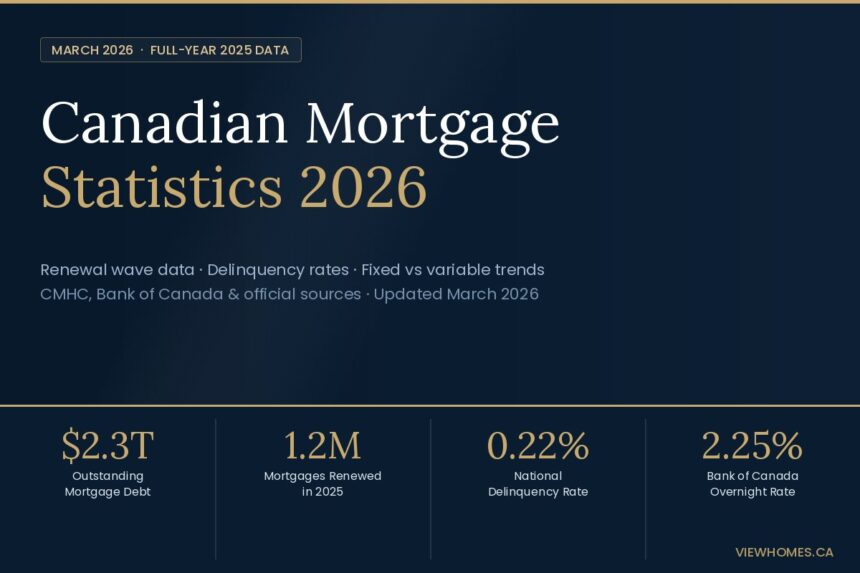
These provisions are a direct response to the financial pressure faced by households during the renewal cycle. Fitch Ratings noted that approximately 1.2 million mortgages were scheduled to renew at higher interest rates in 2026.
The financial strain is not limited to housing debt. The national 90-day plus non-mortgage delinquency rate rose to 1.63% in the third quarter of 2025, according to The Logic.
This broader delinquency trend serves as a leading indicator of household stress. It suggests that consumers may be prioritizing mortgage payments over other forms of debt, a common behavior during periods of economic contraction.
The national mortgage arrears rate was 0.29% as of July 2026.
Canadian Bankers Association
Options for Managing Renewal Risk
Borrowers facing higher mortgage renewal costs (see also variable mortgage rate strategy) have several paths to mitigate the impact of rising rates. Proactive engagement with lenders is the most recommended step for those expecting difficulty.
Refinancing options include extending amortization periods where permitted by current regulations. This can lower monthly payments, although it increases the total interest paid over the life of the loan.
Consolidating high-interest non-mortgage debt can also free up cash flow. By moving credit card or line of credit debt into a lower-interest mortgage product, households may reduce their total monthly burden.
Switching to a fixed-rate mortgage may provide stability for those concerned about future volatility. While this locks in current rates, it protects the household budget from further increases in the near term.
- Contact your lender at least four months before your renewal date to discuss available terms.
- Review your budget to account for potential increases in monthly mortgage renewal costs.
- Consult with a licensed financial advisor to assess the feasibility of debt consolidation.
- Research government programs or lender-specific hardship assistance if you anticipate missing payments.
- Monitor your credit report to ensure that non-mortgage delinquency does not affect your renewal eligibility.
Analysis of the Banking Sector Pivot
The tripling of loss expectations signals a fundamental change in how Canadian banks view their mortgage portfolios. LaunchLen Media observes that this is a move toward defensive positioning rather than a reaction to an immediate systemic collapse.
Some market analysts argue that current arrears rates are still historically low, suggesting that banks are merely engaging in prudent, proactive de-risking. They point out that the banking sector remains well-capitalized and capable of absorbing these projected losses.
However, the counterpoint remains that the sheer volume of renewals in 2026 creates a unique pressure point. If unemployment rises or the economy slows further, the current low arrears rate could climb rapidly.
The decision by major banks to increase provisions suggests they are not taking any chances. This conservative approach is likely to persist as long as interest rates remain elevated compared to the previous decade.
Steps for Canadian Homeowners
Homeowners should prioritize building an emergency fund to cover at least three to six months of mortgage payments. This provides a buffer against unexpected income loss during the renewal period.
Reviewing your current mortgage contract for prepayment privileges can also be beneficial. Applying extra payments toward the principal now can reduce the total balance before your next renewal date.
Stay informed about the broader Canadian real estate market trends in your specific province. Regional differences in arrears rates suggest that local economic conditions play a significant role in individual risk profiles.
Finally, avoid taking on new high-interest debt. As the non-mortgage delinquency rate rises, maintaining a clean credit history is essential for securing favorable renewal terms with your existing lender.
Frequently Asked Questions
Why are mortgage loss expectations rising if arrears are low?
Banks are forward-looking and are accounting for the impact of 1.2 million mortgages renewing at higher interest rates. They are increasing provisions now to ensure they are prepared for potential future defaults.
What does a 0.29% arrears rate mean for the average homeowner?
This rate indicates that the vast majority of Canadians are currently meeting their mortgage obligations. It serves as a benchmark for the health of the housing market, though it does not capture the stress households feel from higher monthly payments.
Should I be worried about my own mortgage renewal?
While the overall banking sector is stable, individual households should assess their budget against higher interest rates. Proactive communication with your bank is the most effective way to manage renewal risks.