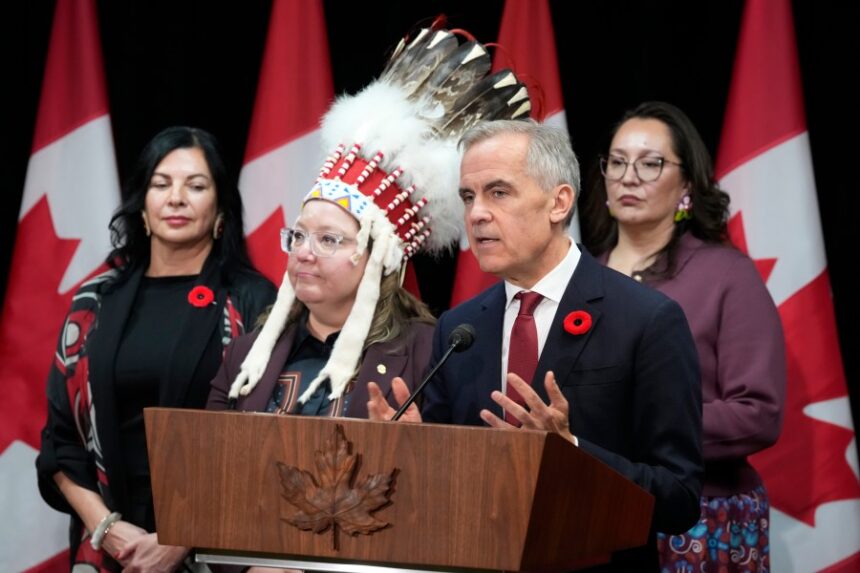
Prime Minister Mark Carney stated on October 26, 2026, that recent progress in trade negotiations with the United States stems from the Trump administration moving closer to Canada’s trade demands. This development arrives as both nations prepare for the political pressures of upcoming midterm elections. Trump’s Rhetoric on Canada Is a Strategic Distraction
Launch Len views this shift as a tactical victory for the Canadian government, though the volatility of U.S. policy suggests that long-term economic security requires a permanent pivot toward global trade diversification.
The shifting landscape of U.S. trade demands
The current thaw in diplomatic relations follows a period of intense friction that saw trade negotiations collapse in August 2026. Prime Minister Carney confirmed that Canada had walked away from the table after the U.S. presented terms that violated core national interests. A Smarter Immigration Strategy for Canada’s Future
According to reports from CTV News, those abandoned terms were described by the Prime Minister as crossing non-negotiable red lines. The subsequent standoff forced a reassessment of the bilateral economic relationship. Source: ABC News.
President Trump signaled a change in approach on October 23, 2026, by announcing a partial rollback of existing tariffs. This move is widely interpreted by analysts as a response to domestic economic pressure ahead of the midterms.
The administration previously imposed 50% tariffs on approximately $20 billion worth of Canadian goods. While the new policy does not eliminate the duties entirely, it represents a significant tactical retreat from the initial protectionist stance.
More Read

Mechanics of the October 30 tariff adjustment
The modified tariff schedule, which takes effect on October 30, 2026, creates a distinct set of winners and losers within the Canadian manufacturing sector. Supply Chain Dive reports that the administration is removing duties on plywood and specific machinery. Canadian dollar steadies after seven-day rally ahead of rate decisions
This removal provides immediate relief for the Canadian forestry and industrial equipment sectors. These industries were among the hardest hit by the initial 50% levy applied earlier in the year.
Conversely, the administration is adding new products to the tariff list, including carpets and air conditioners. This indicates that the U.S. is not abandoning protectionism but rather refining its targets to better suit domestic political messaging.
The complexity of these adjustments requires businesses to monitor their supply chains closely. Firms that previously faced high costs on machinery may see relief, while those in the home goods sector face new, higher barriers to entry.
- Plywood: Removed from the 50% tariff list.
- Heavy Machinery: Duties lifted to support industrial supply chains.
- Carpets: Now subject to new trade restrictions.
- Air Conditioners: Added to the updated tariff schedule.
Strategic alternatives for Canadian exporters
Prime Minister Carney is actively pursuing a strategy to reduce economic dependence on the United States. His administration has set a formal goal of doubling Canadian exports to non-U.S. markets over the next decade. Changes to Express Entry for high-wage occupations
This diversification strategy includes deepening partnerships with nations like Turkey. By expanding into emerging markets, Canada aims to insulate its economy from the sudden shifts in U.S. trade demands.
The government is also looking toward broader trade agreements in Europe and Asia to replace lost volume from the American market. These efforts are designed to provide a buffer against the unpredictability of the current U.S. executive branch.
While the U.S. remains the largest trading partner, the focus on alternative markets is a direct response to the volatility experienced throughout 2026. This long-term pivot is intended to provide stability regardless of who holds office in Washington.
Analysis of the current diplomatic thaw
Launch Len observes that while the current movement toward Canada’s position is welcome, it remains fragile. The administration’s willingness to negotiate appears tied more to electoral math than a fundamental change in philosophy. Former Transport Canada executive Elsa Henchiri leads new NordSpace Ottawa office
A fair counterpoint is that the U.S. tariff adjustments are merely temporary posturing. Critics argue that once the midterm elections conclude, the administration could easily revert to its previous, more aggressive trade demands. Source: Supply Chain Dive.
Prime Minister Carney himself expressed caution during his October 26 remarks. He noted that he remains uncertain if the President would actually sign a long-term agreement in pen, reflecting a deep-seated skepticism regarding the durability of current promises.
Despite this, the current momentum provides a necessary window for Canada to solidify its own trade position. The government’s insistence on maintaining its red lines has proven effective in forcing a more balanced dialogue.
I do not know if the president would sign in pen.
Prime Minister Mark Carney
Steps for businesses to navigate uncertainty
Businesses operating across the border should prioritize flexibility in their supply chain contracts. Given the recent history of sudden tariff changes, companies should include clauses that allow for rapid adjustments in sourcing. TFSA Passive Income: Enbridge’s Near-6% Dividend Yield Explained
Exporters should also take advantage of the current lull in hostilities to diversify their customer base. Relying solely on the U.S. market carries significant risk given the current political climate.
Consulting with trade legal experts is essential for firms affected by the October 30 changes. Understanding the specific classification of goods under the new tariff list can prevent unexpected costs at the border.
Finally, investors should monitor the progress of the government’s export diversification program. Companies that align with these new trade routes are likely to face less regulatory friction in the coming years.
Frequently Asked Questions
Are all 50% tariffs on Canadian goods being removed?
No. The administration is removing some items, such as plywood and machinery, while simultaneously adding new products like carpets and air conditioners to the tariff list.
Why did Canada suspend trade talks in August 2026?
Canada suspended negotiations because the U.S. proposed terms that Prime Minister Carney stated crossed national red lines.
What is the primary goal of the Canadian government’s new trade strategy?
The government aims to double the volume of Canadian exports to countries outside of the United States over the next ten years to reduce economic reliance.