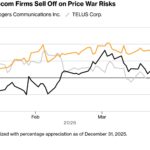
Quebecor Inc. announced a $31 billion takeover proposal for Telus in November 2026, marking a significant shift in the Canadian telecommunications sector. The unsolicited bid follows a period of intense financial pressure and leadership transition at the Vancouver-based company.
This potential Telus takeover highlights the risks inherent in long-term diversification strategies that rely heavily on debt. Launch Len Media examines how a 26-year tenure of expansion ultimately left the firm exposed to opportunistic acquisition attempts.
The stakes for investors remain high as the company navigates a new leadership regime and a volatile regulatory environment. Understanding the mechanics of this bid requires looking back at the strategic decisions made under former CEO Darren Entwistle.
The Mechanics of the Quebecor Proposal
In November 2026, Quebecor Inc. formally proposed a $31 billion takeover of Telus. The move surprised many on Bay Street, given the scale of the target and the regulatory complexity involved in such a transaction. Source: The Globe and Mail.
Telus management and its board of directors have not accepted the bid. They cited significant concerns regarding the valuation and the proposed ownership structure that would result from the merger.
Analysts have expressed skepticism about the deal’s viability. RBC analyst Drew McReynolds stated there is a low probability of the merger closing due to significant regulatory hurdles regarding market competition.
The federal government has historically favored pro-competition policies that allowed smaller players like Quebecor to gain market share. A merger of this magnitude would effectively reverse those policies, creating a political and legal impasse.
The proposal comes at a time when Telus is already undergoing a major internal restructuring. The company is attempting to recover from a period of declining share prices and operational challenges.
There is a low probability of the Quebecor-Telus merger closing due to regulatory hurdles.
RBC analyst Drew McReynolds

The Entwistle Legacy and Financial Strain
Darren Entwistle concluded his 26-year tenure as Telus CEO on June 30, 2026. His leadership was marked by a 661% total shareholder return, a figure that significantly outperformed the broader TSX index.
Despite these long-term gains, the final years of his tenure saw the company’s financial position weaken. The firm’s shares fell roughly 60% from their 2022 peak, leaving the company vulnerable to external bids.
The diversification strategy, which included acquisitions like LifeWorks for $2.3 billion and WillowTree for US$1.23 billion, was largely funded by debt. This strategy aimed to broaden the company’s revenue mix beyond traditional telecom services.
However, the debt load became unmanageable as interest rates rose and revenue growth stalled. The average revenue per user in the wireless segment remained stagnant at approximately $57 per month since 2021, failing to keep pace with inflation. Source: Global News.
In July 2026, new CEO Victor Dodig took decisive action to address these issues. He slashed the dividend by 55% and pushed back debt reduction targets by one year to stabilize the company’s finances.
The new leadership also recognized the impairment of previous investments. The company took a $2.1 billion writedown on the Telus Digital division, reflecting a reassessment of the value generated by recent acquisitions.
Strategic Alternatives and Market Options
Investors facing uncertainty regarding the Telus takeover bid have several ways to evaluate their position. The following options represent the current landscape for those holding or considering telecom sector exposure.
Option 1: Hold and Monitor. Investors may choose to hold their current positions while waiting for the Telus board to provide a formal response to the Quebecor offer. This approach relies on the belief that the current valuation does not reflect the long-term potential of the firm’s infrastructure assets.
Option 2: Diversify into Defensive Telecoms. Some investors are reallocating capital toward companies with lower debt-to-equity ratios. While Rogers and BCE have also faced challenges, their different approaches to infrastructure funding may offer a different risk profile for those seeking stability.
Option 3: Focus on Dividend-Adjusted Returns. Given the 55% dividend cut at Telus, investors should re-evaluate their income-focused portfolios. Comparing the current yield of Telus against other utility-like stocks can help determine if the current share price provides sufficient compensation for the risk.
Option 4: Regulatory Arbitrage. Investors who believe the deal will be blocked might look for opportunities in companies that benefit from the status quo. The regulatory environment remains the primary driver of market share for smaller regional players like Quebecor, which has seen its stock jump 50% over the past year.
Analysis of the Strategic Pivot
The vulnerability of Telus is a direct result of the tension between aggressive expansion and the realities of a changing market. Launch Len Media views the current situation as a cautionary tale regarding the limits of debt-fueled growth in capital-intensive industries. Source: CTV News.
While the diversification into health and digital services was intended to create a premium valuation, it ultimately distracted from the core business. The writedowns taken by the new management team confirm that the expected synergies did not materialize as planned.
A fair counterpoint is that Darren Entwistle’s tenure was undeniably successful by most long-term metrics. Delivering a 661% total shareholder return over 26 years is a feat few CEOs achieve, and the current vulnerability may be more a product of broader market volatility than governance failure.
However, the timing of the transition suggests that the board recognized the need for a change in direction. The swift actions taken by Victor Dodig indicate that the previous strategy was no longer sustainable in the face of rising debt costs and regulatory pressure.
Ultimately, the Telus takeover attempt serves as a signal to the market that even the most established incumbents are not immune to the consequences of strategic drift. The company must now prove that it can thrive as a leaner, more focused entity.
Next Steps for Shareholders
Shareholders should first review their investment mandate to determine if the increased volatility aligns with their risk tolerance. The reduction in dividends fundamentally changes the investment case for those relying on Telus for steady income.
Second, monitor official communications from the Telus board regarding the Quebecor proposal. Any rejection or counter-proposal will be a critical indicator of how management views the company’s standalone value versus a potential sale.
Third, track the regulatory proceedings in Ottawa. Since the federal government holds the power to approve or block the merger, any shifts in competition policy will directly impact the probability of the deal closing.
Finally, assess the progress of the new leadership team in executing their turnaround plan. The success of the $2.1 billion writedown and the impact of the dividend cut on debt reduction will be key metrics to watch in the coming quarters.
Related reading: Quebecor proposes a $31 billion merger to reshape Canadian telecom and regulatory scrutiny of the Quebecor bid for Telus property assets.