Finance Minister François-Philippe Champagne announced a permanent full expensing regime in the November 5, 2026, budget. This policy, dubbed the Productivity Mega Deduction, is expected to generate $22 billion in annual GDP growth over the next decade.
This shift represents a fundamental change in how Canadian businesses account for capital investments. For the reader, this policy signals a significant reduction in the cost of upgrading machinery and equipment, potentially altering long-term investment strategies.
The stakes are high as the government attempts to reverse stagnant productivity trends. By lowering the barrier to capital acquisition, policymakers hope to modernize the national industrial base before 2030.
The Mechanics of the Productivity Mega Deduction
The federal government officially introduced the legislative framework for full expensing on September 15, 2026. This policy allows firms to deduct the full cost of capital assets in the year of purchase rather than depreciating them over several years. Source: Kalkine CA.
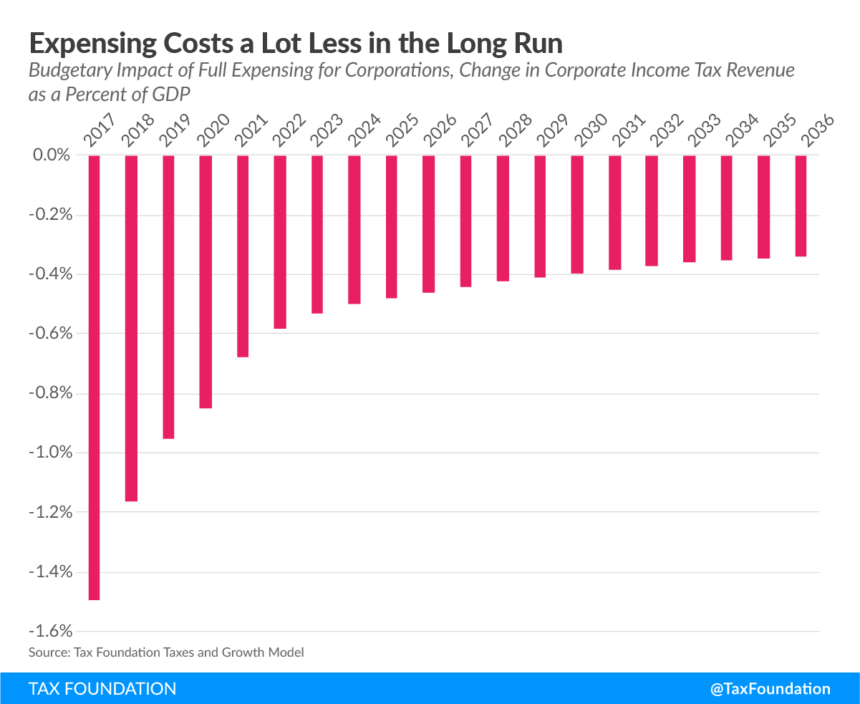
According to the Department of Finance, this change is designed to stimulate immediate business activity. By accelerating cost recovery, the government aims to lower the marginal effective tax rate on new investment from 13% to 6.4%.
This adjustment is intended to make Canada more competitive on the global stage. Projections from the Tax Foundation suggest that by 2030, this regime could provide Canada with the most favorable capital cost recovery among large developed economies.
The policy is a centerpiece of the federal budget 2026 strategy to address lagging business investment. Officials argue that the previous tax structure discouraged firms from upgrading their technology and physical assets.

Economic Projections and Job Growth Targets
The $22 billion annual GDP lift is the primary metric cited by Finance Minister Champagne to justify the tax shift. This figure represents the cumulative impact of increased capital expenditure across the private sector over a ten-year horizon.
Government estimates indicate the policy will support up to 80,000 jobs. These roles are expected to emerge in sectors that rely heavily on machinery, such as manufacturing, logistics, and technology.
The Canadian Trucking Alliance has publicly supported the measure. They noted that the policy significantly improves the economics of fleet modernization, allowing operators to replace older, less efficient vehicles with newer models.
Despite these optimistic projections, the long-term success of the policy depends on business uptake. Firms must choose to reinvest their tax savings into productive assets rather than dividends or share buybacks to achieve the projected growth.
The policy improves the economics of fleet modernization.
Canadian Trucking Alliance
Sectoral Distortions and Tax Risks
While the government promotes the benefits of full expensing, some analysts warn of unintended consequences. A primary concern is that the policy may create uneven incentives across different parts of the economy.
Critics argue that capital-intensive industries will benefit disproportionately compared to service-oriented or labor-focused sectors. This could lead to a misallocation of resources if businesses invest based on tax advantages rather than market demand.
There is also a technical risk regarding the interaction between full expensing and existing interest deductibility rules. Analysts at The Hub suggest this combination could theoretically lead to negative effective tax rates in specific scenarios.
A negative effective tax rate occurs when the tax subsidy for an investment exceeds the tax paid on the income it generates. This outcome could distort investment patterns and potentially reduce overall tax revenue more than the government currently anticipates.
- Capital-intensive firms may see a larger reduction in their tax burden.
- Service-based industries might experience fewer direct benefits from the policy.
- The interaction with interest deductions requires careful monitoring by the CRA.
- Investment decisions may shift toward assets that qualify for the full deduction.
- Long-term tax revenue stability could be challenged if distortions become widespread.
Evaluating the Long-Term Productivity Case
The argument for full expensing rests on the premise that capital investment is the primary driver of labor productivity. By making it cheaper to buy equipment, the government expects workers to become more efficient through better tools.
Launch Len Media views this as a necessary structural shift to modernize the tax code. Canada has historically lagged behind peers in capital intensity, and this policy directly addresses that gap.
However, the fair counterpoint remains that tax policy alone cannot solve productivity issues. Factors such as regulatory hurdles, labor market skills gaps, and infrastructure quality also play critical roles in economic performance.
Despite these limitations, the move toward full expensing remains a sound strategy for the current economic climate. The potential for a $22 billion GDP boost provides a strong justification for the fiscal cost of the program.
Next Steps for Business Owners
If you operate a business, you should review your capital expenditure plans for the coming fiscal year. Determine which assets qualify for the new full expensing rules to maximize your tax efficiency.
Consult with your tax advisor to understand how these changes interact with your existing debt obligations. Because the policy affects interest deductibility, your overall tax strategy may require adjustments.
Monitor future updates regarding the implementation of the budget 2026 measures. Legislative details can evolve, and staying informed will help you navigate the transition effectively.
Consider how these tax savings can be reinvested into your operations. Focusing on long-term productivity gains will likely yield better results than short-term tax planning alone.
Frequently Asked Questions
What is the Productivity Mega Deduction?
It is a permanent full expensing regime that allows businesses to write off the full cost of capital assets in the year they are purchased.
How much is the GDP expected to grow due to this policy?
The government projects that the policy will add approximately $22 billion to Canada’s annual GDP over the next ten years.
Will this policy affect all industries equally?
No, critics suggest the policy may favor capital-intensive industries over labor-focused ones, potentially creating sectoral distortions.