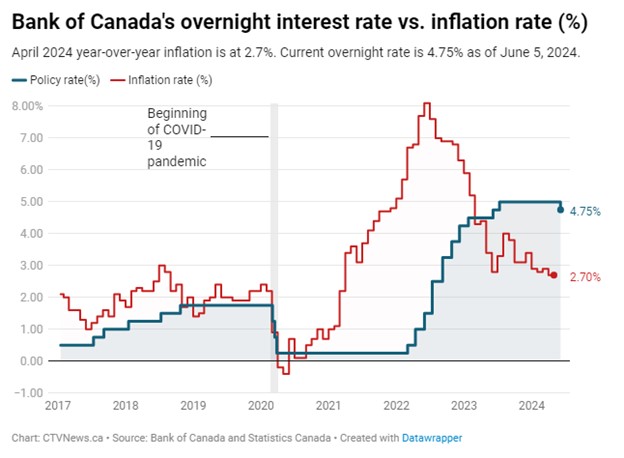
The Bank of Canada raised its target for the overnight rate by 25 basis points to 2.5% on October 28, 2026. This move marks the first increase in borrowing costs since July 2023.
This shift in Bank of Canada interest rates forces investors to re-evaluate their portfolios for defensive strength. Dividend-paying energy stocks with robust cash flows appear to be the most viable option for those seeking stability.
The decision follows a period of economic uncertainty and persistent inflationary pressure. Investors must now navigate a landscape where capital is more expensive and growth is harder to secure.
The October Rate Hike Explained
The decision to increase the overnight rate to 2.5% was driven by the central bank’s desire to curb inflation. According to the Bank of Canada, the 2027 inflation forecast is now 3.1%, up from the 2% projection made in July 2026.
This adjustment reflects a broader concern regarding the durability of price increases. Economists note that the bank is attempting to balance cooling the economy without triggering a severe recession.
Market participants remain uncertain about the future trajectory of these adjustments. Some analysts forecast that the benchmark rate could reach 3.25% by December 2027, according to reports from Al Jazeera.
The impact of this policy shift is immediate for both retail and institutional investors. Higher rates typically lead to increased yields on fixed-income assets, which compete directly with dividend-paying stocks for capital.

Mechanics of Debt and Dividend Sustainability
Rising interest rates directly affect the cost of borrowing for corporations. Companies that rely heavily on debt to fund operations or infrastructure projects face shrinking profit margins as interest expenses climb.
For instance, capital-intensive firms like Enbridge must manage these higher servicing costs, which can constrain their ability to raise dividends. Morningstar analysts have highlighted that these firms are particularly sensitive to the current rate environment.
Conversely, companies with strong balance sheets and low debt levels are better positioned to weather the storm. These firms do not need to refinance at higher rates as frequently as their more leveraged peers.
Investors should focus on the cash flow coverage ratio when evaluating dividend stocks. A company that generates enough cash to cover its dividend payments even during periods of economic contraction is a safer bet.
Defensive Dividend Options for Investors
Canadian Natural Resources (TSX: CNQ) stands out as a primary candidate for investors seeking stability. The company has maintained a record of 26 consecutive years of dividend increases, according to company filings. Source: Canadian Natural Resources.
Analysts at The Motley Fool identify CNQ as a potential hedge against rising rates due to its solid balance sheet and strong cash flow generation. Its low valuation relative to its historical performance makes it an attractive defensive play.
Another option involves looking at energy producers that have already deleveraged their operations. These companies are less susceptible to the negative impacts of rising interest rates compared to utility providers.
While no stock is immune to market volatility, these energy giants provide a cushion. Their ability to maintain payouts through various economic cycles is a key metric for long-term income investors. Telecom names, once seen as dividend darlings, show how quickly leverage can change that picture, and the rise in consumer insolvencies is another reason to favour balance-sheet strength.
- Canadian Natural Resources (TSX: CNQ) offers a long history of dividend growth.
- Energy producers with low debt levels are better protected against rising borrowing costs.
- Utility companies may face margin pressure due to high capital expenditure requirements.
- Investors should prioritize cash flow consistency over high, unsustainable yields.
Analysis of the Current Market Strategy
The argument for favoring energy stocks during this cycle rests on their ability to generate significant free cash flow. When inflation is high, energy prices often remain elevated, providing a natural revenue boost for these companies.
However, a fair counterpoint exists regarding the sector’s cyclical nature. If the Bank of Canada interest rates push the economy into a deep recession, demand for energy could crater, hurting even the most efficient producers.
Despite this risk, the defensive nature of established dividend payers remains a sound strategy. Investors who focus on companies with low debt are effectively insulating themselves from the primary negative side effect of the rate hike.
The current environment rewards discipline over speculation. Investors should avoid companies that carry excessive debt, as the cost of servicing that debt will only increase if the central bank continues its tightening cycle.
The Bank of Canada raised its 2027 inflation forecast to 3.1%, up from the 2% projection made in July 2026.
Al Jazeera
Next Steps for Your Portfolio
Review your current holdings to identify companies with high debt-to-equity ratios. If a company relies on floating-rate debt, consider whether its current earnings can sustain its dividend payouts if rates continue to climb.
Shift your focus toward companies that have a proven track record of increasing dividends for over a decade. These companies have demonstrated the ability to manage their capital through multiple economic cycles.
Monitor the upcoming statements from the Bank of Canada for clues on future rate pauses. Understanding the central bank’s stance will help you adjust your risk tolerance for the coming year.
Consult with a financial advisor to ensure your portfolio alignment matches your long-term goals. While dividend stocks are defensive, they should still be part of a diversified approach to managing risk.
Frequently Asked Questions
Why does the Bank of Canada raise interest rates?
The central bank raises rates primarily to control inflation. By making borrowing more expensive, it aims to slow down consumer and business spending to stabilize prices.
Are all dividend stocks safe during interest rate hikes?
No, not all dividend stocks are safe. Companies with high debt loads may see their margins squeezed by rising interest costs, which could threaten the sustainability of their dividend payments.
How can I identify a strong dividend stock in this environment?
Look for companies with a long history of dividend increases, low debt levels, and strong, consistent cash flow. These factors suggest the company can maintain payments even when the economy faces headwinds.