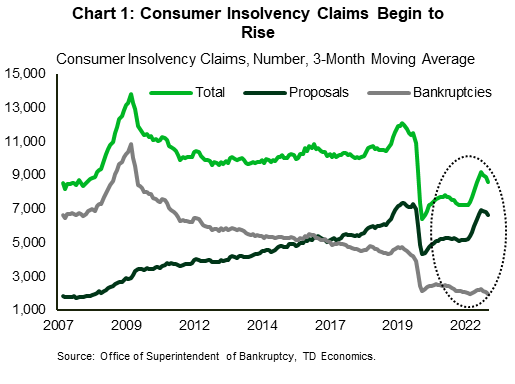
Canada recorded 36,797 consumer insolvencies during the third quarter of 2026, marking the third consecutive quarter that filings exceeded the 36,000 mark. This sustained volume represents the highest level of financial distress for Canadian households since 2009, according to data from the Office of the Superintendent of Bankruptcy.
These figures suggest a structural breakdown in household financial resilience, as persistent debt accumulation meets a tightening macroeconomic environment. Launch Len maintains that while population growth masks the severity of the crisis, the sheer volume of filings indicates that many families are reaching a breaking point.
The Scale of Financial Distress in 2026
The first three quarters of 2026 produced the highest quarterly filing totals seen in Canada since 2009, per the Canadian Association of Insolvency and Restructuring Professionals. Data from the Office of the Superintendent of Bankruptcy shows that filings for the 12-month period ending September 30, 2026, rose 5.0% compared to the previous year. Source: Wealth Professional.
September 2026 alone saw 12,836 filings, which represents a 9.2% increase from August 2026 and a 1.3% increase from September 2025. While quarterly volumes dipped 1.9% from the second quarter of 2026, the overall trend remains elevated.
The regional impact is uneven across the country. Atlantic Canada experienced the most significant year-over-year percentage increases during the third quarter of 2026, according to the Office of the Superintendent of Bankruptcy.
Prince Edward Island led the nation with a 15.9% increase in filings, reaching 175 total cases. Newfoundland and Labrador followed with a 5.4% rise to 649, while Nova Scotia saw a 5.0% increase to 1,125 filings.

Mechanics of the Current Insolvency Landscape
The current data presents a complex picture when viewed through a population-adjusted lens. There were 1.1 insolvency filings per 1,000 Canadian adults in the third quarter of 2026, a figure that remains below the 1.5 per 1,000 recorded in the third quarter of 2009.
This discrepancy between absolute volume and per-capita rates is largely attributed to Canada’s significant population growth over the last 17 years. However, the absolute number of families entering insolvency remains a critical indicator of economic health.
The macroeconomic environment continues to exert downward pressure on household budgets. The Bank of Canada increased its policy rate by 25 basis points to 2.5% in October 2026, marking the first hike since July 2023.
This change directly impacts households with variable-rate mortgages or lines of credit. Furthermore, fixed-rate mortgage holders facing renewal are encountering higher interest rates that necessitate significant adjustments to monthly household cash flow.
Inflationary pressures also remain a factor, with consumer prices rising 3.1% year-over-year in September 2026. Gasoline prices specifically jumped 27.8%, further limiting the discretionary income available to service debt.
Consumer insolvency filings are historically high right now, and Canada’s population growth since 2009 helps explain why the insolvency rate is lower than it was during the financial crisis. Still, persistently high filing totals this year show that many Canadians are struggling to keep up with their debts.
Wesley Cowan, Licensed Insolvency Trustee and Vice Chair of CAIRP
Options for Managing Debt and Financial Risk
For individuals struggling to manage their financial obligations, several pathways exist to address debt before it reaches the point of formal insolvency. Proactive management is essential for those feeling the strain of rising interest rates.
Financial advisors and licensed professionals recommend the following steps to manage debt effectively:
1. Conduct a comprehensive debt audit to categorize all high-interest obligations, including credit cards and lines of credit.
2. Consult with a Licensed Insolvency Trustee to explore restructuring options that do not involve bankruptcy.
3. Avoid unregulated debt advisors who promise credit restoration through high-pressure sales tactics or misleading claims.
4. Prioritize mortgage renewal planning by stress-testing household budgets against potential future interest rate increases.
5. Utilize official resources from the Office of the Superintendent of Bankruptcy to identify legitimate debt relief programs.
Analysis of the Structural Breakdown
Launch Len argues that the sustained volume of insolvencies is not merely a temporary fluctuation but a symptom of long-term debt accumulation. When households rely on variable-rate credit to manage daily expenses, they lose the ability to absorb even minor interest rate shocks.
The counterpoint, supported by the population-adjusted data, is that the current situation is a manageable byproduct of rapid population growth. Proponents of this view suggest that the economy is not in a state of systemic collapse, but rather adjusting to a larger, more indebted population base.
Despite this, the reality for the individual household remains dire. Even if the national rate is lower than in 2009, the absolute number of people filing for insolvency represents a significant failure of financial resilience.
The persistence of these numbers suggests that current economic policies are not effectively shielding the most vulnerable segments of the population from the impact of higher borrowing costs.
Steps for Proactive Financial Planning
Readers should begin by reviewing their current debt-to-income ratio. If debt payments consume a disproportionate share of monthly income, it is time to seek professional, licensed guidance rather than relying on online influencers or unregulated services.
Financial Literacy Month serves as a reminder to verify the credentials of any advisor. The Office of the Superintendent of Bankruptcy warns that unlicensed entities often steer clients toward high-interest loans that exacerbate rather than solve the underlying debt problem.
For those with business-owner clients or personal business interests, the situation requires immediate attention. Craig Munro, Chair of CAIRP, advises that business owners should not wait until cash flow is completely exhausted before seeking professional restructuring assistance.
Finally, monitor the broader macroeconomic indicators, including inflation and Bank of Canada policy decisions. Understanding how these factors impact your specific mortgage costs and credit lines is the first step in building a more resilient financial future.
Frequently Asked Questions
Why are insolvency filings high if the per-capita rate is lower than in 2009?
The absolute number of filings is high because Canada’s population has grown significantly since 2009. While the rate per 1,000 adults is lower, the total volume reflects a larger number of households under financial pressure.
What should I look for when choosing a debt advisor?
You should ensure that any advisor is a Licensed Insolvency Trustee. Avoid individuals or companies that use high-pressure sales tactics, charge upfront fees for services they are not licensed to provide, or make unrealistic promises about credit restoration.
How do rising interest rates affect insolvency risk?
Rising interest rates increase the cost of servicing variable-rate debt and can lead to significantly higher monthly payments upon mortgage renewal. This reduces the disposable income available for other living expenses, increasing the likelihood of financial distress.