



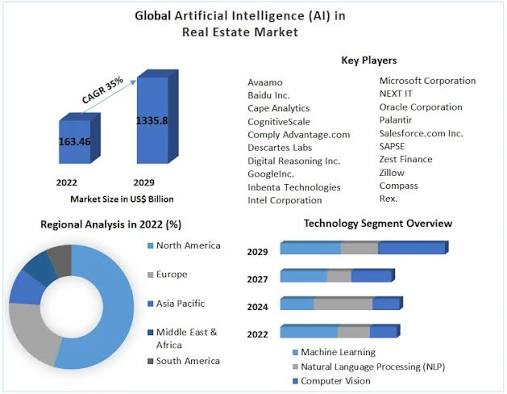
Buyers are increasingly using AI tools to assess property potential, often arriving at showings with pre-calculated financial assumptions about development opportunities. This shift forces real estate professionals to move beyond simple information sharing to provide high-value human verification.
The emergence of AI in real estate does not threaten the commission model, but it fundamentally changes what clients expect from their agents. Success now depends on an agent’s ability to interpret AI data and mitigate the risks inherent in automated property analysis.
For the modern agent, the stakes involve both legal liability and market relevance. As automated tools proliferate, the ability to discern between accurate data and flawed AI assumptions will define the next generation of professional service.
The Rise of Automated Property Analysis
The integration of AI into the home-buying process has accelerated rapidly. According to Statistics Canada, approximately 25.2% of Canadian businesses planned to use AI to produce goods or deliver services in Q3 2026, a significant increase from 14.5% in 2025. Source: Real Estate Magazine.
This trend is visible in the residential sector, where buyers now use AI platforms to evaluate zoning, garden-suite potential, and basement conversion feasibility. These tools provide instant, albeit sometimes unverified, insights that influence buyer negotiations before they even consult an agent.
Industry leaders have expressed growing unease regarding this shift. HousingWire reported that the ‘worry score’ for brokerage leaders regarding AI rose to 6.38 out of 10 in 2026, driven by concerns over agentic AI, data privacy, and compliance.
Despite these concerns, the Bureau of Labor Statistics projects a 2% growth for real estate agents and brokers from 2025 to 2035. This suggests that AI is transforming specific tasks rather than replacing the profession entirely.

Legal Obligations and the Verification Mandate
The Real Estate Council of Ontario (RECO) has provided clear guidance regarding the use of technology in transactions. Registrants are legally responsible for all AI-generated information and must verify its accuracy before sharing it with clients.
This mandate ensures that agents act as a necessary filter for the information their clients consume. Simply passing along an AI-generated summary of a property’s potential is no longer sufficient and may expose the agent to liability.
Agents are encouraged to maintain a file record of what was checked, what remains unresolved, and what specialist advice was recommended. This documentation serves as a safeguard, distinguishing professional advice from automated output.
As Natalka Falcomer, Chief Real Estate Officer at Houseful, notes, the technology itself requires scrutiny. Agents must understand which municipalities and rules a tool covers and whether its answers link to authoritative sources.
Registrants remain responsible for information generated or assisted by AI and must verify content before relying on or sharing it.
RECO AI Guidance
Strategies for Maintaining Value
To justify their commissions, agents must evolve into verification experts who provide human judgment that AI cannot replicate. This involves identifying when a client’s plan depends on expertise beyond the agent’s own, such as consulting with planners or designers.
The following strategies help agents leverage AI while maintaining their professional value proposition:
Focus on feasibility: Use AI to identify potential, then immediately investigate the actual costs and regulatory hurdles with qualified professionals. Source: Statistics Canada.
Manage expectations: Explain to clients that AI-generated summaries are starting points, not final assessments of a property’s value.
Document the process: Keep detailed records of all verifications to demonstrate due diligence to clients and regulators.
Build a network: Maintain relationships with local planners and architects who can provide the expert validation that AI lacks.
Prioritize negotiation: Use the time saved on data gathering to focus on the human elements of the transaction, such as empathy and complex problem-solving.
The Competitive Landscape of AI Tools
Several platforms are currently shaping how buyers interact with real estate data. PermitFOX, for instance, provides an AI-driven interface for Ontario zoning and permitting questions, allowing users to query property potential for garden suites.
While such tools offer convenience, they do not replace the need for professional oversight. The value for the agent lies in interpreting these results within the context of the specific client’s financial goals and risk tolerance.
Other firms are focusing on lead generation and qualification. Approximately 18.6% of Canadian real estate firms planned to adopt AI software for these purposes by 2026, according to Perspective AI data.
These tools allow agents to streamline administrative tasks, potentially freeing up time for higher-value activities. The key is to reinvest this time into the areas of the business that require human empathy and professional judgment.
Analysis: The Human Element in a Digital Market
The argument that AI threatens the real estate commission model often overlooks the complexity of the home-buying process. While AI can process data, it cannot navigate the emotional and legal nuances of a high-stakes transaction.
A fair counterpoint is that as AI tools become more sophisticated, consumers may increasingly question the necessity of traditional commission percentages for services they can partially perform themselves. This could place downward pressure on fees if agents fail to demonstrate their unique value. Source: HousingWire.
However, the demand for human verification remains high. Data from the 2026 Cotality AI in Housing survey indicates that 44% of respondents would pay an additional fee for a human expert to verify AI-generated housing decisions.
This suggests that the market values confidence and accuracy above all else. Agents who position themselves as the ultimate source of truth in an age of information overload will likely find their services in higher demand than ever.
Next Steps for Real Estate Professionals
Agents should begin by auditing the AI tools they currently use or encounter in their daily practice. Ensure that every tool provides links to authoritative sources and clearly states its limitations.
Develop a standardized verification process for all AI-generated data. This should include a disclaimer that accompanies any information shared with clients, emphasizing that the data has been reviewed for accuracy.
Educate clients on the distinction between AI-generated possibilities and legally binding property potential. By setting these expectations early, agents can build trust and demonstrate their role as a necessary partner in the decision-making process.
Finally, focus on building a network of trusted specialists. When a client’s plan hinges on uncertain zoning or construction costs, having a direct line to a professional who can provide a definitive answer is a service that no AI can currently replace.
Frequently Asked Questions
Are real estate agents legally liable for AI errors?
Yes, according to RECO guidance, registrants are responsible for all information they share, including content generated by AI. Agents must verify information for accuracy before presenting it to clients.
Will AI replace the need for a real estate agent?
Industry research suggests AI will transform tasks rather than replace the profession. Human judgment, negotiation skills, and empathy remain critical components of the real estate transaction that AI cannot replicate.
How can agents justify their commissions in an AI-driven market?
Agents can justify their value by acting as verification experts. By validating AI-generated data and providing professional guidance on complex issues like zoning and feasibility, agents offer a level of security that automated tools cannot provide.
Related reading: Why the Canada Housing Market Faces a Long Road to Recovery.