



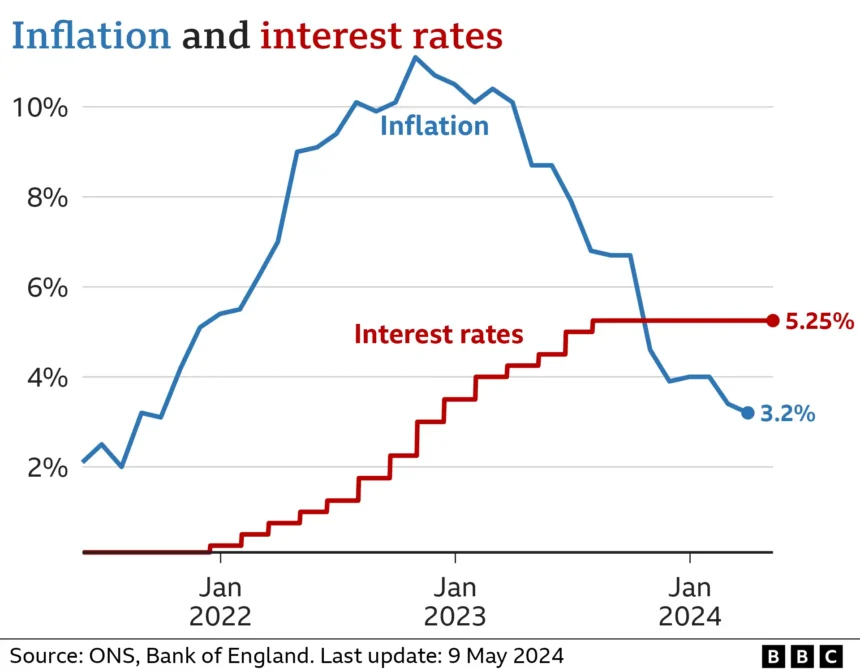
UK inflation reached 3.6% in October 2026, marking the fourth consecutive monthly increase for the nation. This rise has prompted the Bank of England to maintain a hawkish stance on monetary policy.
This persistent price pressure signals a global trend of higher interest rates that will likely force the bank of canada to keep its own restrictive policies in place for longer than investors hoped.
Understanding these international shifts is essential for Canadians managing debt or investments. Global economic interconnectedness means that domestic policy cannot escape the gravity of international inflation trends.
The UK Inflation Reality Check
The Office for National Statistics reported that the annual CPI inflation rate for the UK hit 3.6% in October 2026. This figure represents an increase from the 3.5% recorded in September.
The data confirms a stubborn upward trend in prices, which has now lasted for four straight months. Energy costs, exacerbated by ongoing conflict in the Middle East, remain a primary driver of this inflationary pressure.
In response to these figures, the Bank of England’s Monetary Policy Committee took decisive action. On November 5, 2026, the committee voted 8-1 to increase the Bank Rate by 0.25 percentage points to 4.0%.
This move reflects a commitment to curbing inflation before it becomes deeply embedded in the economy. The central bank is clearly prioritizing price stability over immediate economic growth.
Further interest rate increases are likely in the coming months.
Huw Pill, Bank of England Chief Economist

The Mechanics of Global Rate Hikes
The Bank of England’s decision to raise rates to 4.0% has immediate implications for global capital flows. When one major central bank increases rates, it often puts upward pressure on the yields of other nations.
For the Canadian economy, this creates a complex environment. The Bank of Canada monitors these global shifts closely because they influence the value of the Canadian dollar.
A weaker Canadian dollar relative to the British pound or the US dollar increases the cost of imported goods. This imported inflation can further complicate the efforts of domestic policymakers.
Monetary policy operates with a significant lag of 18 to 24 months, according to the Bank of Canada. Decisions made today will not fully impact inflation levels for nearly two years.
This delay forces central bankers to be proactive rather than reactive. If they wait for inflation to peak before acting, they risk falling behind the curve and allowing price expectations to become unanchored. Source: Bank of England.
Strategic Options for Navigating High Rates
Investors and homeowners must adapt to the reality of higher borrowing costs. The following options are common strategies for managing financial exposure in a high-rate environment.
Fixed-rate debt instruments provide certainty in an uncertain market. By locking in rates, borrowers protect themselves from further central bank hikes that could increase monthly payments.
High-interest savings accounts and GICs have become more attractive as rates rise. These vehicles offer a low-risk way to earn a return while waiting for market volatility to subside.
Dividend-paying stocks in defensive sectors like utilities or telecommunications can provide income. These companies often have the pricing power to pass on costs, maintaining their margins despite inflation.
Reducing variable-rate debt should be a priority for households. Paying down high-interest credit lines or variable mortgages reduces the sensitivity of your personal balance sheet to future rate announcements.
- Lock in fixed-rate mortgages to avoid future payment shocks.
- Increase exposure to high-yield savings products for guaranteed returns.
- Focus on companies with strong balance sheets and pricing power.
- Aggressively pay down variable-rate debt to reduce interest expense.
- Diversify portfolios to include assets that historically hedge against inflation.
Analysis of the Global Divergence Debate
The prevailing view at Launch Len Media is that the UK’s path signals a broader global trend. Central banks are increasingly unified in their goal to suppress inflation, even at the cost of slower growth.
This ‘higher-for-longer’ interest rate environment is likely to persist as long as energy prices remain volatile. The Bank of Canada will find it difficult to cut rates if the global trend remains hawkish.
A fair counterpoint exists, however. Canada’s domestic economic conditions are unique, particularly regarding the housing market. Some economists argue that high levels of household debt make the Canadian economy more sensitive to rate hikes than the UK. Source: The Guardian.
If domestic demand in Canada collapses faster than expected, the Bank of Canada might be forced to diverge from the Bank of England. This would be a defensive move to prevent a deep recession.
Despite this possibility, the historical correlation between global central bank actions remains strong. The Bank of Canada is rarely able to ignore the inflationary pressures felt by its international peers for long.
Next Steps for Financial Stability
You should conduct a thorough review of your current debt obligations. Identify any variable-rate loans that could become significantly more expensive if rates remain at 4.0% or climb higher.
Consider speaking with a financial advisor about rebalancing your portfolio. Ensure your asset allocation reflects the reality of a higher-rate environment rather than the low-rate era of the past decade.
Monitor the upcoming announcements from the Bank of Canada with a focus on their commentary regarding global inflation. Their language will provide clues about their willingness to deviate from international trends.
Focus on building an emergency fund that covers at least six months of expenses. This buffer is your best defense against the economic uncertainty that often accompanies persistent inflation.
Stay informed about how canadian inflation data compares to the global benchmarks. Understanding these trends will help you make better decisions about your spending and saving habits.
Frequently Asked Questions
Why does UK inflation affect Canadian interest rates?
Global markets are interconnected. When major economies like the UK raise rates, it affects currency values and global bond yields, which forces other central banks to adjust their own policies to maintain stability.
How long does it take for interest rate hikes to lower inflation?
The Bank of Canada notes that monetary policy changes typically impact the economy with a lag of 18 to 24 months. This means the full effect of current rate hikes is not yet visible in the data.
Should I switch from a variable to a fixed mortgage rate?
This depends on your risk tolerance and financial goals. A fixed rate offers payment certainty, while a variable rate may eventually become cheaper if rates fall, though that outcome remains uncertain in the current climate.