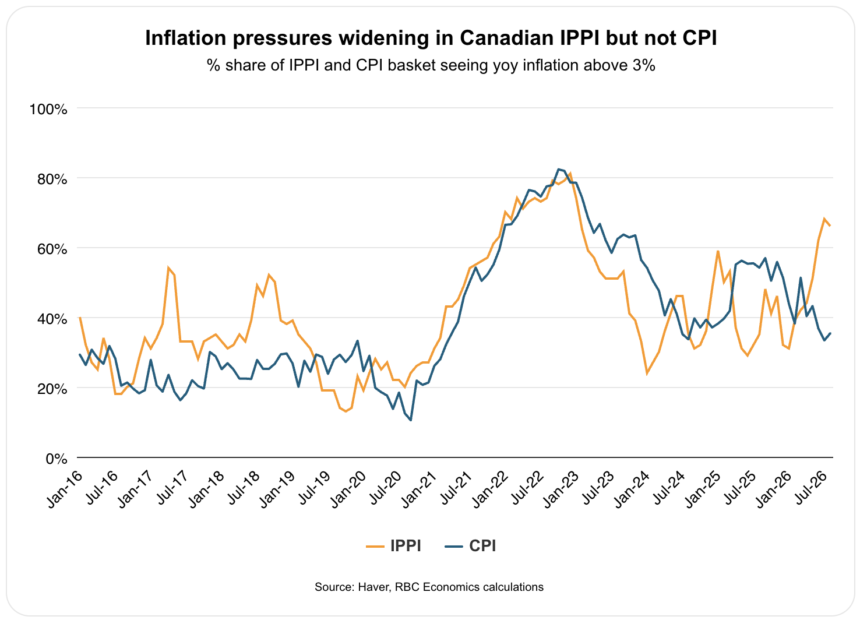
Canada’s annual inflation rate remained unchanged at 3.1% in October 2026, according to data released by Statistics Canada. This figure matched the September reading and came in below some market expectations.
This steady CPI reading provides the Bank of Canada with a necessary window to pause interest rate hikes during its December 9 announcement. By holding, the central bank could assess the full impact of its October 28 rate increase on a cooling economy.
The Current State of Canadian Inflation
The October 2026 CPI report confirmed that headline inflation is holding at 3.1%. This stability follows a period of volatility driven largely by energy markets. Source: Statistics Canada.
Statistics Canada reported that gasoline prices rose 30.9% on a year-over-year basis. This energy spike accounted for a significant portion of the headline figure.
Transportation costs now contribute 1.5 percentage points to the total 3.1% inflation rate. This highlights the sensitivity of the current index to global oil market fluctuations.
In contrast, shelter inflation has moderated significantly. It now accounts for only 0.4 percentage points of the total CPI, reflecting a cooling housing market.
Mechanics Behind the Core Inflation Stability
While headline numbers remain elevated, core inflation measures such as CPI-trim and CPI-median have stayed near the 2% target. This suggests that price pressures are not broadening across the wider economy.
Food prices rose 2.4% in October, an increase from the 1.7% recorded in September. Analysts suggest this may be an early sign of transportation costs impacting grocery prices.
Clothing prices also saw a notable increase, rising 1.8% annually and 3.4% monthly. This represents the largest monthly jump in clothing costs since 2019, driven by higher shipping and fuel expenses. Source: Bank of Canada.
Cellular service prices dropped 6.2% year-over-year. This decline is attributed to a base-year effect from price increases implemented by carriers in October 2025.
Policy Options for the December Announcement
The Bank of Canada must decide on December 9 whether to maintain the current policy rate of 2.5% or implement another increase. The decision hinges on balancing inflation control with economic growth.
Proponents of a pause point to the cooling labor market as evidence that previous hikes are working. Canada has experienced three consecutive months of job losses, signaling a potential slowdown in consumer demand.
Conversely, some financial institutions argue for a final 25-basis-point hike. This would serve as a proactive measure to ensure that energy-driven inflation does not become entrenched in the long term.
The central bank has previously signaled a hawkish stance to regain credibility after earlier delays in addressing post-pandemic inflation. This history of caution may influence their final decision.
- Pause the policy rate at 2.5% to allow previous hikes to fully impact the economy.
- Implement a 25-basis-point hike to 2.75% to preemptively combat potential inflation persistence.
- Monitor energy price trends in November to determine if the October spike was transitory.
- Evaluate labor market data to assess the risk of a deeper economic contraction.
- Review core inflation metrics to ensure underlying price pressures remain contained.
Analysis of the Central Bank Strategy
Launch Len Media views the current inflation data as a clear signal for a pause. The containment of core inflation suggests that the economy is responding to the current bank of canada policy.
A fair counterpoint is that the central bank may prioritize price stability above all else. By opting for a final 25-basis-point hike, the bank would aim to eliminate any remaining risk of inflation expectations becoming unanchored. Source: CBC News.
Despite this hawkish risk, the combination of a cooling housing market and a weakening labor market momentum makes a pause the more prudent path. The bank has already raised rates significantly in a short period.
Waiting until January 2027 for the next potential move would provide policymakers with more data on whether energy prices will stabilize. This buffer is essential for preventing an unnecessary economic downturn.
The central bank has taken a more proactive and cautiously hawkish stance this time by raising rates in October. Still, evidence points to energy inflation being relatively contained, which gives the Bank of Canada some buffer to wait until January 2027 for the next rate hike.
RSM Canada Economic Analysis
Next Steps for Financial Planning
If you are managing debt, consider the possibility of a rate hold. A pause could provide temporary relief for those with variable-rate loans or lines of credit.
Review your household budget to account for the ongoing impact of energy and transportation costs. Even if headline inflation stabilizes, specific categories like fuel may remain volatile.
Monitor the upcoming December 9 announcement closely. The bank of canada rate decision will likely influence short-term market sentiment and borrowing costs.
Consult with a financial advisor to stress-test your portfolio against a potential 25-basis-point increase. Preparing for a range of outcomes is the best way to maintain financial stability.
Frequently Asked Questions
Why did gasoline prices increase so much in October?
Gasoline prices rose 30.9% year-over-year due to global energy market fluctuations. This increase was the primary driver of the headline CPI figure.
What is the current status of the Canadian labor market?
The labor market has experienced three consecutive months of job losses. This trend is a key factor cited by analysts who argue for a pause in interest rate hikes.
When is the next Bank of Canada interest rate announcement?
The next policy interest rate announcement is scheduled for December 9, 2026. This decision will determine whether the current 2.5% rate is maintained or increased.