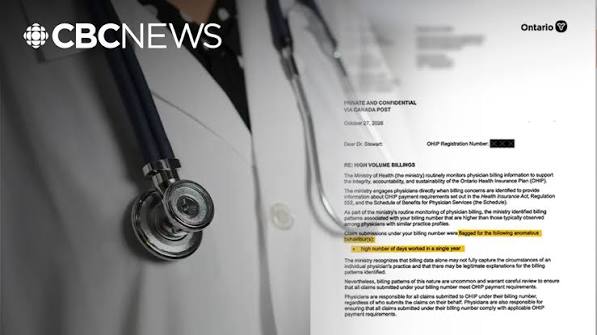
The Ontario Ministry of Health issued warning letters to hundreds of Ontario physicians on October 27, 2026, flagging what officials termed anomalous billing patterns. These notices targeted doctors for high patient volumes and extended service hours.
This move highlights a growing tension between provincial oversight and the urgent need for medical capacity. Launch Len Media contends that using blunt, automated metrics to police doctors risks alienating a workforce already stretched to its breaking point.
The situation carries significant stakes for the province, where approximately 2.5 million residents currently lack a family doctor. Any policy that discourages high-volume clinical work could exacerbate this existing access crisis.
The Scope of the Ministry Audit
The Ministry of Health’s Payment Accountability and Fraud Control Unit distributed the letters in late October 2026. These documents were sent to hundreds of practitioners across the province. Source: CP24.
The letters specifically flagged billing patterns that exceeded certain thresholds. According to Ministry guidelines, these include more than 15 hours of services provided in a single day or more than 100 unique patient encounters.
Dr. Rebecca Hicks, president of the Ontario Medical Association, stated the association was not consulted before the letters were sent. She characterized the move as a blunt instrument that fails to account for modern clinical realities.
The OMA has formally demanded an apology from the provincial government. The organization argues that the letters create a chilling effect on physician productivity at a time when the system requires maximum output.
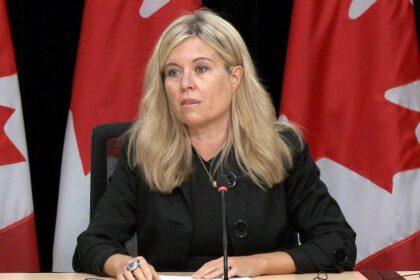
Health Minister Sylvia Jones defended the initiative in public statements. She maintained that the letters are purely educational and do not assume that any inappropriate billing has occurred.
The letters are educational and do not assume inappropriate billing.
Health Minister Sylvia Jones

Mechanics of the Billing Thresholds
The Ministry uses automated data analysis to identify outliers in the Ontario Health Insurance Plan billing system. The goal is to ensure the integrity and sustainability of public funding.
However, the criteria used to trigger these letters have drawn significant criticism from the medical community. Critics argue that a simple count of patient encounters or hours worked ignores the complexity of modern practice.
For instance, rural physicians often handle on-call duties that require long, irregular hours. Similarly, doctors managing complex chronic cases may see fewer patients but spend more time per encounter than the Ministry’s data models suggest.
The Ministry asserts that no action will be taken against physicians if their billing is found to be appropriate upon review. The letters are framed as a proactive measure to prevent potential fraud or administrative errors.
Despite these assurances, the administrative burden of responding to such inquiries adds to the workload of busy clinics. This creates a friction point between the government and the professionals it relies on to deliver care.
Options for Addressing Administrative Friction
Physicians who receive these notices are encouraged to review their billing practices and documentation. Maintaining detailed records is the primary defense against audit-related concerns.
The OMA has provided guidance for members who feel unfairly targeted by these automated systems. This includes documenting the specific nature of after-hours or complex care that might trigger a flag.
The following list outlines the recommended steps for practitioners currently navigating the Ministry’s oversight process:
Review the specific billing codes flagged in the Ministry correspondence to identify potential data entry errors.
Consult with OMA representatives to ensure that clinical documentation supports the volume of services reported.
Document the specific circumstances of high-volume days, such as emergency coverage or rural on-call requirements.
Engage in the educational dialogue offered by the Ministry to clarify the nature of the clinical practice.
Monitor for future communications from the Payment Accountability and Fraud Control Unit to ensure compliance.
Balancing Oversight and Access
The provincial government holds a fiduciary responsibility to protect the Ontario Health Insurance Plan. Routine oversight is a standard component of managing public healthcare funds.
However, the method of delivery for these warnings appears to have undermined the government’s relationship with Ontario doctors. By using automated letters, the Ministry has inadvertently signaled a lack of trust in the profession.
Launch Len Media believes that while fiscal integrity is non-negotiable, the implementation of these audits should be collaborative. Alienating physicians through blunt metrics is counterproductive when the province is desperate to recruit and retain staff.
A fair counterpoint is that the Ministry cannot ignore anomalous billing patterns. If the government fails to investigate potential outliers, it risks losing public confidence in the management of taxpayer dollars.
The challenge remains to create an oversight system that is both rigorous and respectful of clinical reality. Until that balance is struck, the friction between the Ministry and medical providers will likely continue to hinder systemic improvements.
Next Steps for Affected Physicians
Physicians who receive a letter from the Ministry should first verify the accuracy of the billing data cited. Errors in data entry can sometimes trigger false flags in automated systems.
If you are a practitioner affected by this, contact the OMA legal or policy departments immediately. They can provide specific advice on how to respond to the Ministry’s inquiries.
It is also vital to keep clear records of patient encounters that fall outside of standard office hours. This documentation serves as your primary evidence during any subsequent review process.
The ongoing dialogue regarding Ontario doctors and their relationship with the government will likely evolve as more data is analyzed. Staying informed through professional associations is the best way to navigate these administrative challenges.
Ultimately, the goal is to ensure that administrative oversight does not become a barrier to patient care. By engaging with the process professionally, physicians can help shape more effective auditing policies.
Frequently Asked Questions
Why were these letters sent to physicians?
The Ministry of Health sent the letters to flag anomalous billing patterns and ensure the integrity of the Ontario Health Insurance Plan.
What happens if a doctor receives a letter?
The Ministry states the letters are educational. No action is taken if the billing is found to be appropriate upon review.
What is the OMA’s stance on the letters?
The OMA argues that the letters use blunt metrics that ignore the realities of clinical practice and is demanding an apology from the government.