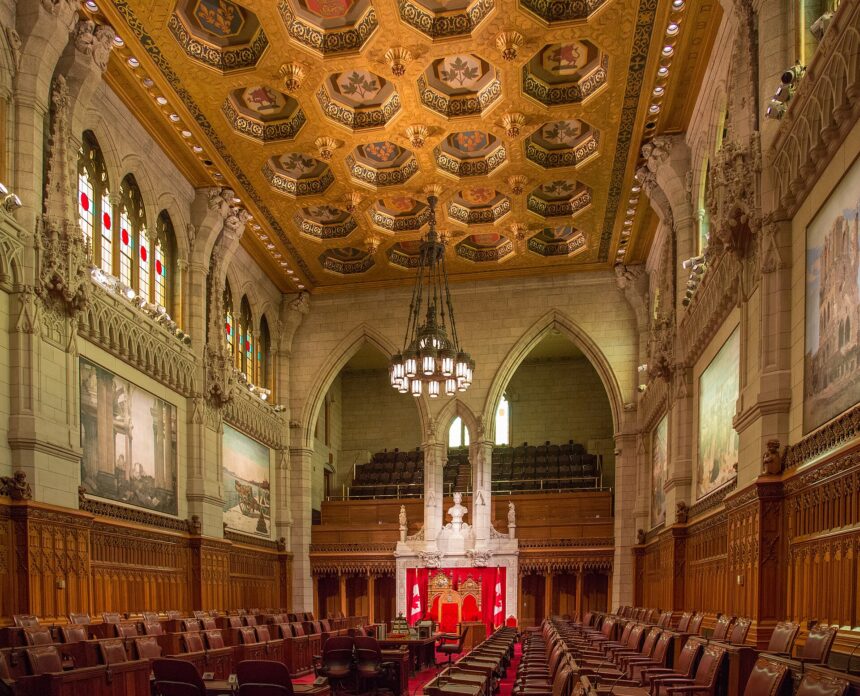
The House of Commons Standing Committee on Canadian Heritage is set to begin formal hearings on Bill S-211 on October 29, 2026. The legislation seeks to establish a national framework for regulating sports betting advertising to mitigate public health risks.
This bill represents a necessary federal intervention to address the saturation of gambling marketing that contributes to widespread social harms. Launch Len Media views this as a vital step toward protecting vulnerable populations from aggressive industry tactics.
The upcoming hearings will determine if the federal government can successfully impose national standards despite significant opposition from provincial leaders. The outcome will likely reshape how Canadians encounter sports betting content during major broadcasts.
The scope of the proposed federal intervention
Bill S-211 aims to address the rapid expansion of sports betting advertising across Canadian media platforms. Proponents argue that the current volume of advertisements poses a significant threat to public health, particularly among younger demographics. Source: OpenParliament.ca.
A 2026 analysis conducted by the University of Bristol and CBC News highlighted the scale of the issue. Researchers identified approximately 3,000 gambling-related advertising messages during just seven NHL playoff games.
The data revealed that 95% of these messages lacked any form of harm reduction information or age restrictions. This lack of transparency has fueled calls for the federal government to step in with stricter oversight.
The bill passed the Senate on October 21, 2025, and moved to the House of Commons. It received a strong second reading vote of 291-28 on April 22, 2026, signaling broad parliamentary support for the initiative.
The Standing Committee on Canadian Heritage will conduct its review starting October 29, 2026. A clause-by-clause review is scheduled to follow on November 3, 2026, to finalize the legislative language.

Mechanics of the national regulatory framework
The legislation mandates that the Canadian Radio-television and Telecommunications Commission (CRTC) review its current policies regarding gambling advertisements. This process is intended to align broadcasting standards with public health objectives.
The Minister of Canadian Heritage is tasked with developing a national framework that sets clear standards for the industry. This framework will likely influence how broadcasters and digital platforms display sports betting content.
The bill does not implement an outright prohibition on advertising. Rather, it focuses on regulating the frequency, content, and placement of these messages to ensure they are not predatory or misleading.
The CRTC will be expected to play a central role in enforcing these new standards. Broadcasters will need to adjust their internal compliance procedures to meet the federal requirements once they are enacted.
Options for regulatory reform and industry compliance
The industry faces several paths forward depending on the final version of the bill. Companies must prepare for increased scrutiny and potential changes to their marketing strategies. Source: CBC News.
The following options represent the likely directions for stakeholders involved in the sports betting ecosystem:
1. Voluntary harm reduction updates: Broadcasters and betting operators could proactively add clear warnings to all advertisements to preempt stricter federal mandates.
2. CRTC-led compliance audits: The commission may require regular reporting on ad placement, forcing companies to move away from high-frequency ad slots during family-oriented programming.
3. Provincial-federal cooperation agreements: Provinces might negotiate with the federal government to harmonize their existing rules with the new national standards to avoid a two-tier regulatory system.
4. Digital platform restrictions: The framework may extend to social media and streaming services, requiring platforms to implement stricter age-gating and content moderation for gambling ads.
Analysis of the provincial opposition
Provincial governments in Ontario and Alberta have formally opposed the bill. They argue that the legislation creates a redundant two-tier regulatory system that complicates existing oversight.
These provinces contend that they already possess the necessary infrastructure to regulate gambling effectively within their borders. They view the federal move as an infringement on their regional economic autonomy.
Launch Len Media maintains that provincial regulation has proven insufficient to curb the sheer volume of advertisements identified in the 2026 NHL study. A national standard is required to ensure consistent protection across all provinces.
While the provincial concern regarding jurisdictional overreach is a valid point, the public health crisis caused by unregulated advertising outweighs these administrative complaints. A unified federal approach is the only way to address a national media landscape. Source: Canadian Gaming Business.
The federal government must balance these regional concerns while ensuring that the primary goal of the legislation is not diluted. The upcoming committee hearings will be the final opportunity for provinces to voice their objections before the bill proceeds.
The House of Commons Standing Committee on Canadian Heritage is scheduled to hold hearings on Bill S-211 on October 29, 2026, followed by a clause-by-clause review on November 3, 2026.
House of Commons of Canada
Steps for stakeholders and observers
Broadcasters and sports betting firms should monitor the committee hearings closely to anticipate new compliance requirements. Preparing for potential changes to ad placement and content standards is essential for long-term planning.
Advocacy groups and public health organizations should continue to provide testimony to the committee. Their input is critical in ensuring that the final legislation includes robust protections for minors and vulnerable individuals.
Investors in the gaming and media sectors should assess the impact of potential advertising restrictions on revenue models. The shift toward more regulated marketing could change the profitability of high-frequency ad campaigns.
Citizens interested in the outcome can track the committee proceedings through official parliamentary channels. Public engagement remains a key factor in how legislators approach the final vote on the bill.
Frequently Asked Questions
What is the primary goal of Bill S-211?
The bill aims to establish a national framework for sports betting advertising to address public health concerns and reduce gambling-related harms.
Does Bill S-211 ban all sports betting advertisements?
No, the bill does not impose an outright ban. It requires the CRTC to review its policies and mandates the development of national standards for how these ads are presented.
Why do some provinces oppose the legislation?
Provinces like Ontario and Alberta argue that the bill is redundant and infringes on their jurisdiction, as they believe they already effectively regulate gambling at the provincial level.