Ontario Liberal MPP Lucille Collard called on the provincial government on October 30, 2026, to coordinate with Quebec to end the semi-annual daylight saving time shift. This proposal aims to eliminate the time zone divide currently affecting the interconnected Ottawa-Gatineau region.
The initiative highlights the growing pressure to finalize a consistent time change policy across provincial borders. Launch Len Media views this move as a critical step toward reducing administrative and social friction in Canada’s capital area.
Legislative Hurdles and Regional Coordination
The push for a unified time system follows the passage of the Time Amendment Act in 2020. According to the Legislative Assembly of Ontario, this bill remains inactive because it relies on reciprocal legislation from Quebec and New York. Source: CTV News.
MPP Lucille Collard emphasized the necessity of this cooperation during her October address. She noted that residents in the Ottawa-Gatineau region cross provincial borders daily for work, education, and healthcare.
Quebec has signaled a willingness to act, with the provincial government announcing plans to consult with the public and experts. Justice Minister Marie-Claude Sarrazin stated that the province intends to make the fall 2026 time change the final one for Quebec.
This momentum is part of a broader national trend. According to reports from The Weather Network, British Columbia, Alberta, and the Northwest Territories moved to permanent daylight saving time earlier in 2026.
As more jurisdictions move away from seasonal time changes, it is important that Ontario and Quebec work together to avoid creating unnecessary confusion for people living and working in our region.
Lucille Collard, Ontario Liberal MPP

The Northwestern Ontario Precedent
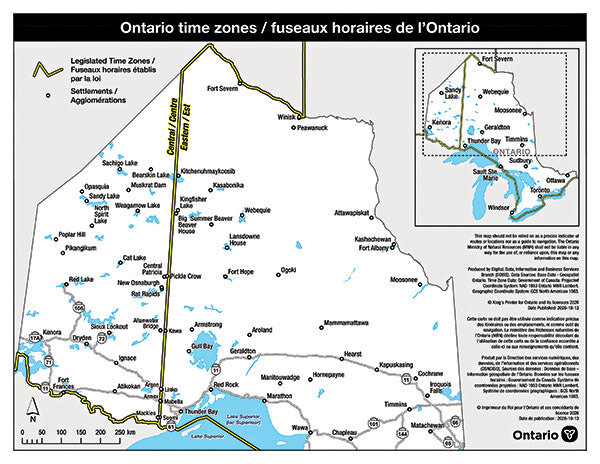
While most of the province continues to shift clocks, northwestern Ontario has already moved forward. As of November 1, 2026, regions west of the 90th meridian transitioned to permanent daylight saving time.
This decision was driven by the need to align with Manitoba, which officially adopted a permanent time system in September 2026. According to Global News, the provincial government engaged with Indigenous leaders and local communities before finalizing the change.
The move was designed to minimize economic and social disruptions. By matching the time zone of neighboring communities in Manitoba, the region avoided the complications of having a split schedule across the border.
This regional success provides a blueprint for the rest of Ontario. However, the government has maintained that the Eastern Time Zone regions must wait for broader legislative consensus.
Options for Legislative Reform
Policymakers are currently weighing several paths to resolve the current time change policy. Each option carries different implications for regional commerce and public health. Source: Legislative Assembly of Ontario.
The following list outlines the primary approaches currently under consideration by provincial governments across Canada.
1. Full Adoption of Permanent Daylight Saving Time: This path aligns with the current trend in Manitoba and British Columbia. It provides more evening sunlight but faces criticism from health experts regarding morning light exposure.
2. Synchronized Legislative Adoption: This involves Ontario, Quebec, and New York passing identical bills simultaneously. This is the current requirement under Ontario’s 2020 legislation to ensure regional consistency.
3. Regional Time Zones: Similar to the northwestern Ontario model, this allows specific geographic areas to opt out of the time change. It solves local economic issues but creates a fragmented time map across the province.
4. Maintaining the Status Quo: This keeps Ontario in line with the current Eastern Time Zone schedule. It avoids immediate legislative complexity but ignores growing public demand for ending the semi-annual shift.
Analysis of the Health and Economic Tradeoffs
The debate over daylight saving time involves a clash between economic convenience and biological health. Proponents argue that permanent time systems reduce the stress of biannual transitions.
Critics, however, point to the potential for long-term health consequences. According to research cited by CTV News, sleep experts warn that permanent daylight saving time may lead to stolen morning light.
This lack of morning sun can disrupt circadian rhythms, which are essential for human health. Launch Len Media observes that while economic alignment is a valid political goal, the health impact on the population remains a significant concern that requires further study. Source: Global News.
Despite these concerns, the political momentum remains strong. The desire for a seamless cross-border experience in the national capital region is a powerful driver for change that may eventually outweigh the health-related objections.
Next Steps for Residents and Stakeholders
Residents interested in the future of daylight saving schedules should monitor the progress of the Time Amendment Act. Public consultations in Quebec may also influence the timeline for Ontario’s legislative response.
If you are concerned about how these changes affect your local community, you can contact your local MPP to express your views on regional synchronization. Advocacy groups often provide templates for letters to provincial representatives.
Businesses operating across the Ontario-Quebec border should prepare for potential shifts in operational hours. Maintaining awareness of the legislative status of both provinces is essential for long-term planning.
For those tracking the broader transition, staying informed about the latest policy updates is key. You can find more information on the current status of the province’s time change policy through official legislative portals.
Frequently Asked Questions
Why does Ontario need Quebec to act before changing its own time policy?
The Ontario Time Amendment Act of 2020 explicitly requires Quebec and New York to adopt similar legislation to ensure consistent time zones across the region.
Has any part of Ontario already stopped changing clocks?
Yes, as of November 1, 2026, regions in northwestern Ontario west of the 90th meridian have moved to permanent daylight saving time to align with Manitoba.
What are the health risks associated with permanent daylight saving time?
Sleep experts suggest that permanent daylight saving time reduces morning light exposure, which can negatively impact human circadian rhythms.