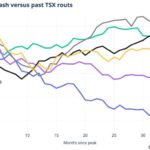
The Toronto Stock Exchange retreated on November 16, 2026, as the S&P/TSX Composite Index fell 1.06% to close at 35,722.13. This decline followed a session dominated by heavy losses in the energy and materials sectors.
While domestic inflation data remained stable, the market’s sensitivity to global commodity prices continues to dictate short-term performance. Investors must weigh the benefits of steady inflation against the risks of sector-specific volatility.
Market Performance and Sector Declines
The S&P/TSX Composite Index experienced a sharp correction on November 16, 2026, closing at 35,722.13. This 1.06% drop reflected broader investor anxiety regarding the resource-heavy composition of the index.
Energy stocks led the decline, falling 1.8% during the session. Materials companies followed closely behind, recording a 2.1% decrease in value.
The TSX Venture Exchange also struggled, posting a 2.1% decline. This drop highlighted a broader weakness among smaller, resource-focused companies that are highly susceptible to fluctuations in global commodity prices.
By November 18, 2026, the downward pressure on these sectors intensified. Agnico Eagle Mines shares fell 6.26%, while Canadian Natural Resources shares dropped 4.44%.

Inflation Data and Economic Context
Statistics Canada reported that the annual inflation rate remained at 3.1% in October 2026. This figure matched the September rate and fell slightly below the 3.2% forecast predicted by economists.
Gasoline prices played a significant role in the headline inflation numbers. According to federal data, gasoline prices rose 30.9% year-over-year in October, which kept overall costs elevated for consumers.
Despite these pressures, the steady inflation data provides the Bank of Canada with a clearer path for monetary policy. CIBC economists noted that this inflation data supports a potential interest rate hold at the upcoming December meeting.
The stability in the consumer price index offers a necessary buffer for the central bank. It allows policymakers to maintain current interest rates rather than resorting to further aggressive hikes.
The inflation data supports a potential interest rate hold at the Bank of Canada’s December meeting.
CIBC economists
Resource Stocks Under Pressure
Investors looking at the Toronto Stock Exchange often focus on resource-heavy equities, a theme we covered in our guide to TSX dividend stocks. The recent performance of these stocks illustrates the risks associated with commodity price sensitivity.
Agnico Eagle Mines (AEM) saw its shares drop 6.26% on November 18. This decline underscores the vulnerability of gold miners to shifts in global market sentiment and metal pricing.
Canadian Natural Resources (CNQ) experienced a 4.44% decline on the same day. As a major player in the energy sector, its performance is closely tied to the volatility of global oil prices.
These companies remain central to the TSX index. Their recent price movements demonstrate how quickly sentiment can shift when commodity markets face headwinds.
- Agnico Eagle Mines: Faced a 6.26% decline as mining sector sentiment weakened.
- Canadian Natural Resources: Dropped 4.44% due to broader energy sector volatility.
- TSX Venture Exchange: Fell 2.1%, signaling weakness in smaller resource-focused firms.
- Energy Sector: Recorded a 1.8% decline on November 16, 2026.
Market Analysis and Future Outlook
Launch Len Media views the current TSX performance as a reflection of its structural dependence on commodity prices. While domestic inflation data is stable, the index remains vulnerable to global economic uncertainty.
A fair counterpoint suggests that the 3.1% inflation rate is a positive sign for the Canadian economy. By staying within expected ranges, it provides the Bank of Canada with the stability needed to avoid further rate hikes.
This policy stability could provide a floor for the market in the long term. If interest rates remain steady, it may encourage capital to return to the equity markets once commodity volatility subsides.
The index is likely to remain sensitive to international developments. Investors should prepare for continued fluctuations until global demand for energy and materials stabilizes.
Steps for Investors
Review your portfolio exposure to the energy and materials sectors. If your holdings are heavily weighted toward these areas, consider diversifying into more stable sectors to mitigate volatility.
Monitor upcoming announcements from the Bank of Canada regarding interest rate decisions. The December meeting will be a critical indicator for future market direction.
Focus on long-term fundamentals rather than daily price swings. The current inflation data suggests that the broader economic environment is not as volatile as the daily stock index movements might imply.
Consult with a financial advisor to ensure your asset allocation aligns with your risk tolerance. Market corrections are often opportunities to rebalance rather than reasons to panic.
Frequently Asked Questions
Why did the Toronto Stock Exchange fall on November 16?
The index fell 1.06% primarily due to significant declines in the energy and materials sectors, which were impacted by weakening commodity prices.
What was the impact of the latest inflation data?
Canada’s annual inflation rate held steady at 3.1% in October. This result was slightly lower than the 3.2% forecast and suggests the Bank of Canada may hold interest rates steady in December.
Are resource-heavy stocks a good investment right now?
Resource stocks are currently experiencing high volatility. Investors should weigh the potential for long-term growth against the immediate risks posed by global commodity price fluctuations.