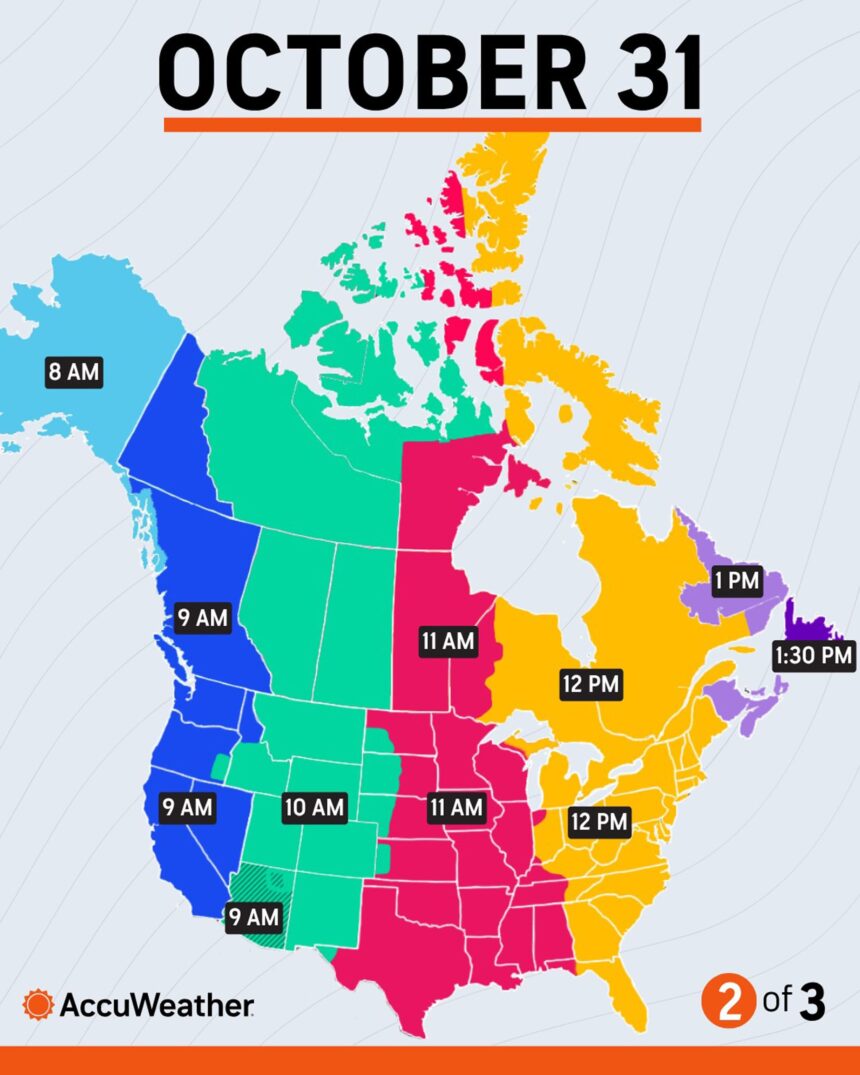
Ontario continues to observe the biannual clock shift while much of western Canada moves to permanent daylight saving time with the November 1, 2026 clock change. This divergence leaves the province as a notable outlier in a national shift away from seasonal adjustments.
The ongoing reliance on the biannual time change creates logistical friction for businesses and residents navigating a fragmented national schedule. Launch Len Media views this lack of synchronization as a significant barrier to economic efficiency across provincial borders.
The legislative stalemate of Bill 214
Ontario passed Bill 214 in 2020 with the stated intent of ending the biannual time change. However, the legislation includes a critical clause that mandates coordination with neighboring jurisdictions before it takes effect. Source: CityNews.
According to CityNews reports from October 2026, the government remains committed to this synchronization requirement. Officials argue that moving forward without Quebec and New York would create unnecessary trade and financial friction.
This policy stance prioritizes economic alignment with major partners over the immediate implementation of permanent daylight saving time. Consequently, the majority of Ontario residents continue to adjust their clocks twice a year.
The province has not provided a firm timeline for when these external negotiations might conclude. Until then, the legislative framework remains effectively dormant for most of the population, even as the Ontario legislature returns to work.

Regional shifts in northwestern Ontario
The landscape of time-zone policy changes significantly on November 1, 2026, when communities in northwestern Ontario located west of the 90th meridian move to permanent daylight saving time.
The Ontario Ministry of the Attorney General said this transition is designed to align these specific communities with Manitoba. Manitoba, along with British Columbia, Alberta, and the Northwest Territories, officially abolished seasonal clock changes earlier in 2026.
This move effectively splits the province into two distinct time-keeping zones. Residents near the 90th meridian must now navigate the complexities of living in a region that does not observe the same rules as the rest of the province.
The Canada Border Services Agency is responding to these changes by adjusting operating hours at 26 land crossings. These modifications ensure that border services remain synchronized with U.S. states that continue to observe seasonal time changes.
Options for navigating the current time landscape
Residents and businesses must adapt to the current reality of inconsistent time standards across the country. Below are the primary options for managing these disparities effectively. Source: Ontario Ministry of the Attorney General.
For those living near the 90th meridian, the transition to permanent daylight saving time requires updating all automated scheduling systems. Failure to do so may result in missed appointments or logistical errors.
Businesses operating across the Ontario-Quebec border should prepare for potential changes in the near future. Quebec officials have signaled an intention to abolish the biannual time change following the November 2026 switch.
For those in the rest of Ontario, the status quo remains the only option. Manual device verification is necessary during the biannual switch to ensure that digital clocks and calendars remain accurate.
The times aren’t a changin in western Canada, but there’s still adjustments ahead.
CityNews, October 31, 2026
Analysis of the economic and social trade-offs
The decision to maintain the biannual time change in Ontario is rooted in a desire for economic stability. By staying aligned with New York and Quebec, the province avoids the complications of operating on a different clock than its largest trading partners.
Critics of this approach point to the health and productivity costs associated with the biannual shift. Research consistently suggests that the transition periods can disrupt sleep patterns and decrease workplace efficiency.
Launch Len Media maintains that while the economic argument for alignment is valid, the long-term social benefits of ending the time change are becoming increasingly difficult to ignore. The fragmentation of the country into different time-keeping regimes creates a new type of administrative burden.
The fair counterpoint is that a unilateral move by Ontario could cause immediate disruption to cross-border finance and trade. Until Quebec and New York act, the province is likely to continue its cautious approach. Source: The Weather Network.
Next steps for residents and business owners
You can mitigate the impact of the current time-zone policy by auditing your digital infrastructure. Ensure that all scheduling software is configured to handle regional time differences automatically.
If you operate a business that relies on cross-border logistics, review the updated hours for the 26 affected land crossings. These adjustments are critical for maintaining supply chain continuity.
Stay informed about potential legislative updates from the Quebec government. Any change in their policy will likely trigger a rapid response from Ontario lawmakers to maintain regional alignment.
Finally, maintain a manual check for all critical appointments during the biannual transition weeks. Relying solely on automated systems in a fragmented time environment remains a significant risk.
Frequently Asked Questions
Why does Ontario still change its clocks?
Ontario’s Bill 214 requires the province to coordinate with Quebec and New York before implementing permanent daylight saving time to avoid trade and economic friction.
Are all parts of Ontario on the same time system?
No. Starting November 1, 2026, communities in northwestern Ontario west of the 90th meridian are on permanent daylight saving time, while the rest of the province continues to observe the biannual change.
Will Quebec change its time policy soon?
Quebec has signaled an intention to abolish the biannual time change, which could eventually prompt Ontario to move forward with its own legislative plans.