Lines of credit often function as fair-weather friends that provide liquidity during stable periods but may vanish when economic conditions deteriorate. Recent data shows that growth in Canadian lines of credit has accelerated over the past year, signaling potential financial pressure on households.
Launch Len believes these instruments are inherently unreliable during downturns because banks prioritize their own balance sheet stability over borrower needs. Treating these facilities as a permanent safety net creates significant systemic risk for both individuals and businesses.
Macroeconomic volatility increases reliance on these tools as precautionary instruments, yet this trend can exacerbate liquidity risks if many borrowers draw down commitments simultaneously. Understanding the mechanics of these revolving debts is essential for navigating current market instability.
The mechanics of revolving debt
A line of credit operates similarly to a credit card by allowing borrowers to access funds up to a specific limit. You pay interest only on the amount you withdraw, and the available credit replenishes as you repay the principal, according to Canada.ca. Source: The Globe and Mail.
These facilities are often promoted for their flexibility during periods of economic growth. However, they typically carry variable interest rates that adjust alongside central bank policy decisions, making them sensitive to broader economic shifts.
Unlike term loans, which have fixed repayment schedules, lines of credit often allow for interest-only payments. This structure can lead to a slippery slope of unmanageable debt for borrowers who fail to pay down the principal balance over time.
Small and medium-sized enterprises face higher sensitivity to changes in bank lending standards compared to large, publicly traded firms. When economic conditions sour, these smaller entities are often the first to see their access to credit restricted by nervous lenders.
More Read

The hidden risk of bank intervention
Lenders maintain the right to lower credit limits or demand repayment on short notice, a reality that many borrowers overlook. While this is not a daily occurrence, banks frequently reassess risk profiles during downturns when unemployment rises or property values fall.
Approximately 20% of bank losses during crisis periods can be attributed to credit line drawdowns, according to research from the University of Wisconsin-Madison. This statistic explains why banks hold higher capital against these commitments and why they act quickly to reduce exposure when the economy weakens.
The average Canadian with a home-equity line of credit, or HELOC, currently owes just under $60,000. With a competitive interest rate of 4.95%, a single central bank rate hike of 0.25% increases the monthly interest payment by approximately $12.
While $12 may seem manageable, central banks rarely implement a single rate hike in isolation. Multiple increases over several months can significantly inflate the total cost of borrowing, placing further strain on household budgets that are already managing other rising debt costs.
Strategic alternatives for liquidity
Borrowers should view lines of credit as a temporary convenience rather than a core component of their emergency fund strategy. Relying on these facilities during a recession could lead to a sudden reduction in available capital when you need it most.
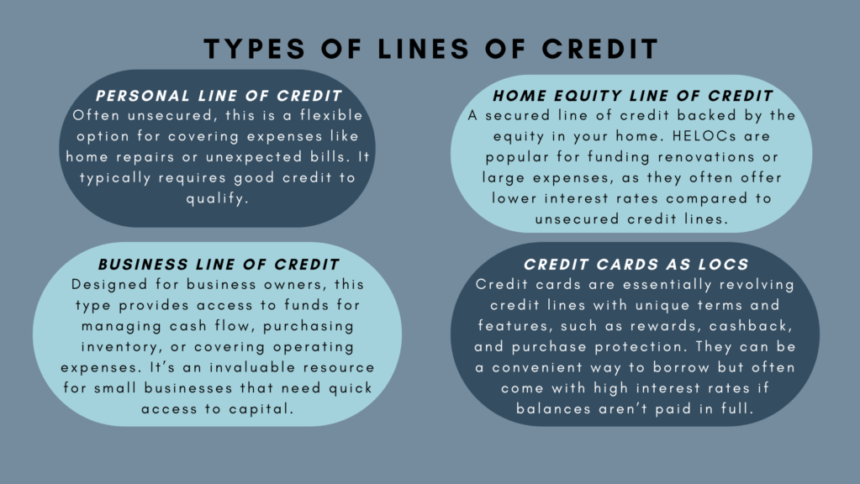
To mitigate these risks, consider shifting toward more stable forms of financing or building cash reserves. Below are specific strategies to manage your liquidity needs effectively during volatile market cycles. Source: CIBC Capital Markets.
The following options can help you reduce your reliance on revolving debt while maintaining financial flexibility:
1. Prioritize paying down the principal balance on existing lines of credit to lower your interest exposure and reduce the impact of future rate hikes.
2. Establish a dedicated emergency fund in a high-interest savings account to avoid relying on credit facilities for unexpected expenses.
3. Explore fixed-term loans for large, planned expenditures to lock in interest rates and avoid the volatility associated with variable-rate revolving debt.
4. Review your current credit agreements to understand the specific terms under which a lender can reduce your limit or demand immediate repayment.
That’s why it’s never a good idea to treat a line of credit as your emergency fund. It could shrink when you need it most, or you could be asked to repay what you borrowed when you can least afford it.
The Globe and Mail
Analysis of the credit trap
Launch Len maintains that lines of credit are inherently flawed as a long-term financial strategy because they offer a false sense of security. Banks are legally and operationally incentivized to protect their own balance sheets, which means they will inevitably restrict access to credit when the broader economy enters a contraction phase.
A fair counterpoint is that lines of credit remain a vital, contractually obligated liquidity buffer for many businesses. When managed as a strategic tool rather than a permanent crutch, these facilities allow borrowers to survive temporary shocks that would otherwise force insolvency.
Despite this, the systemic risk remains high because many borrowers treat the limit as an extension of their income. When interest rates rise and banks tighten standards simultaneously, the resulting liquidity squeeze can turn a manageable debt load into a financial crisis. Source: Canada.ca.
The growth in Canadian household credit suggests that many individuals are already using these facilities to cover gaps in their budgets. This trend is concerning because it leaves little room for error if the economic forecast worsens as expected.
Concrete steps for borrowers
You should begin by auditing your current debt obligations to identify which balances are tied to variable interest rates. Prioritizing the repayment of these specific debts will shield your budget from the impact of future central bank rate hikes.
If you rely on a line of credit for business operations, consider negotiating a committed facility that includes specific terms regarding limit reductions. While these may carry higher fees, they provide the contractual certainty that standard lines of credit lack.
Avoid the temptation to use your line of credit to finance long-term assets or lifestyle upgrades. These items should be funded through savings or fixed-term financing to ensure you are not exposed to the risks of a revolving debt facility.
Finally, monitor your bank’s communication regarding lending standards. If you notice a trend of tightening criteria in the broader market, take proactive steps to diversify your sources of liquidity before your existing lender makes a move to reduce your access.
Frequently Asked Questions
Can a bank really cancel my line of credit without warning?
Yes, most lines of credit are demand loans, meaning the lender can request repayment of the outstanding balance at any time. While they usually provide notice, they are not obligated to maintain the facility if they perceive an increase in your risk profile or systemic economic risk.
How do rising interest rates affect my line of credit payments?
Because lines of credit typically carry variable interest rates, your monthly interest payment will increase whenever the central bank raises its policy rate. This can lead to a significant increase in your total debt service costs if you maintain a large balance.
Is it better to pay off a line of credit or save money?
Paying off a line of credit is generally a better move during periods of economic instability because it reduces your interest expense and removes the risk of the bank calling in the loan. Building a cash emergency fund is also important, but you should prioritize eliminating high-interest debt first.