Democratic majorities in the U.S. House and Senate following the November 3, 2026, midterm elections have created a new political reality for the Canada trade war. This shift in legislative power may force the Trump administration to reconsider its aggressive tariff strategy.
The outcome matters to investors and homeowners because a de-escalation of trade tensions could stabilize the Canadian housing market. Launch Len Media views this as a critical inflection point that provides a necessary check on executive overreach regarding cross-border commerce.
The Impact of the November Midterms
The November 3, 2026, midterm elections resulted in a Democratic takeover of both the U.S. House and Senate. This political shift arrives nearly two years into a trade conflict that has defined the economic relationship between the two nations. Source: MPA Magazine.
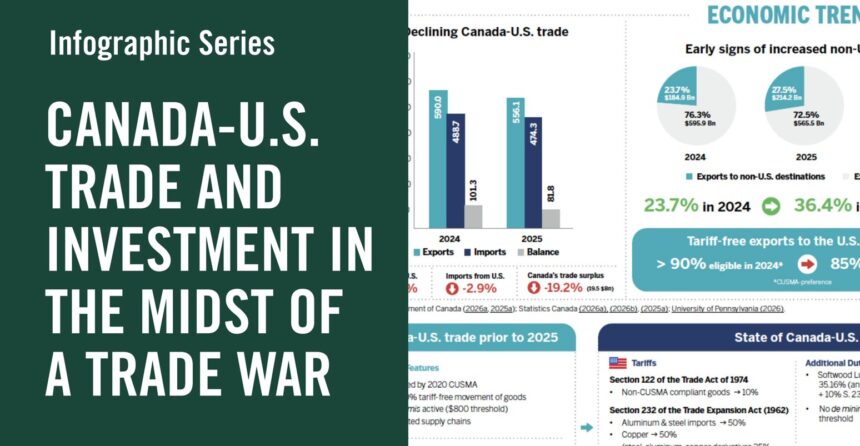
The Canada trade war officially commenced on February 1, 2025, following a series of executive orders. By August 2026, the administration escalated the dispute by imposing 50% tariffs on $27.6 billion of Canadian goods under Section 338 of the Tariff Act of 1930.
Canada responded in kind on September 8, 2026, by implementing reciprocal tariffs on an equivalent $27.6 billion of U.S. goods. This tit-for-tat escalation has affected a total trade relationship that reached approximately $916 billion in 2023.
Bernard Yaros, lead U.S. economist at Oxford Economics, noted that the current tariffs have become a point of contention for lawmakers. He emphasized that the fallout is particularly visible in northern U.S. border states where tourism and local industries have suffered.
There is widespread enough dissatisfaction in Congress with the US tariffs on Canada, given how important cross-border trade is between Canada and a lot of our northern border states.
Bernard Yaros, Oxford Economics

Housing Market Fragility and Trade Uncertainty
The trade dispute has acted as a drag on the Canadian housing market throughout 2025 and 2026. High interest rates have already kept many buyers on the sidelines, but trade-related uncertainty has compounded these affordability challenges.
Sal Guatieri, a senior economist at BMO Capital Markets, has warned that the prolonged dispute damages consumer confidence. He stated that the threat of further tariffs increases concerns about job security, which discourages long-term investments in real estate.
Royal LePage CEO Phil Soper also identified economic uncertainty as a primary factor keeping first-time buyers out of the market. He noted that while the market is quieter, the lack of clarity regarding trade relations prevents a rebound in activity.
The Canada Mortgage and Housing Corporation (CMHC) has observed that mortgage delinquencies are rising. Areas such as Southern Ontario, which are heavily integrated into the cross-border supply chain, have experienced the most significant impact from the tariff regime.
Legislative Hurdles and Executive Power
While the Democratic majority offers a new avenue for policy change, the executive branch maintains significant control over trade. President Trump can still utilize executive orders to adjust or maintain tariffs without immediate congressional approval.
Overriding a presidential veto on trade legislation requires a two-thirds majority in both the House and Senate. This threshold remains difficult to reach even with the recent shift in partisan control, as it requires bipartisan support.
Despite these hurdles, there is growing talk of a potential deal. As the midterms approached, the administration signaled that a resolution might be near, reflecting an awareness of the political unpopularity of the current tariff wave.
Prime Minister Mark Carney has hinted at a return to the negotiating table. A successful deal could provide the clarity needed to stabilize the Canadian housing sector and reduce the risk of further trade flare-ups.
- Monitor legislative sessions for attempts to repeal Section 338 tariffs.
- Watch for official statements from the Prime Minister regarding a new trade deal.
- Track mortgage delinquency rates in regions heavily dependent on cross-border manufacturing.
- Evaluate the impact of potential tariff relief on regional tourism and local employment.
Analysis: The Limits of Legislative Pressure
Launch Len Media maintains that the Democratic victory serves as a vital political check on the administration. By highlighting the economic pain in border states, Congress can force the White House to prioritize a de-escalation of the Canada trade war.
However, a fair counterpoint is that trade policy is historically the domain of the executive branch. Even with a hostile Congress, the President can use national security arguments to justify maintaining existing levies for an extended period.
The reality is likely somewhere in the middle. While Congress may not be able to unilaterally dismantle the tariff structure, the political pressure generated by the new majority makes a status quo approach increasingly difficult for the administration to sustain.
The economic integration of the two nations is too deep to ignore indefinitely. As the costs of the trade war continue to mount for U.S. businesses, the incentive for a negotiated settlement will likely outweigh the political benefits of protectionism.
What Readers Can Do
For those navigating the current economic environment, it is essential to remain informed on trade developments. If you are considering a home purchase, factor in the potential for continued volatility in the Canadian housing market until a formal resolution is reached.
Investors should pay close attention to companies with high exposure to cross-border supply chains. Changes in trade policy regarding Canadian tariffs could significantly alter the earnings outlook for these firms in the coming quarters.
Keep track of official updates from the CMHC and major financial institutions regarding mortgage arrears. These metrics will provide the earliest indicators of whether the housing market is beginning to stabilize following the midterm results.
Finally, review your personal financial strategy to ensure you have adequate liquidity. Economic uncertainty often leads to unexpected shifts in interest rates and lending standards, making a conservative approach to debt management prudent.
Frequently Asked Questions
Will the U.S. midterms automatically end the trade war?
No. While the Democratic majority provides a legislative check, the President retains significant executive authority to maintain tariffs.
How have tariffs affected the Canadian housing market?
Tariffs have increased economic uncertainty and concerns over job security, which has kept many potential buyers on the sidelines and contributed to rising mortgage delinquencies.
What is the next step for trade negotiations?
Both the Canadian government and the U.S. administration have signaled a potential return to the negotiating table to discuss a deal that could de-escalate the current conflict.