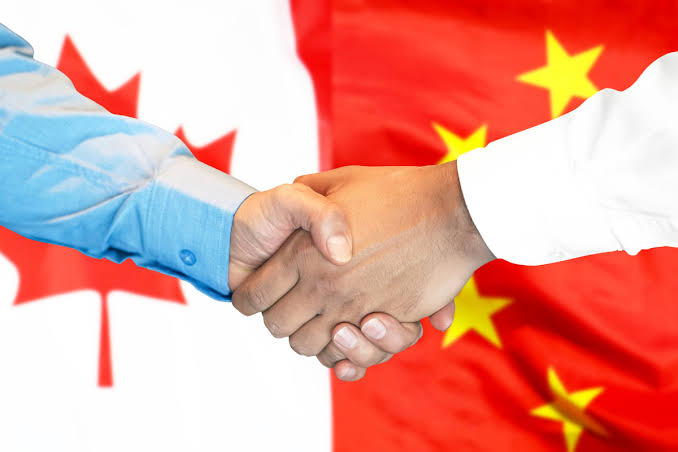
Prime Minister Mark Carney and President Xi Jinping met on November 17, 2026, to finalize a significant expansion of bilateral economic cooperation. The agreement provides $400 million in tariff relief for Canadian exports while recalibrating industrial import duties.
This move signals a pragmatic shift in Canada-China trade policy as Ottawa seeks to insulate its domestic industries from U.S. protectionism. Launch Len Media views this pivot as a critical survival strategy for a nation facing an uncertain north-south trade landscape.
The Mechanics of the New Trade Agreement
The meeting in Shenzhen occurred just ahead of the APEC summit, highlighting the urgency of the diplomatic engagement. According to the Prime Minister’s Office, the deal centers on a $400 million package intended to stimulate Canadian agricultural output. Source: CBC News.
The agreement functions through a series of reciprocal tariff remissions. Canada provides relief for Chinese industrial inputs, specifically steel and aluminum, while China lowers barriers for Canadian pork and seafood products.
Data from the Prime Minister’s Office indicates that more than 90% of bilateral trade is now covered by these reduced tariff arrangements. This represents a significant increase in market access compared to the period before the January 2026 strategic partnership.
The partnership has already yielded measurable results for the Canadian economy. According to the Prime Minister’s Office, Canada has now restored market access for more than 90% of trade previously subject to tariff action, worth nearly $7.5 billion in Canadian exports.

Navigating the U.S. Protectionist Threat
The pivot toward Beijing is largely a response to the cooling of relations between Ottawa and Washington. Under the current U.S. administration, Canada has faced repeated threats of broad-based tariffs that could destabilize key sectors.
Prime Minister Carney has framed this shift as a pragmatic necessity rather than an ideological realignment. By diversifying export destinations, Canada aims to reduce its vulnerability to the ongoing canada trade war that has gripped North American markets.
Despite the deepening ties with China, Carney has been careful to manage expectations regarding future integration. During a press briefing, he confirmed that Canada has no intention of pursuing a comprehensive free trade agreement with China.
This caution stems from the need to remain compliant with the Canada-U.S.-Mexico trade framework. The government is balancing the need for economic survival with the requirement to maintain its primary trade agreements with its southern neighbor.
The Debate Over Asymmetrical Concessions
The deepening relationship has faced sharp criticism from domestic and international observers. Former diplomat Michael Kovrig has warned that the economic gains may be overshadowed by long-term security risks.
Kovrig argues that the concessions made by Canada are asymmetrical and disproportionately benefit Beijing. He suggests that the focus on trade ignores China’s history of foreign interference and human rights violations.
Critics also point to the potential for diplomatic leverage to be used against Canada in the future. There is concern that by increasing reliance on the Chinese market, Canada may find itself with less room to maneuver on sensitive geopolitical issues.
Despite these concerns, the government maintains that the economic benefits are too significant to ignore. The administration argues that the current global environment requires a flexible approach that prioritizes national economic stability over traditional diplomatic alignments.
Gains in the Canada-China trade deal don’t go both ways.
Former diplomat Michael Kovrig, speaking to CBC News
Strategic Options for Canadian Exporters
Canadian businesses looking to capitalize on the new trade environment have several avenues to explore. The current agreement provides specific relief for producers in the agricultural and industrial sectors.
The following list outlines the primary areas where Canadian firms can leverage the new trade terms to expand their market reach. Source: Prime Minister’s Office.
These options reflect the sectors prioritized by the November 17 agreement and the ongoing strategic partnership.
- Pork Producers: Benefit from direct tariff relief, making Canadian pork more competitive against regional rivals in China.
- Seafood Exporters: Gain improved access to the Chinese consumer market, which has shown rising demand for high-quality imported proteins.
- Steel Manufacturers: Benefit from the extension of tariff remissions, allowing for more predictable supply chain costs over the next two years.
- Aluminum Processors: Can utilize the expanded remission framework to maintain export volumes despite global market volatility.
Analysis: The Case for Pragmatic Engagement
Launch Len Media maintains that the pivot to China is a rational response to the protectionist turn in U.S. policy. When a primary trading partner threatens to impose punitive tariffs, diversifying the export base becomes a matter of national economic security.
The counterpoint, as articulated by critics like Kovrig, is that economic dependence on an authoritarian regime carries inherent risks. This is a valid concern, particularly regarding the potential for future political coercion.
However, the reality of the global market suggests that Canada cannot afford to be isolated. The restoration of market access for nearly $7.5 billion in Canadian exports since January 2026 provides a strong empirical case for the current strategy’s effectiveness.
Ultimately, the government is betting that the economic benefits of this trade expansion will outweigh the diplomatic costs. Whether this calculation holds will depend on the stability of the U.S.-Canada relationship in the coming months.
Next Steps for Canadian Businesses
If you are an exporter, the first step is to review your current tariff classifications under the new agreement. Consult with your trade compliance officer to ensure you are capturing the full benefit of the recent remissions.
Second, monitor the implementation of the agricultural relief packages. The government has indicated that further administrative guidance will be released regarding the specific pork and seafood quotas.
Third, diversify your supply chain to mitigate the risks associated with geopolitical shifts. While the China deal is a positive development, maintaining a broad portfolio of trading partners remains the best defense against future volatility.
Frequently Asked Questions
Does this deal include a free trade agreement with China?
No. Prime Minister Carney has explicitly stated that Canada is not pursuing a free trade agreement with China due to existing obligations under the Canada-U.S.-Mexico trade framework.
Which sectors are the primary beneficiaries of the new tariff relief?
The agreement primarily benefits Canadian agricultural producers, specifically those in the pork and seafood sectors, as well as the steel and aluminum industries.
How much has trade with China grown since the partnership began?
Since the partnership began in January 2026, Canada has restored market access for more than 90% of trade previously subject to tariff action, nearly $7.5 billion in exports, according to the Prime Minister’s Office.