The Canada Revenue Agency has officially confirmed the RRSP limit for 2027 at $35,390 and for 2028 at $36,390. These updates provide a clear roadmap for taxpayers looking to maximize their tax-sheltered savings.
These predictable, incremental increases offer a vital framework for long-term retirement planning in an otherwise volatile economic climate. Understanding these thresholds is essential for Canadians aiming to optimize their tax liabilities and secure their financial future.
The stakes are high for high-income earners who rely on these contribution ceilings to reduce their annual taxable income. Failing to account for these changes can result in missed opportunities for tax deferral or, conversely, costly over-contribution penalties.
Official CRA Announcements for 2027 and 2028
On October 28, 2026, the Canada Revenue Agency released the updated contribution thresholds for registered plans. The agency confirmed that the 2027 RRSP limit is $35,390, while the 2028 ceiling is set at $36,390.
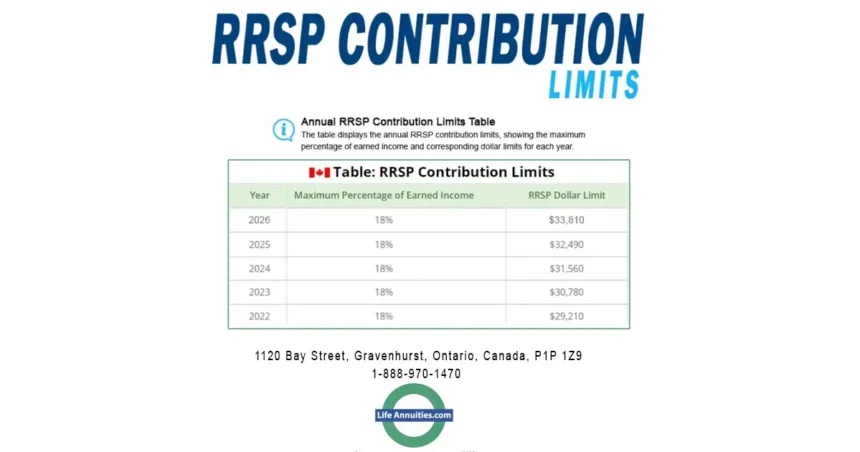
These figures represent a steady progression from the 2026 limit of $33,810. The increases are mandated by federal tax rules that index registered retirement savings limits to the money purchase pension plan limits of the prior year.
The announcement also included updates to other pension-related thresholds. For instance, the 2027 money purchase limit was confirmed at $36,390, which serves as the benchmark for the 2028 RRSP limit.
These official figures provide taxpayers with the certainty needed to plan their financial contributions well in advance. By knowing the limits early, individuals can adjust their savings strategy to align with their expected income levels.

The Mechanics of Contribution Room Calculations
While the annual dollar limit sets a national ceiling, your personal contribution room is determined by a specific formula. According to Sun Life, your annual RRSP deduction limit is generally 18% of your previous year’s earned income, up to the annual maximum.
Earned income for these purposes includes employment income, net self-employment income, and rental income. It does not include investment income, capital gains, or employment insurance benefits.
If you participate in a workplace pension plan, your employer reports a pension adjustment. This adjustment reduces your available RRSP room because your employer is already contributing to your retirement savings on a tax-deferred basis.
Unused contribution room is a powerful tool for many Canadians. Any room you do not use in a given year carries forward indefinitely, allowing you to make larger contributions in future years when your income might be higher.
To reach the maximum contribution limit, specific income thresholds must be met. For 2027, a taxpayer would need approximately $196,612 in earned income during 2026 to hit the $35,390 limit, assuming no pension adjustments.
Strategies for Maximizing Tax-Sheltered Savings
Taxpayers have several options when managing their RRSP contributions to optimize their tax position. These strategies can help you make the most of the available room while balancing current cash flow needs.
Consider these common approaches to managing your RRSP contributions:
1. Prioritize high-income years: If you expect to move into a higher tax bracket in the future, consider carrying forward your unused room to claim larger deductions when they provide more significant tax savings.
2. Utilize the first 60 days: Contributions made in the first 60 days of the calendar year can be applied to the previous tax year. This allows you to finalize your tax planning after knowing your exact income for the year. Source: Sun Life.
3. Monitor your Notice of Assessment: The CRA provides your exact, up-to-date contribution room on your Notice of Assessment. Relying on this document is the only way to ensure you do not exceed your limit.
4. Leverage tax-deferred growth: Inside the RRSP, all investment growth, including dividends and capital gains, is tax-deferred. This allows your retirement portfolios to compound more effectively over the long term.
- Focus on maximizing contributions during your peak earning years to lower your current marginal tax rate.
- Use the first 60 days of the year to retroactively adjust your tax liability based on actual income.
- Check your CRA My Account portal regularly to track your lifetime unused contribution room.
- Coordinate your RRSP contributions with other savings vehicles like the TFSA to maintain liquidity.
Analysis of the Fixed Limit Framework
The predictable, incremental increases in the RRSP limit provide a stable framework for long-term retirement planning. By setting these limits years in advance, the government allows individuals to build consistent savings habits without fear of sudden policy shifts.
However, critics argue that these fixed dollar limits fail to keep pace with the actual cost of living and inflation. As the price of goods and services rises, the real-world purchasing power of these retirement savings may effectively decrease for middle-income Canadians.
Despite these concerns, the RRSP remains a cornerstone of Canadian retirement security. The ability to defer taxes on income that would otherwise be taxed at high marginal rates provides a significant advantage for long-term wealth accumulation.
The debate highlights a tension between fiscal policy and individual financial needs. While a higher limit would benefit those with the capacity to save more, the current system balances the government’s tax revenue needs with the public’s desire for tax-advantaged retirement vehicles.
The 2028 RRSP dollar limit represents a $2,580 cumulative increase over the 2026 ceiling of $33,810, giving Canadians significantly more room to shelter earned income from taxation in the years ahead.
Canada Revenue Agency
Next Steps for Taxpayers
To take advantage of these new limits, start by reviewing your most recent Notice of Assessment. This document will show your exact available contribution room as of your last tax filing.
If you are planning for the 2027 or 2028 tax years, project your expected income to determine how much you can contribute. Remember that your limit is the lesser of 18% of your income or the annual dollar maximum.
Consult with a financial advisor if you are unsure how to balance your RRSP contributions with other financial goals. They can help you determine whether it makes sense to claim your deduction in the current year or carry it forward.
Finally, ensure your contributions are made before the annual deadlines. Missing these dates can complicate your tax filing and delay the benefits of your retirement savings strategy.
Frequently Asked Questions
Can I contribute more than my personal RRSP limit?
You can generally contribute up to $2,000 over your limit without penalty. Contributions beyond this buffer are subject to a monthly tax of 1%.
Does my employer’s pension plan affect my RRSP limit?
Yes, your employer reports a pension adjustment that reduces your RRSP contribution room. This is because your workplace plan is already providing tax-sheltered savings.
Where can I find my exact RRSP contribution room?
Your exact contribution room is listed on your most recent Notice of Assessment. You can also view it by logging into the CRA My Account portal.