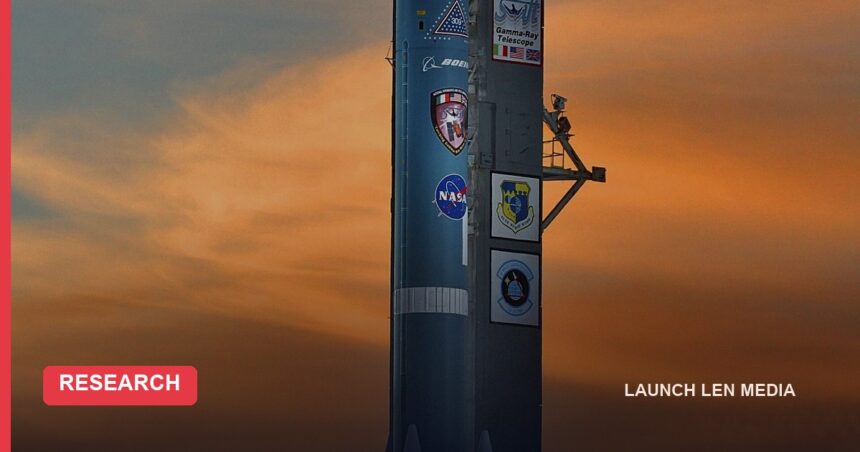
NASA’s Swift space telescope is gone. The U.S. Space Force confirmed that the 1.5-ton observatory re-entered the atmosphere at 7:39 a.m. EST on Wednesday, November 4, over the North Sumatra region of Indonesia. Source: NASA. Source: The Associated Press via CP24.
- What Happened to Swift on November 4
- What Swift Did During Its 22 Years in Orbit
- Swift by the Numbers
- Why Swift Fell: Solar Activity and Drag
- The $30 Million Rescue That Fell Short
- What It Means for Canada and the U.S.
- A Fair Counterpoint
- What Comes Next and What Readers Can Do
- How We Reported This Story
- Frequently Asked Questions
- Sources and Further Reading
The end came after an unusual attempt to save it. NASA paid a commercial startup $30 million to send a robotic spacecraft to latch on and push Swift higher, but that spacecraft never got close enough to try. Source: NASA. Source: NASA.
Here is what Swift did, why it fell, what went wrong with the rescue, and why the mission still matters for astronomers in Canada, the U.S. and beyond.
What Happened to Swift on November 4
NASA updated its Swift mission blog on Wednesday, November 4, to confirm the re-entry. The agency said the spacecraft came down at about 3.4 degrees north latitude and 98.6 degrees east longitude, almost 22 years after launch. Source: NASA.
Sky & Telescope reported the same moment as 12:39 UT, plus or minus one minute, based on Space-Track data. It added that sighting reports from Johor, Pahang and Kedah in Malaysia appear to match the fireball. Source: Sky & Telescope.
NASA expected most of the spacecraft to burn up but acknowledged that some components may have survived. No injuries or damage had been reported in the sources reviewed for this article. Source: NASA.
Before the re-entry, NASA mission chief scientist Brad Cenko told the AP that a handful of tungsten pieces, a metal denser than lead, plus some mirror parts could survive. The AP added that any surviving wreckage would most likely land in the ocean. Source: The Associated Press via CP24.
What Swift Did During Its 22 Years in Orbit
Swift launched on a Delta II rocket on November 20, 2004. Its job was to catch gamma-ray bursts. Gamma-ray bursts are brief, extremely powerful flashes of high-energy light, produced for example when massive stars collapse or neutron stars merge. Source: Sky & Telescope. Source: ScienceDaily.
What made Swift special was speed. It could swing its telescopes toward a sudden outburst on its own and alert observatories around the world, so other instruments could study an event before it faded. Source: NASA.
That made Swift a kind of first responder for bigger telescopes. The AP noted that NASA considered it a first responder for Hubble and Webb, which followed up on its alerts. Source: The Associated Press via CP24.
Sky & Telescope also lists monitoring of black holes tearing apart stars, changes in exoplanet atmospheres, and observations of the interstellar comet 3I/ATLAS among its later projects. Source: Sky & Telescope.
The mission was renamed in 2018 to honour Neil Gehrels, who led it and died in 2017. Source: Sky & Telescope.
- Burst Alert Telescope: a wide-field gamma-ray detector that spotted bursts.
- X-ray Telescope: pinned down the X-ray afterglow of each event.
- Ultraviolet/Optical Telescope: captured the visible and ultraviolet light that followed.
We've known this day would come since before Swift was launched.
John Nousek, Penn State astronomer who led Swift's control team, to the AP
Swift by the Numbers
The headline figure is longevity. NASA planned a two-year prime mission; Swift kept working for more than two decades. Source: NASA.
Counts of its discoveries vary by source and by how they are defined. The AP put the final tally at more than 2,000 gamma-ray bursts and 1,400 exploding stars, plus comets, asteroids and black holes. Source: The Associated Press via CP24.
~22 yrs
In orbit, against a 2-year prime mission
2,000+
Gamma-ray bursts detected (AP tally)
1,400
Exploding stars observed
$30M
NASA rescue contract with Katalyst
Sky & Telescope described a catalogue of more than 1,750 bursts and over 1,400 supernovae in other galaxies. It also said Swift could observe up to 75 targets in a single day and produced the first all-sky survey in high-energy X-rays. Source: Sky & Telescope.
Its later work reached well beyond bursts. NASA lists targets such as active galaxies powered by supermassive black holes, stars throwing off X-ray flares, supernovae, and comets and asteroids in our own solar system. Source: NASA.
Why Swift Fell: Solar Activity and Drag
Swift circled Earth roughly every 90 minutes in a low orbit inclined 20.5 degrees to the equator. Source: Sky & Telescope.
Orbital decay is the slow loss of altitude as thin upper-atmosphere gas drags on a satellite. Swift’s orbit decayed faster than expected because a busier Sun heated and expanded the upper atmosphere, raising drag. NASA cited that increased solar activity when it hired a company to attempt a boost in 2025. Source: NASA.
Clayton Turner, then associate administrator of NASA’s Space Technology Mission Directorate, put it plainly in 2025: “Orbital decay is a common, natural occurrence for satellites.” Source: NASA.
Sky & Telescope notes that Solar Cycle 25 peaked in 2025, adding drag on many satellites in low Earth orbit. Source: Sky & Telescope.
The team tried to buy time. It paused science work to reduce drag, then restarted observations in late August 2026. That extra drag, combined with recent solar activity, made Swift sink quickly again. Source: NASA.
On October 20, Swift reached 171 miles (275 kilometres) in altitude, could no longer compensate and entered safe mode. The operations team at Penn State then sent a command that effectively ended the mission. Source: NASA.
The $30 Million Rescue That Fell Short
On September 24, 2025, NASA awarded Katalyst Space Technologies of Flagstaff, Arizona, a $30 million contract to try to raise Swift’s orbit. The deal used a Phase III Small Business Innovation Research award, which let NASA move on a shorter timeline. Source: NASA.
NASA said success would have been the first time a commercial robotic spacecraft captured an uncrewed government satellite not designed for servicing. Astrophysics official Shawn Domagal-Goldman said at the time: “we are in a race against the clock.” Source: NASA.
Katalyst’s LINK spacecraft launched on July 3, 2026, on a Northrop Grumman Pegasus XL rocket. It carried three LiDAR-guided robotic arms meant to grab a structural feature on Swift without touching its instruments. Source: Astronomy.
The plan was delicate. Katalyst would check LINK’s navigation and propulsion, survey Swift up close to choose a contact point, latch on, and then fire thrusters over several months to raise both spacecraft. Source: Astronomy.
Swift was never designed to be grabbed. Katalyst’s LINK lead, Kieran Wilson, called it “an unprepared but cooperative partner in the rendezvous.” Source: Astronomy.
It did not work. On August 19, NASA and Katalyst said LINK would not capture or boost Swift because of an ongoing attitude control issue on the commercial spacecraft. Sky & Telescope attributed the failed rendezvous to an early power fault. Source: NASA. Source: Sky & Telescope.
According to the AP, LINK got no closer than 7 to 9 miles (12 to 15 kilometres) from Swift before it re-entered the atmosphere in September. Source: The Associated Press via CP24.
| Date | Milestone | Source |
|---|---|---|
| Nov. 20, 2004 | Swift launches on a Delta II rocket | Sky & Telescope |
| Sept. 24, 2025 | NASA awards Katalyst $30M to boost Swift | NASA |
| July 3, 2026 | Katalyst’s LINK launches on Pegasus XL | Astronomy |
| Aug. 19, 2026 | NASA says LINK will not capture Swift | NASA |
| Oct. 20, 2026 | Swift hits 275 km and enters safe mode | NASA |
| Nov. 4, 2026 | Swift re-enters over North Sumatra | NASA / U.S. Space Force |
What It Means for Canada and the U.S.
For people in Canada and the contiguous United States, there was no risk. The AP listed parts of Africa, Australia, India, Southeast Asia, and Central and South America as being within the re-entry zone. Source: The Associated Press via CP24.
That follows from Swift’s 20.5-degree orbit: a satellite’s path only passes over latitudes up to its inclination. Canada and the contiguous United States sit well north of that band. Source: Sky & Telescope.
The bigger loss is scientific. Swift was a NASA mission run with partners including Penn State, Los Alamos National Laboratory and Northrop Grumman, and its rapid public alerts fed telescopes worldwide. Source: NASA.
It also offers a lesson for the commercial space sector, including Canada’s, which is wrestling with how much to rely on private operators. See our coverage of the Telesat debt crisis and the SpaceX and Qualcomm Starlink Mobile plan for the broader picture.
A Fair Counterpoint
A fair counterpoint is that Swift was never supposed to last this long. It ran more than ten times its planned prime mission, so its end is a retirement, not a failure. Source: ScienceDaily.
The rescue, too, was a calculated gamble. NASA framed the Katalyst deal as both an attempt to save Swift and a way to develop the U.S. space-servicing industry, and LINK still attempted rendezvous operations to demonstrate its capabilities. Source: NASA. Source: NASA.
Nousek told the AP he hopes the lessons from Swift’s successes carry into future missions. NASA has not announced a direct replacement in the sources reviewed here. Source: The Associated Press via CP24.
What Comes Next and What Readers Can Do
Astronomers lose a fast, flexible burst hunter. Sonoma State University astronomer Lynn Cominsky told Sky & Telescope that NASA’s Fermi telescope, which also sees gamma-ray bursts, has no instruments that can provide accurate burst positions. Source: Sky & Telescope.
Its legacy remains. Time-domain astronomy is the study of how objects in the sky change over time, and Sky & Telescope credits Swift with helping turn it into a rich field. Source: Sky & Telescope.
The rescue attempt will also shape future missions. For example, the open question is whether satellites will be built with grapple points and docking features so commercial servicers can reach them more easily.
- Follow the official record: NASA’s Swift mission blog carries the confirmed re-entry details and the mission history.
- Treat debris claims with caution: NASA says most of Swift burned up, and the AP says survivors most likely fell into the ocean.
- Watch the servicing market: Katalyst’s attempt was billed as a first; future attempts will show whether robotic rescue can work.
How We Reported This Story
Methodology: this article is a sourced synthesis of NASA’s Swift mission blog and its 2025 contract announcement, Associated Press reporting carried by CP24, Sky & Telescope, Astronomy and ScienceDaily. Each figure links to the page it came from.
Where sources differ, both versions are attributed rather than merged. The AP counts more than 2,000 gamma-ray bursts, while Sky & Telescope cites more than 1,750. NASA blamed LINK’s failure on attitude control, while Sky & Telescope reported a power fault.
The point that Canada sat outside the re-entry zone is our own analysis, based on Swift’s published 20.5-degree inclination and the AP’s list of affected regions.
Frequently Asked Questions
When and where did NASA’s Swift telescope fall?
Swift re-entered the atmosphere at 7:39 a.m. EST on November 4, 2026, over the North Sumatra region of Indonesia. The U.S. Space Force confirmed the time and location, according to NASA.
Did any Swift debris land in Canada or the U.S.?
No. Swift’s orbit was inclined 20.5 degrees, so its path never crossed Canada or the contiguous United States. NASA expected most of it to burn up, and the AP said any surviving pieces most likely fell into the ocean.
Why couldn’t NASA save Swift?
Increased solar activity raised atmospheric drag on Swift’s low orbit faster than expected. NASA paid Katalyst $30 million to boost it, but the company’s LINK spacecraft developed an attitude control problem and never captured Swift.
What did Swift discover?
Swift specialised in gamma-ray bursts and quick-response alerts. The AP tallies more than 2,000 bursts and 1,400 exploding stars, plus observations of black holes, comets and asteroids.
Sources and Further Reading
- NASA: NASA's Swift Observatory Re-Entered Atmosphere
- NASA: NASA's Swift Mission Ends Ahead of Re-Entry
- NASA: Next Steps for Commercial Swift Boost Mission
- NASA: NASA Awards Company to Attempt Swift Orbit Boost
- The Associated Press via CP24
- Sky & Telescope
- Astronomy
- ScienceDaily
This article was researched with AI assistance and checked against the sources listed above. Facts are current as of the publication date; follow the source links for updates.