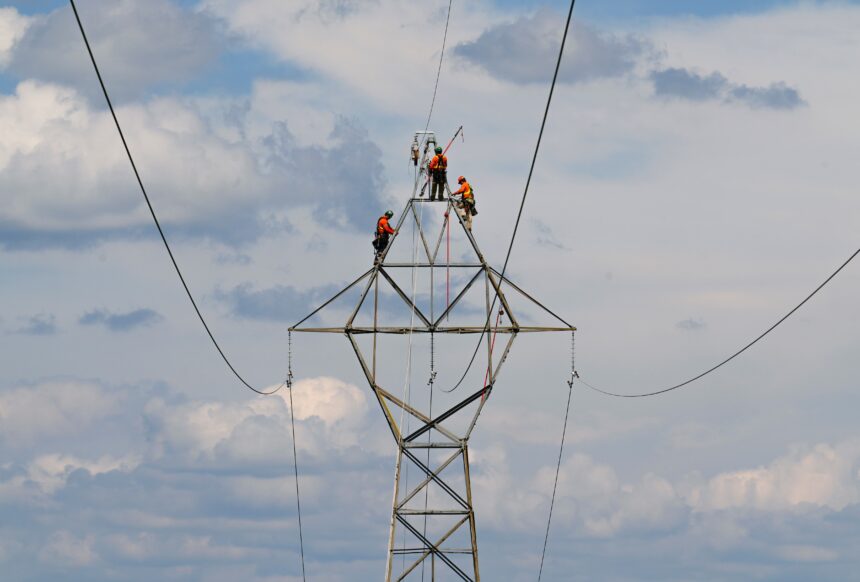
The Ontario government announced a comprehensive overhaul of the province’s electricity distribution sector on October 27, 2026. This legislative push seeks to modernize 58 local distribution companies to handle surging energy demand.
These reforms represent a necessary, overdue step to modernize Ontario’s grid and ensure economic competitiveness against U.S. tariffs. By mandating long-term planning, the province hopes to stabilize costs for the future.
The stakes for the provincial economy are high as utilities face mounting pressure to expand capacity. Failure to act could leave the grid unable to support industrial growth and new housing developments.
The scale of the grid challenge
Ontario faces a significant hurdle in maintaining its power grid as electricity demand continues to climb. According to the Ontario Newsroom, the province must prepare to add capacity equivalent to the City of Toronto every six years.
This growth is driven by rapid industrial expansion and the electrification of the broader economy. The Electricity Distributors Association estimates that the sector may require up to $120 billion in capital investment over the next two decades.
These massive infrastructure needs require a more coordinated approach than current fragmented models provide. The government argues that the status quo is insufficient for the challenges posed by modern energy requirements.
Energy and Mines Minister Stephen Lecce stated that the current utility structure was designed for a different era. He noted that the system was built well before the current surge in demand and the impact of external trade pressures.
Ontario’s utilities were designed for a different era – well before soaring electricity demand and President Trump’s tariffs.
Energy and Mines Minister Stephen Lecce

Mandatory planning and governance shifts
The proposed reforms introduce a requirement for all 58 local distribution companies to develop 10-year infrastructure and workforce plans. These documents must detail the condition of existing assets and projected financing needs.
This shift aims to move utilities away from reactive maintenance toward proactive long-term development. By aligning workforce needs with infrastructure goals, the province hopes to prevent labor shortages from delaying critical projects.
Governance of municipally owned utilities will also face stricter scrutiny under the new rules. The government is pushing for skills-based boards to ensure that utility leadership possesses the technical expertise required for complex grid management.
London Hydro is frequently cited by provincial officials as a successful model for this type of governance. The province intends to use such examples to guide other municipalities toward more transparent and efficient oversight.
Options for utility modernization
The government has outlined several pathways for utilities to improve their operational efficiency and service delivery. These options are designed to help local providers manage costs while meeting the rising demand for power. Source: Ontario Construction News.
Utilities are encouraged to participate in joint purchasing initiatives such as Buy Ontario and Buy Canada. These programs allow smaller utilities to pool their buying power to reduce costs for equipment and materials.
Sharing services and resources between neighboring utilities is another key strategy proposed by the province. This approach aims to reduce administrative overhead and improve the speed of response to grid failures.
The government is also focusing on consumer protections for residents in multi-unit buildings. New regulations will mandate transparency for sub-metering fees and implement a ban on winter disconnections for these residents.
- Joint purchasing agreements to lower procurement costs for equipment.
- Shared service models to reduce administrative and operational overhead.
- Skills-based board requirements to improve utility governance and oversight.
- Mandatory 10-year infrastructure planning to address long-term capacity needs.
- Enhanced consumer protections including winter disconnection bans for sub-metered residents.
Analysis of the reform strategy
The government’s plan is a pragmatic response to the urgent infrastructure needs facing the province. By forcing utilities to plan a decade ahead, Ontario creates a clearer roadmap for investment and development.
However, some critics argue that the proposal lacks ambition by focusing primarily on traditional infrastructure. Mark Winfield, a noted energy policy expert, suggests that the plan misses an opportunity to empower utilities to act as organizers of flexible, distributed energy resources.
Distributed energy resources could potentially save costs by reducing the need for massive, centralized grid upgrades. While the government’s focus on traditional capacity is understandable, failing to integrate decentralized energy may limit the long-term efficiency of the system.
Despite these criticisms, the move remains a necessary step toward grid reliability. The focus on governance and long-term planning provides a solid foundation for future technological integration. Source: REMI Network.
Next steps for stakeholders
Local distribution companies must now begin preparing their 10-year infrastructure and workforce plans to comply with the upcoming legislative changes. Utilities should review their current governance structures to ensure they meet the new standards for board composition.
Residents living in multi-unit buildings served by sub-meter providers should monitor the progress of these consumer protections. The government intends to issue a directive to the Ontario Energy Board to formalize these expectations.
Investors and contractors involved in the energy sector should track the implementation of joint purchasing initiatives. These programs will likely shift procurement patterns for major projects across the province.
Stakeholders should also watch for the legislative approval process in the coming months. The government’s ability to pass these reforms will determine the pace of grid modernization and the allocation of the projected $120 billion in investment.
Related reading: Ontario’s civil projects pipeline.
Frequently Asked Questions
What is the main goal of the proposed Ontario electricity distribution reforms?
The reforms aim to modernize 58 local distribution companies to handle significantly higher electricity demand and manage an estimated $120 billion in required infrastructure investment.
How will these changes affect residents in multi-unit buildings?
Residents will benefit from new consumer protections, including a ban on winter disconnections and increased transparency regarding fees charged by sub-meter providers.
What are the new requirements for utility boards?
The government is mandating stronger governance, specifically encouraging the adoption of skills-based boards to improve oversight and transparency in municipally owned utilities.