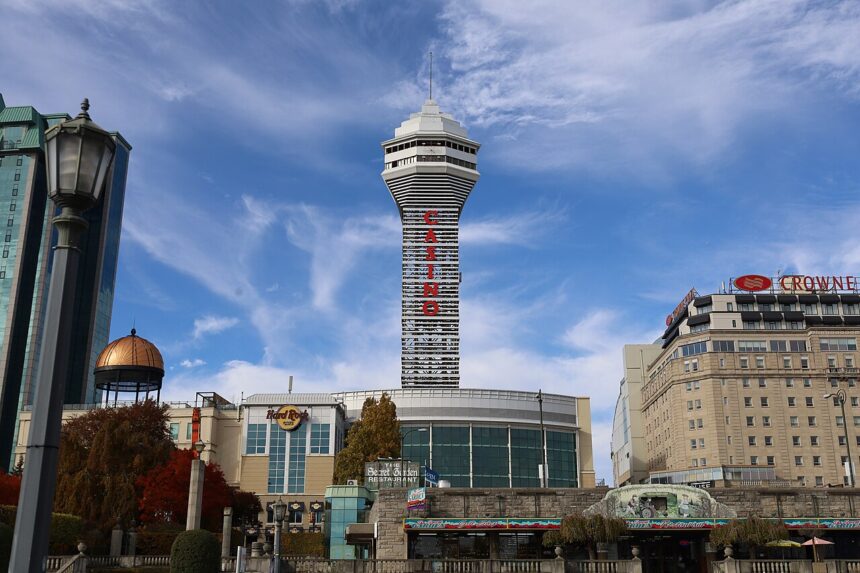
Mayor-elect Lori Lococo secured a decisive victory on October 26, 2026, capturing 51.45% of the vote to unseat four-term incumbent Jim Diodati. Her win arrives just as the Ontario government accelerates plans for a massive Niagara Falls casino expansion.
This transition of power signals a potential shift in how the city manages large-scale municipal development and provincial relations. Lococo must now determine if the province’s aggressive growth agenda aligns with the long-term stability of her constituents.
The Provincial Call for Investment
On October 28, 2026, the Ontario government officially launched a Call for Investment aimed at attracting up to three new land-based casino operators to the region. This initiative is a cornerstone of the broader Destination Niagara strategy.
Provincial officials project that this expansion will generate over $3 billion in direct gaming investment. The plan also anticipates the creation of more than 10,000 construction jobs throughout the development period.
The strategy aims to transform the region into a world-class, year-round destination. By doubling annual tourism to 25 million visitors, the province hopes to add $3 billion annually to the Ontario GDP.
According to the Ontario Ministry of Tourism, Culture and Gaming, these targets are essential for maintaining the province’s competitive edge in the global tourism market. The ministry views the Niagara Falls casino project as a vital economic engine.

Financial Mechanics and Tax Requirements
The financial structure of the expansion imposes strict requirements on prospective operators. Each new casino must commit a minimum investment of $1.5 billion to qualify for participation.
Operators will be subject to a 9.75% gaming tax rate, a figure designed to ensure the province captures a significant portion of the revenue. These funds are intended to support provincial coffers and regional development initiatives.
The mechanics of this tax structure are designed to balance profitability for operators with public revenue generation. However, local leaders have expressed concern about how these funds will be distributed back to the city.
Revenue-sharing agreements remain the most critical point of negotiation for the incoming administration. Without clear guarantees, the city risks bearing the burden of increased infrastructure demand without the corresponding tax windfall.
Investment Options and Operator Requirements
The province has outlined specific criteria for operators looking to enter the Niagara market. These requirements are intended to ensure that only high-capacity, high-investment partners are selected for the project.
The following list details the core expectations for potential participants in the Niagara Falls casino expansion program:
1. Minimum Capital Investment: Operators must pledge at least $1.5 billion in direct capital to the project to ensure long-term viability.
2. Gaming Tax Obligations: All successful bidders will be subject to a mandatory 9.75% gaming tax rate on all generated revenue.
3. Construction Benchmarks: Operators are required to meet strict timelines to support the provincial goal of creating 10,000 construction jobs.
4. Tourism Integration: Bidders must demonstrate how their facilities will contribute to the target of 25 million annual visitors to the region.
These requirements serve as the baseline for the province’s selection process. The city will likely push for additional community benefit agreements that go beyond these provincial mandates.
Analyzing the Economic Trade-offs
Launch Len Media views this expansion as a high-stakes gamble for the new administration. While the potential for economic growth is significant, the risk of over-leveraging municipal resources is equally high.
The fair counterpoint is that the Destination Niagara strategy provides a necessary catalyst for a sector that has struggled to modernize. Proponents argue that without this level of investment, the city would lose its status as a premier tourist destination.
Despite these arguments, the city’s infrastructure must be able to support such a massive influx of visitors. If the revenue-sharing agreements do not prioritize local needs, the city could face significant budget deficits.
The incoming administration must demand transparency from the province regarding how these funds will be allocated. A failure to secure these terms could leave Niagara Falls with the costs of development but few of the benefits.
The provincial gaming expansion project is projected to attract over $3 billion in direct investment and create more than 10,000 construction jobs.
Canadian Gaming Business
Next Steps for Local Stakeholders
Residents and business owners should monitor the upcoming council meetings regarding the provincial investment call. These sessions will likely reveal the city’s formal stance on the revenue-sharing negotiations.
Stakeholders should advocate for clear, legally binding agreements that link casino revenue directly to infrastructure maintenance and public service funding. This is essential to prevent the city from falling behind during the construction phase.
Mayor-elect Lococo has indicated that she will prioritize fiscal accountability during her transition. Engaging with the provincial ministry early will be critical to shaping the terms of the final development contracts.
You should track the progress of these negotiations to understand how they will impact local property taxes and service levels in the coming years. Public participation will be the most effective way to ensure the city’s interests remain at the forefront.
Frequently Asked Questions
What is the primary goal of the Destination Niagara strategy?
The strategy aims to double annual tourism to 25 million visitors and contribute $3 billion annually to Ontario’s GDP.
How much must a new operator invest in the Niagara Falls casino project?
Each new casino operator must commit a minimum investment of $1.5 billion to be considered for the project.
What is the tax rate for new gaming operators in the region?
New casino operators will be subject to a 9.75% gaming tax rate.
Related coverage on LaunchLen Media: Ontario Elections Reveal Deep Voter Desire for New Leadership and Ontario Civil Projects Pipeline Surges With $25 Billion in New Activity.
For official information, see Ontario Lottery and Gaming Corporation and City of Niagara Falls.