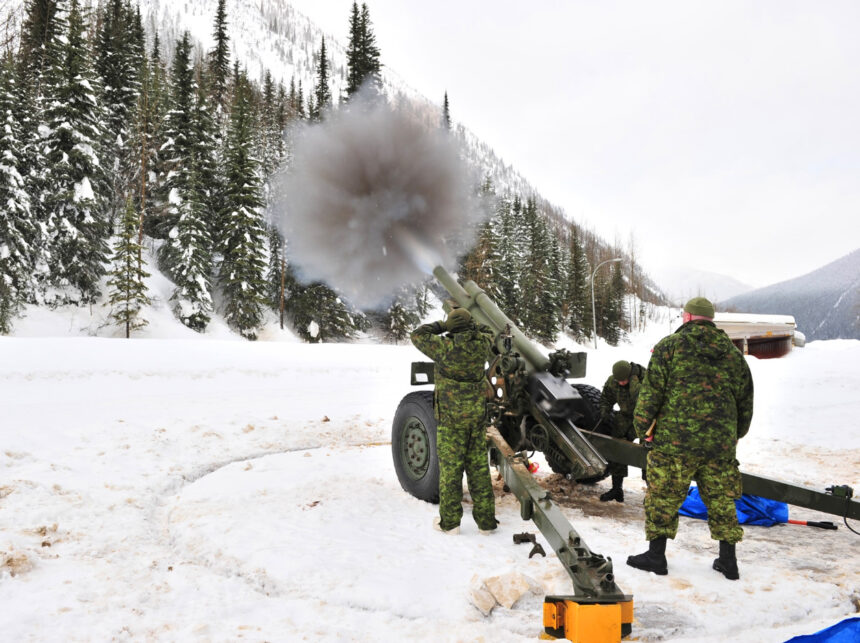
Parks Canada and the Canadian Armed Forces are scheduled to begin howitzers testing in the East Rogers area of Glacier National Park on November 4, 2026. The verification shoots are set to continue through November 7 to ensure the accuracy of avalanche control equipment.
This operation represents a critical phase for the Trans-Canada Highway, which carries roughly $65 million in daily commercial goods. The transition away from military-led avalanche mitigation threatens the economic stability of this vital corridor as the 65-year partnership nears its final conclusion.
The Mechanics of Verification Shoots
Verification shoots involve a specific set of procedures designed to calibrate the artillery used for avalanche control. According to reports from the region, these drills typically require firing between six and ten rounds from a single gun position. Source: Columbia Valley.
The primary goal is to confirm that the 105 mm howitzers remain accurate for the upcoming winter season. Operation PALACI currently manages 135 distinct avalanche paths and approximately 270 registered targets along the highway corridor.
Parks Canada emphasizes that these operations are strictly for the protection of infrastructure. The agency maintains that the drills do not render slopes safe for recreational backcountry users like skiers or snowboarders.
All individuals entering the backcountry must comply with the mandatory Winter Permit System. This regulatory framework is designed to manage human activity in areas where high-risk avalanche control is being conducted.
This program protects highway and railway traffic from natural avalanches. It does NOT make slopes safe for skiers or snowboarders.
Parks Canada

The Economic Stakes of Military Withdrawal
The end of the 65-year partnership between the Canadian Armed Forces and Parks Canada is scheduled for August 2027. This decision follows a broader military shift toward modernization and the divestment of legacy artillery systems.
The Rogers Pass corridor serves as a major economic artery for the country. With approximately $65 million in commercial goods moving through the pass daily, any disruption to avalanche control efficiency carries significant financial implications for Canadian markets.
The British Columbia Ministry of Transportation has expressed formal concerns regarding the transition. Officials worry that the removal of military-grade artillery could lead to longer highway closures during severe winter weather events.
The loss of the military’s specialized equipment and personnel creates an urgent need for new mitigation strategies. The province and federal agencies are currently assessing how to maintain the same level of safety without the current artillery support.
Alternatives for Future Avalanche Mitigation
As the military prepares to exit the program, several non-military alternatives are being evaluated to ensure the corridor remains open. These technologies aim to provide more precise and flexible mitigation than the traditional artillery model.
Remote exploders represent one of the primary alternatives currently under consideration. These systems allow for avalanche control to be triggered from a distance without the need for large-scale military artillery deployments.
Drones are also being explored for their potential to monitor snowpack conditions and deliver mitigation charges with high precision. These tools could offer a safer and more localized approach to managing avalanche hazards in complex terrain.
The transition to these technologies could ultimately reduce the reliance on external military support. Industry analysts suggest that replacing aging artillery with modern, automated systems may provide a more sustainable long-term solution for regional infrastructure resilience.
- Remote exploder systems provide automated, long-distance avalanche triggering capabilities.
- Unmanned aerial vehicles offer enhanced monitoring of snowpack stability in high-risk zones.
- Fixed-position gas exploders reduce the need for manual artillery firing in hazardous conditions.
- Advanced sensor networks improve real-time data collection for better decision-making.
Analysis of the Transition Strategy
The shift from military-led artillery to civilian-managed technology is a necessary evolution, though it presents significant logistical risks. The military’s current capacity to handle 270 targets is a massive operational burden that civilian agencies must now replicate.
Critics argue that the transition period is too short to fully implement and test new systems at the scale required for Rogers Pass. If the new technology fails to match the efficacy of the 105 mm howitzers, the economic impact on the supply chain could be severe.
Conversely, proponents of the shift argue that the current artillery model is outdated and increasingly difficult to maintain. Modernizing the system could lead to more frequent, smaller interventions rather than the large-scale, disruptive shoots currently required.
LaunchLen Media views this transition as a high-stakes test of infrastructure resilience. The success of the new program will depend on the speed of adoption and the reliability of the chosen technological alternatives.
Steps for Travelers and Stakeholders
For those traveling through the region, the immediate priority is staying informed about current closures. Checking DriveBC before departure is essential to avoid being caught in unexpected delays caused by the ongoing verification shoots.
Backcountry users must prioritize adherence to the Winter Permit System. Failure to comply with these regulations not only risks personal safety but also interferes with the critical work of avalanche control teams.
Commercial operators should monitor provincial updates regarding the 2027 transition. Understanding how the shift in avalanche control will affect highway closure protocols is vital for long-term logistics planning.
Stakeholders interested in the broader implications of this change should follow updates from the British Columbia Ministry of Transportation and Parks Canada’s Glacier National Park advisories. Public safety coverage remains a central theme as the province navigates this complex transition.
Frequently Asked Questions
Why are the howitzers being tested in November?
The verification shoots are conducted to ensure the 105 mm howitzers are firing accurately ahead of the winter season to protect the highway corridor.
Does the military testing make the slopes safe for skiing?
No. Parks Canada explicitly states that these operations do not make slopes safe for skiers or snowboarders and are strictly for highway and railway protection.
What happens to avalanche control after 2027?
The partnership with the Canadian Armed Forces will end in August 2027, forcing a transition to new, non-military avalanche mitigation technologies.