A Google Research team says a regular smartwatch can pick up signs of high blood pressure without an arm cuff. In a study of 196 adults, its AI model correctly flagged about two in three people who had hypertension, while rarely flagging people who did not. Source: Google Research.
- What Google's Study Found
- How a Watch Reads Blood Pressure Without a Cuff
- How It Compares With Cuffs and Apple Watch
- Why Undiagnosed Hypertension Matters
- What Canadian and US Wearers Can Use Today
- What an Alert Actually Tells You
- A Fair Counterpoint
- What Readers Can Do
- What Comes Next
- Frequently Asked Questions
- Sources and Further Reading
The research, titled “Opportunistically Detecting Signs of Hypertension on a Consumer Smartwatch”, was published online in Nature on November 5, 2026. It matters because high blood pressure usually causes no symptoms, and many adults who have it do not know.
Below is what the study did, how the numbers compare with a doctor’s cuff and with Apple’s existing alert, what is available in Canada and the US, and what the results do not show.
What Google's Study Found
The team tested a model it calls AI-PPG-ACC-HTN on 196 adults at five US sites. None had known cardiovascular disease and none were taking blood pressure medication. Each person’s true status was set by 24-hour ambulatory blood pressure monitoring, the clinical reference standard. Source: Google Research.
Ambulatory blood pressure monitoring is a test in which a person wears a cuff that inflates automatically through a full day and night. Unlike a single clinic reading, it captures how pressure behaves across a whole day, including during sleep.
65.8%
Hypertension cases flagged by the watch model (sensitivity)
90.0%
People without hypertension correctly cleared (specificity)
196
Adults in the US validation study
7 days
Everyday wear analysed per person
Over seven days of everyday wear, the watch-based model reached 65.8% sensitivity, 90.0% specificity and an 80.6% positive predictive value. An initial office blood pressure reading, held to the same 90.0% specificity, caught 55.3% of cases with a 77.8% positive predictive value. Source: medRxiv preprint.
Sensitivity is the share of people with a condition that a test correctly flags, while specificity is the share without it that the test correctly clears. For example, in plain terms, among people who truly had hypertension, the watch flagged about two in three. Among people who did not, it wrongly flagged about one in ten.
How a Watch Reads Blood Pressure Without a Cuff
The model does not measure a blood pressure number. It looks at the pulse waveform from the watch’s optical sensor (photoplethysmography, or PPG), plus accelerometer data and the wearer’s height, and estimates whether the overall pattern looks like hypertension. Source: Google Research.
Photoplethysmography is the light-based technique smartwatches commonly use to track heart rate: the sensor measures small changes in light as blood pulses through the wrist. Google’s model learns from the shape of that pulse signal over days, rather than from any single beat.
Google says the system was first pre-trained on 492,347 hours of unlabelled sensor data from 2,109 consenting participants. It then averages what it sees across several days before making a call, which is why it needs a week of wear rather than a single reading. Source: Google Research.
That design is the main difference from cuffless devices that try to output systolic and diastolic numbers. Those usually need periodic calibration against a cuff; this model does not, because it only answers a yes-or-no screening question.
- Input: optical pulse signal, motion data and height.
- Output: a flag for likely hypertension, not a reading in mmHg.
- Window: several days of normal wear, averaged together.
- Calibration: none required, according to Google.
How It Compares With Cuffs and Apple Watch
Google also ran a smaller confirmatory test on 48 participants whose first office reading was elevated. There, the watch reached 78.4% sensitivity and 90.9% specificity, against 67.6% and 63.6% for a repeat office reading. Multi-day home cuff monitoring did best on sensitivity at 89.2%, with 81.8% specificity. Source: Google Research.
Apple already offers hypertension notifications on Apple Watch. Apple says its feature reviews optical sensor data over 30-day periods, was validated in a clinical study of over 2,000 participants, and “will not detect all instances of hypertension”. Source: Apple Newsroom.
A University of Utah-led analysis in JAMA, published in February 2026, looked at Apple’s validation data. About 59% of people with undiagnosed hypertension would not receive an alert, and about 8% without it would get a false one. Source: EurekAlert! / JAMA.
The studies used different people, settings and time windows, so the figures below are a rough guide rather than a head-to-head result.
| Method | Cases caught (sensitivity) | Correctly cleared (specificity) | Basis |
|---|---|---|---|
| Google watch model, 7 days | 65.8% | 90.0% | 196-person study, five US sites |
| Single office cuff reading | 55.3% | 90.0% | Same 196-person study |
| Multi-day home cuff (confirmatory) | 89.2% | 81.8% | 48-person subset |
| Apple Watch notification | About 41% (about 59% missed) | About 92% (about 8% false alerts) | Apple validation data, as cited by JAMA authors |
Why Undiagnosed Hypertension Matters
Google cites estimates that hypertension affects over one billion people worldwide and that more than half of adults with it are unaware, with the gap widest among adults aged 18 to 44. Source: Google Research.
In the US, the CDC says 48.1% of adults, or 119.9 million people, have high blood pressure, and only 22.5% of them have it under control. It lists high blood pressure as a primary or contributing cause of 680,179 US deaths in 2024. Source: CDC.
48.1%
US adults with high blood pressure (CDC)
22.5%
Of those, share with it under control (CDC)
84%
Canadian adults with hypertension who knew it (Statistics Canada)
Canada’s picture is better but not solved. A Statistics Canada Health Reports analysis found about 24% of men and 23% of women aged 20 to 79 had hypertension, and that 84% of them were aware of it. Younger adults were less likely to be aware, treated or controlled. Source: Statistics Canada.
The threshold matters. Using the lower 130/80 mmHg cut-off instead of 140/90, the same Statistics Canada analysis put prevalence at 40% of men and 32% of women. Source: Statistics Canada.
The cost is large as well: the CDC estimates high blood pressure cost the US about $219 billion a year as of 2019. Source: CDC.
High blood pressure is what we call a silent killer.
Adam Bress, University of Utah, via EurekAlert!
What Canadian and US Wearers Can Use Today
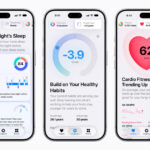
Google says the study is early feasibility research, but that its findings helped inform the blood pressure trends feature in Health Guardian, part of the Google Health app. Source: Google Research.
Blood pressure trends work on Pixel Watch 3, 4 and 5 without a subscription; Fitbit Edge and Fitbit Air need Google Health Premium. Google says the feature needs five continuous days of wear, sends a monthly summary, is not a prescreener for hypertension and should not be used to adjust medication. Source: Google Health Help Center.
Google states that Health Guardian availability varies by region, country and device, and it does not publish a country list on that page. Canadian Pixel Watch owners should check the app rather than assume the feature is live. Source: Google.
Google announced the Health Guardian features on September 24, 2026, saying the first trend reports would arrive in early October and that Fitbit Air support would follow later this year with a Premium subscription. Source: Google.
Apple’s hypertension notifications received a Health Canada medical device licence in September 2025. Apple says the feature is not intended for people under 22, during pregnancy, or for people already diagnosed with hypertension. Sources: MobileSyrup, Apple Newsroom.
What an Alert Actually Tells You
A screening flag changes the odds; it does not settle the question. The JAMA team led by the University of Utah modelled what an Apple Watch alert would mean for different US adults aged 22 and older who did not know they had high blood pressure. Source: EurekAlert! / JAMA.
For adults under 30, the estimated chance of having hypertension rose from 14% to 47% after an alert, and fell only to 10% without one. For adults 60 and older, it rose from 45% to 81% with an alert and was still 34% without one. Source: EurekAlert! / JAMA.
The same researchers estimated about 30 million Apple Watch users in the US. Senior author Adam Bress said clinicians should follow an alert with “a high-quality cuff-based office blood pressure measurement”. Source: EurekAlert! / JAMA.
Consider a 65-year-old whose watch stays silent: on these estimates, the odds of hypertension are still about one in three. The lesson carries over to Google’s model. A flag from either watch is a reason to measure properly, and a quiet watch is not a clean bill of health, especially for older adults whose baseline risk is already high.
A Fair Counterpoint
A fair counterpoint is that a 65.8% hit rate still means roughly one in three people with hypertension in the study would get no flag. Google itself describes the sensitivity as moderate and says the system is not meant to replace arm cuffs or give a standalone diagnosis. Source: Google Research.
The study is also small and company-backed. It was funded by Alphabet and most authors are Alphabet employees, with one co-author from Beth Israel Deaconess Medical Center and Harvard Medical School. Source: medRxiv preprint.
The uncertainty ranges overlap, too. The Nature abstract gives a 95% confidence interval of 54.0% to 76.3% for the watch’s sensitivity and 43.4% to 66.7% for the office reading. Because those ranges overlap, the watch’s lead over a single cuff check is not clear-cut. Source: Nature.
Google also notes that the 48-person confirmatory group is small, so those estimates are imprecise. Independent replication on larger and more varied groups, including Canadian patients, would make the results more convincing.
A false sense of reassurance is the main risk. A watch that stays quiet is not proof that blood pressure is normal.
What Readers Can Do
Treat any watch alert, or the absence of one, as a prompt rather than a verdict. The confirmation step in every study above is a proper cuff measurement.
- Get a cuff reading at a clinic or pharmacy at least as often as your doctor recommends, even if your watch shows nothing.
- If your watch flags possible hypertension, book a follow-up and ask about home or 24-hour monitoring.
- For home checks, use a validated upper-arm cuff and take readings over several days, as the studies did.
- Do not change or stop medication based on a wearable trend; Google and Apple both say their features are not for that.
- Adults under 45 should not assume they are too young to check: Google says the awareness gap is widest among adults aged 18 to 44.
What Comes Next
Google’s post on the study does not announce new features. Its blood pressure trends tool remains a general-wellness feature, and the company frames the research as a way to nudge at-risk people toward clinical assessment. Source: Google Research.
The broader direction is clear: both major watch platforms now try to spot hidden hypertension passively. The open questions are accuracy across different groups, how many flagged users actually see a doctor, and how health systems in Canada and the US handle a rise in wearable-driven visits.
In Ontario, that capacity question is already live: physicians have been pushing to replace fax-based referrals with digital intake to cut wait times, as Launch Len Media reported earlier this week. Hospitals are also stretched, with hallway care at record levels in the province, so any rise in screening-driven appointments would land on a busy system.
Frequently Asked Questions
Can a smartwatch measure my blood pressure?
Not in the way a cuff does. Google’s model and Apple’s feature estimate whether your pulse and motion patterns look like hypertension over days or weeks. Neither gives a medical-grade systolic and diastolic reading.
How accurate was Google’s smartwatch model?
In a 196-person US study, it flagged 65.8% of people who had hypertension and correctly cleared 90.0% of those who did not. Google calls this moderate sensitivity and says it is not a replacement for a cuff.
Is Google’s blood pressure trends feature available in Canada?
Google says Health Guardian availability varies by region, country and device and does not list countries on its help page. Pixel Watch owners in Canada should check the Google Health app directly.
Does the Apple Watch hypertension alert work in Canada?
Apple received a Health Canada medical device licence for the feature in September 2025. Apple says it is not intended for people under 22, during pregnancy, or for people already diagnosed with hypertension.
What should I do if my watch says I might have high blood pressure?
See a clinician and confirm with a proper cuff, ideally over several days at home or with 24-hour monitoring. Do not start or change medication based on the watch alone.
Sources and Further Reading
- Google Research: Detecting signs of hypertension using wearable sensors (Nov 5, 2026)
- Nature: Opportunistically Detecting Signs of Hypertension on a Consumer Smartwatch
- medRxiv preprint of the study (Di Achille et al.)
- CDC: High Blood Pressure Facts
- Statistics Canada Health Reports: Blood pressure and hypertension
- Google Health Help Center: Health Guardian features
- Google: Health Guardian features live in the Google Health app
- Apple Newsroom: Hypertension notifications on Apple Watch
- EurekAlert!: JAMA study on smartwatch hypertension notifications
- MobileSyrup: Health Canada approves Apple Watch hypertension notifications
This article was researched with AI assistance and checked against the sources listed above. Facts are current as of the publication date; follow the source links for updates.