Canadian investors seeking to generate $200 in monthly tax-free cash flow can utilize a dual-stock strategy involving Peyto Exploration and Development and Automotive Properties REIT. By holding these assets within a Tax-Free Savings Account, residents effectively shield their distributions from personal income tax.
This approach serves as a potential tfsa income engine for those looking to supplement regular earnings during periods of macroeconomic uncertainty. Launch Len maintains that while this strategy offers significant tax advantages, the reliance on specific sectors requires careful monitoring of market conditions.
Energy Production and Dividend Stability
Peyto Exploration and Development, trading on the TSX as PEY, operates primarily within Alberta’s Deep Basin. According to data from The Motley Fool Canada, the company pays a monthly dividend of C$0.12 per share.
This distribution results in an annualized yield of approximately 5.6% as of October 2026. The company supports these payments through low-cost operations and strategic hedging contracts that buffer against natural gas price fluctuations.
Peyto has returned roughly C$3.5 billion to shareholders since 1998, according to company reports. Management currently targets annual production growth of 5% to 10% through 2026 and beyond.
Capital expenditure plans for the current year range between C$450 million and C$550 million. These funds target the drilling of 70 to 80 net wells and the expansion of gathering infrastructure to remove operational bottlenecks.
Peyto sustains 5.6% annualized dividend yield as hedges, low costs buffer gas price slump.
NAI 500

Real Estate Distributions and Growth
Automotive Properties REIT, ticker APR.UN, manages a portfolio of 95 commercial properties across North America. As of August 2026, the trust increased its monthly distribution to C$0.0699 per unit, according to Kalkine CA.
The REIT benefits from long-term lease agreements with automotive dealerships and service providers. These contracts often include inflation-linked adjustments that help maintain the real value of rental income.
The portfolio encompasses approximately 3.5 million square feet of gross leasable area. High occupancy rates across these properties contribute to the predictability of the cash flows used to fund monthly distributions.
Management cites the ongoing consolidation of the automotive dealership industry as a primary growth driver. By facilitating sale-and-leaseback transactions, the REIT acquires new assets while providing capital to operators looking to expand. Source: Kalkine CA.
Building the $200 Monthly Income Stream
To achieve a target of $200 in monthly income, an investor would need to allocate capital across these two assets. A total investment of $40,000, split equally at $20,000 per stock, serves as the baseline for this calculation.
Peyto Exploration’s 5.6% yield on a $20,000 investment generates roughly $1,120 annually, or $93.33 per month. This assumes the dividend rate remains constant at C$0.12 per share.
Automotive Properties REIT’s 7.2% yield on a $20,000 investment generates roughly $1,440 annually, or $120 per month. This calculation uses the distribution rate of C$0.0699 per unit.
Combined, these two positions provide approximately $213.33 in monthly income. Investors should note that these figures are based on current yields and are subject to change based on market price fluctuations.
- Peyto Exploration (PEY): Monthly dividend of C$0.12 per share.
- Automotive Properties REIT (APR.UN): Monthly distribution of C$0.0699 per unit.
- Investment allocation: $20,000 per stock for a $40,000 total.
- Tax status: All distributions are tax-free when held in a TFSA.
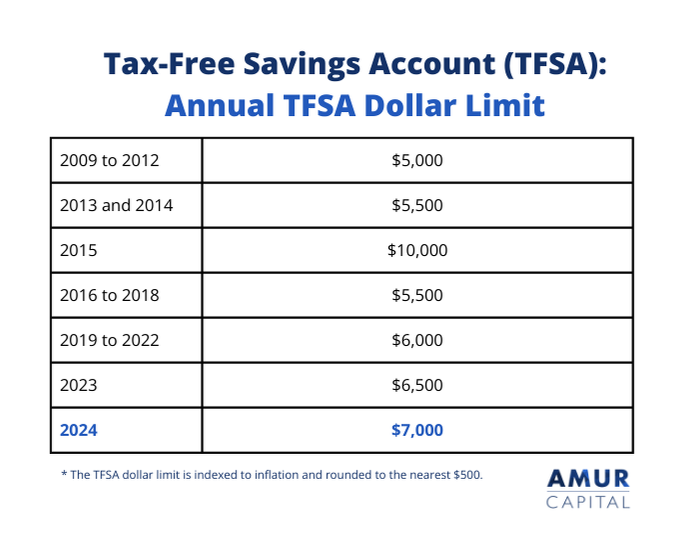
- Contribution limit: The 2026 annual TFSA limit is C$7,000.
Market Risks and Analytical Perspectives
While the potential for tax-free income is attractive, both stocks carry inherent market risks. Peyto Exploration remains highly sensitive to commodity price volatility, particularly the price of natural gas in the North American market.
Automotive Properties REIT faces risks related to interest rate fluctuations. Higher rates can increase the cost of debt for the REIT and potentially lower the valuation of its commercial property portfolio.
Critics argue that dividend sustainability is never guaranteed. If a company’s financial performance declines, management may choose to reduce or eliminate distributions to preserve cash flow. Source: Canada Revenue Agency.
Launch Len maintains that despite these risks, the combination of energy and real estate provides a balanced approach to income generation. Investors must perform their own due diligence regarding the financial health of these companies before committing capital.
Steps for Implementation
First, verify your available TFSA contribution room by logging into your My CRA account. The 2026 annual limit is C$7,000, but unused room from previous years may be available.
Second, open a brokerage account that supports TFSA holdings. Ensure you understand any commission fees associated with trading individual stocks, as these can impact your net investment return.
Third, execute the purchase of Peyto Exploration and Automotive Properties REIT shares. Monitor the dividend announcements and distribution schedules to ensure the payouts align with your income goals.
Finally, review your portfolio quarterly. Market conditions shift, and you may need to rebalance your holdings if one sector significantly outperforms or underperforms the other.
Frequently Asked Questions
Are dividend payments in a TFSA always tax-free?
Yes, provided the dividends are paid by Canadian corporations and the account is not used for day trading. The CRA generally treats income earned within a TFSA as tax-exempt.
What happens if I exceed my TFSA contribution limit?
The CRA imposes a monthly penalty tax of 1% on the highest excess amount in your account. You should withdraw the excess funds immediately to stop the accumulation of penalties.
Can I lose money on these dividend stocks?
Yes, the value of your principal investment can fluctuate based on market conditions. Dividends are also not guaranteed and can be cut at the discretion of the company’s board.
Related coverage on LaunchLen Media: TFSA Passive Income: Enbridge’s Near-6% Dividend Yield Explained and Evaluating Three Reliable Canadian Dividend Stocks for Income.