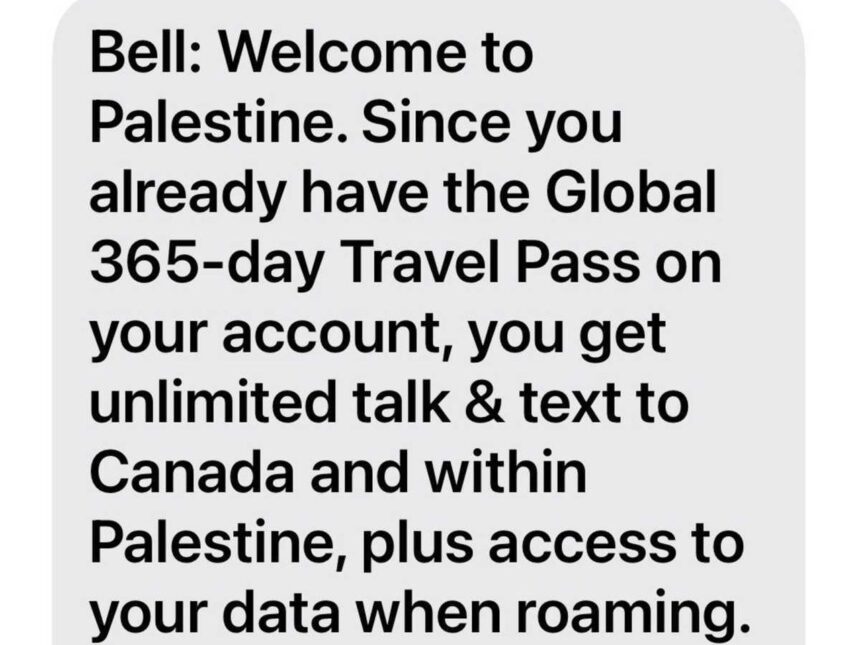
A Canadian traveler visiting the Yad Vashem Holocaust memorial in Jerusalem received an automated ‘Welcome to Palestine’ text message from Bell Canada on October 29, 2026. The incident has drawn sharp criticism regarding the company’s oversight of its international messaging services.
This event highlights the risks inherent in relying on third-party vendors for critical customer communications. Launch Len maintains that such errors demonstrate a significant lack of accountability in how major telecommunications firms handle sensitive geopolitical data.
The incident at Yad Vashem
The traveler, identified as Charles, was visiting the Holocaust memorial in Jerusalem when the notification appeared on his mobile device. He described the experience as nauseating given the site’s historical significance and the current political climate. Source: National Post.
Charles noted that he felt the message was particularly insensitive given the location of the memorial. He expressed shock that a Canadian company would send such a notification while he was physically located in Israel.
Bell Canada confirmed that the message was part of its standard automated roaming notification process. The company stated that these messages are triggered when a device connects to a foreign network partner.
The incident occurred just over a year after Canada officially recognized the State of Palestine on September 21, 2025. This recognition remains a point of intense debate within Canadian political and social circles.

Mechanics of the roaming notification error
Roaming notifications are managed by external platforms that bridge the gap between domestic carriers and international network partners. These systems use automated handshakes to determine which country or region a device has entered.
When a phone connects to a tower, the local network reports its location data to the roaming partner’s database. If the database contains outdated or politically contested geographic definitions, the automated message may reflect those errors.
Bell Canada relies on these third-party vendors to manage the high volume of international traffic. The company does not manually review every automated message sent to millions of traveling customers.
This reliance on external infrastructure creates a disconnect between the company’s brand and the actual content delivered to users. The complexity of these network handshakes makes it difficult to ensure total accuracy in every instance.
Options for managing roaming settings
Travelers who wish to avoid receiving automated roaming notifications or unexpected data charges have several options. These steps can help maintain control over your device’s network behavior while abroad.
You can manually select your preferred network provider in your phone’s cellular settings. This prevents the device from automatically switching to a partner network that might trigger an incorrect welcome message.
Disabling roaming notifications through your carrier’s app or website is another potential solution. While this does not always stop the network handshake, it can limit the frequency of marketing or informational texts.
Using a local eSIM or a dedicated travel SIM card can bypass your home carrier’s roaming infrastructure entirely. This approach ensures that your data and messaging services are provided by a local entity rather than a foreign roaming partner.
- Manually select your network provider in settings to avoid unwanted roaming handshakes.
- Install a local eSIM to bypass your home carrier’s international messaging system.
- Contact your provider’s customer service to opt out of non-essential roaming alerts.
- Use Wi-Fi calling to maintain connectivity without triggering cellular roaming protocols.
Analysis of corporate accountability
The core issue is whether a company like Bell Canada should be held responsible for the output of its third-party vendors. Launch Len argues that outsourcing critical communications does not absolve a corporation of its duty to ensure accuracy and sensitivity.
Critics point out that Bell Canada has faced previous scrutiny regarding its internal policies on the use of the term ‘Palestine’ in its media coverage. This history makes the current roaming error appear less like a random glitch and more like a failure of corporate oversight.
A fair counterpoint is that global telecommunications infrastructure is immensely complex. Occasional errors are inevitable when managing millions of network handshakes across hundreds of international jurisdictions.
Proponents of this view argue that expecting perfect geographic accuracy from automated systems is unrealistic. They suggest that the focus should be on how quickly the company addresses and corrects these errors once reported.
Welcome to Palestine, followed by information about his account’s travel plan.
The text message received by the traveler as reported by the National Post.
Next steps for affected travelers
If you receive an inaccurate or offensive roaming notification, you should document the incident immediately. Take a screenshot of the message, including the date and the network name displayed on your phone.
Contact your service provider’s support team to file a formal complaint. Providing specific details about your location and the time of the message helps the company investigate the vendor’s database.
If you remain dissatisfied with the response, you can escalate the issue to the Commission for Complaints for Telecom-television Services. This body provides an independent mechanism for resolving disputes between consumers and telecommunications companies.
Finally, share your experience with other travelers to raise awareness about potential network issues. Public feedback is often the most effective way to pressure companies into improving their vendor management and communication standards.
Frequently Asked Questions
Why did the traveler receive a ‘Welcome to Palestine’ text in Israel?
The message was an automated roaming notification triggered by the traveler’s device connecting to a local network partner. Bell Canada stated that these messages are managed by an external vendor’s platform.
Is Bell Canada responsible for the content of these messages?
While Bell Canada manages the service, the specific content is often generated by third-party vendor platforms. The company faces criticism for the lack of oversight regarding the accuracy of these automated messages.
Can I stop receiving these roaming notifications?
You can manually select your network provider in your phone settings or use a local eSIM to avoid your home carrier’s roaming protocols. Contacting your carrier to opt out of informational alerts may also be an option.