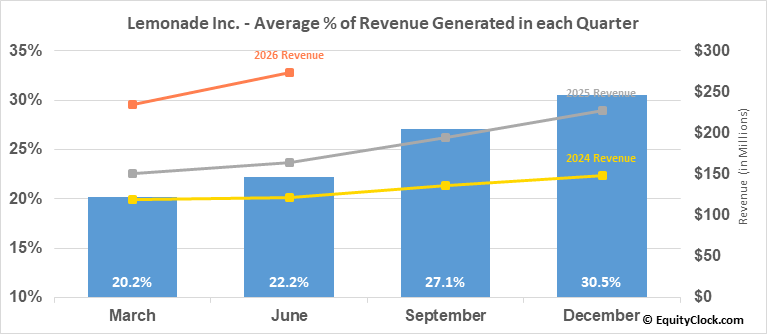
Lemonade reported a 79% increase in revenue to $294.4 million for the second quarter of 2026, according to company filings. Despite this rapid expansion, the stock hit a 52-week low of $42.60 in late October 2026.
This divergence between top-line performance and market valuation highlights the skepticism surrounding the company’s path to profitability. Investors are currently weighing the potential of the firm’s AI-driven model against persistent quarterly net losses.
The Financial Reality of Rapid Scaling
The second quarter of 2026 saw Lemonade generate $294.4 million in revenue, a significant jump from the same period in 2025. This growth is supported by an in-force premium of $1.43 billion, representing a 32% year-over-year increase. Source: Reinsurance News.
However, the company reported a net loss of $43.4 million for the same quarter. This figure underscores the high costs associated with acquiring customers and building out the technological infrastructure required for automated claims processing.
Market participants have reacted to these losses by pushing the stock price to a 52-week low of $42.60. The market appears to be prioritizing immediate cash flow over the long-term potential of the company’s AI-driven platform.
Management remains optimistic about the trajectory of the business. They have reaffirmed their guidance to achieve positive adjusted EBITDA by the fourth quarter of 2026, signaling a shift toward operational efficiency.

Mechanics of the Loss Ratio Improvement
A critical metric for any insurer is the gross loss ratio, which measures the percentage of premiums paid out in claims. Lemonade reported a ratio of 62% in Q1 2026, a notable improvement from the 83% recorded two years earlier.
This reduction suggests that the company’s proprietary AI algorithms are becoming more effective at pricing risk. By accurately assessing individual risk profiles, the platform reduces the likelihood of paying out excessive claims.
The company currently serves 3.3 million customers. Expanding this base is vital, as the firm aims to leverage its existing user data to offer a wider array of insurance products to the same household.
The success of this strategy depends on the company’s ability to retain customers while keeping acquisition costs low. If the loss ratio continues to decline, the path to profitability becomes significantly more achievable.
Strategic Options for Market Exposure
Investors looking to gain exposure to the insurtech sector have several avenues to consider. Each option carries distinct risks and potential rewards based on the current market environment.
The following list outlines the primary ways to approach the sector, focusing on the specific dynamics of the current insurance landscape.
Management at Lemonade continues to emphasize the importance of cross-selling insurance products to drive revenue without increasing customer acquisition costs. This approach is central to their long-term financial strategy.
For those concerned about the volatility of pure-play insurtech stocks, traditional insurance companies offer a more stable, albeit slower-growing, alternative. These firms often have established dividend histories and lower price-to-earnings multiples.
- Direct investment in Lemonade (NYSE: LMND) for those betting on long-term AI-driven disruption.
- Diversified insurance ETFs that provide exposure to both legacy carriers and emerging insurtech firms.
- Traditional insurance stocks with strong balance sheets and consistent dividend payouts for risk-averse portfolios.
- Options strategies that allow investors to hedge against further downside volatility in high-growth tech stocks.
Analyzing the Skepticism
The primary argument against Lemonade is its persistent net loss and the reliance on aggressive growth to offset these costs. Critics argue that the company’s home insurance business has shown signs of decline, which could threaten the overall revenue growth narrative. Source: MarketBeat.
Furthermore, the execution risk associated with cross-selling initiatives is high. If the company fails to convert its existing 3.3 million customers into multi-product users, the path to profitability could be delayed well beyond the fourth quarter of 2026.
Despite these concerns, the company’s ability to scale revenue by 79% in a single year is difficult to ignore. The AI-driven efficiency gains are real, as evidenced by the 21 percentage point improvement in the gross loss ratio.
Launch Len’s view is that the market is currently undervaluing the long-term efficiency gains of the platform. While the net losses are a valid concern, the trend toward a lower loss ratio suggests that the business model is fundamentally sound.
Management has reaffirmed its guidance to achieve positive adjusted EBITDA by the fourth quarter of 2026.
Lemonade Investor Relations
Next Steps for Investors
If you are considering an investment in Lemonade, you should monitor the quarterly loss ratio closely. A consistent decline in this metric is the strongest indicator that the company is moving toward sustainable profitability.
You should also track the company’s progress on its Q4 2026 EBITDA goal. If management misses this target, it may indicate that the underlying business model requires more capital than previously anticipated.
Diversification remains essential when investing in high-growth, loss-making companies. Ensure that your position in Lemonade does not exceed your risk tolerance for speculative assets.
Finally, keep an eye on the broader insurance market trends. Changes in regulatory environments or catastrophic event frequencies can impact all insurers regardless of their technological capabilities.
Related on LaunchLen Media: Why Canadian neobanks are capturing younger customers | Sun Life class action settlement approved
Frequently Asked Questions
Why is Lemonade’s stock price down despite high revenue growth?
Investors are concerned about the company’s persistent net losses and the execution risk of its cross-selling strategy. The market is currently prioritizing immediate profitability over rapid top-line expansion.
What is the significance of the gross loss ratio?
The gross loss ratio measures the percentage of premiums paid out as claims. A lower ratio indicates that the company is pricing risk more effectively and becoming more operationally efficient.
When does management expect to be profitable?
Management has set a target to achieve positive adjusted EBITDA by the fourth quarter of 2026.