Bank of Canada Governor Tiff Macklem told members of Parliament on November 3, 2026, that federal fiscal policy is not currently working against the central bank’s monetary objectives. The testimony comes just days after the institution raised its benchmark interest rate to 2.5 percent.
This assurance from the Governor seeks to calm concerns that government spending could be fueling inflation, a key issue for the Bank of Canada and its mandate. Whether these two arms of government can remain in sync remains a central question for investors navigating the current economic environment.
paragraphThe November Testimony and Policy Stance
headingDuring a House of Commons finance committee appearance on November 3, 2026, Governor Tiff Macklem addressed the relationship between federal spending and monetary tightening. He stated clearly that he does not view current fiscal policy as an obstacle to the Bank of Canada’s inflation-fighting mandate. Source: The Canadian Press.
paragraphThe Governor clarified that he only intervenes or critiques fiscal policy if government spending reaches levels that are clearly unsustainable or directly undermine the bank’s efforts to stabilize prices. According to his assessment, current federal actions have not crossed that threshold.
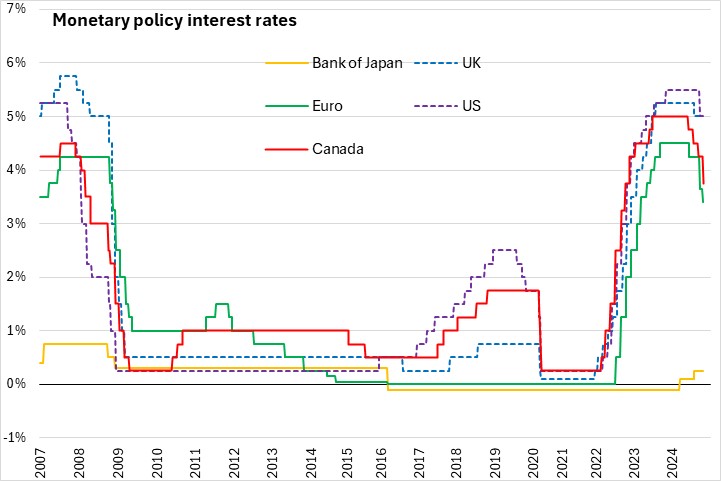
paragraphThis testimony followed the central bank’s decision on October 28, 2026, to lift the benchmark interest rate by 25 basis points. This move brought the policy rate to 2.5 percent, signaling a continued commitment to cooling the economy.
paragraphThe committee session featured pointed questions from opposition members. Conservative finance critic Michael Chong specifically pressed the Governor on whether federal affordability programs were complicating the bank’s work.
paragraph pullquote
Contextualizing the Shift in Rhetoric
headingThe Governor’s current stance represents a notable shift from his previous warnings. In 2023, Macklem explicitly cautioned that government spending was adding to demand faster than the economy could supply goods and services.
paragraphAt that time, he described the fiscal environment as not helpful for controlling inflation. The contrast between his 2023 comments and his November 2026 testimony highlights the evolving nature of the bank of canada rate hike cycle.
paragraphAnalysts suggest that the Governor is attempting to de-escalate political tensions. By publicly validating that fiscal policy is not at odds with monetary policy, he preserves the appearance of institutional cooperation.
paragraphHowever, the mechanics of this alignment remain complex. When the central bank raises rates to reduce demand, any concurrent government stimulus can theoretically offset those efforts, leading to a tug-of-war between the two institutions.
paragraphKey Factors Influencing Policy Alignment
headingSeveral variables influence the relationship between fiscal and monetary authorities. The following factors are critical for understanding how the Bank of Canada balances its independence against government fiscal priorities:
paragraphThe following list outlines the primary considerations for observers monitoring this economic dynamic:
paragraph- Inflationary pressure: The primary indicator for the Bank of Canada when assessing if fiscal policy is too loose.
- Output gap: The difference between actual economic output and potential output, which dictates how much stimulus the economy can absorb.
- Interest rate sensitivity: How quickly households and businesses react to the 2.5 percent benchmark rate.
- Fiscal sustainability: The long-term ability of the government to fund its programs without triggering excessive borrowing costs.
- Institutional independence: The degree to which the central bank can maintain its inflation-targeting mandate without political interference.
Analysis of the Governor’s Balancing Act
headingLaunch Len Media observes that Macklem’s testimony serves as a necessary cooling mechanism for political friction. By declaring the policies aligned, the Governor avoids a direct confrontation with the government that could undermine public trust in the central bank. Source: Bank of Canada.
paragraphCritics argue that this stance blurs the lines of independence. If the Governor is forced to defend government spending to maintain political harmony, some observers fear the bank’s credibility as a neutral arbiter of inflation could suffer.
paragraphDespite these concerns, the Governor’s view holds weight because he retains the ultimate tool of control: the interest rate. As long as the bank remains willing to adjust rates regardless of fiscal policy, its core mandate remains intact.
paragraphThe fair counterpoint is that the central bank cannot ignore fiscal reality. If spending continues to rise, the bank may eventually be forced to raise rates higher than would otherwise be necessary, which would be a clear sign of policy conflict.
paragraphWhat Readers Can Do to Prepare
headingInvestors and homeowners should prepare for a period of sustained interest rate volatility. With the rate now at 2.5 percent, it is essential to review your debt obligations and savings strategies.
paragraphFirst, evaluate your current mortgage structure. If you are on a variable rate, ensure your budget can accommodate potential future increases if the bank of canada policy shifts toward further tightening.
paragraphSecond, consider locking in rates for short-term savings vehicles like GICs if you want to protect your capital from further rate fluctuations. This provides a hedge against the uncertainty of the current economic cycle.
paragraphFinally, monitor future committee testimonies for any change in the Governor’s tone. A shift from ‘not at odds’ to a more critical stance would be a significant signal that the economic environment is deteriorating.
paragraphFrequently Asked Questions
headingIs the Bank of Canada currently in conflict with the federal government?
Governor Tiff Macklem stated on November 3, 2026, that he does not believe current fiscal policy is at odds with the bank’s monetary goals.
paragraphWhat is the current benchmark interest rate?
The Bank of Canada raised the benchmark interest rate by 25 basis points to 2.5 percent on October 28, 2026.
paragraphWhy did the Governor previously criticize government spending?
In 2023, Macklem warned that government spending was increasing demand faster than supply, which he described as not helpful for controlling inflation at that time.
paragraph