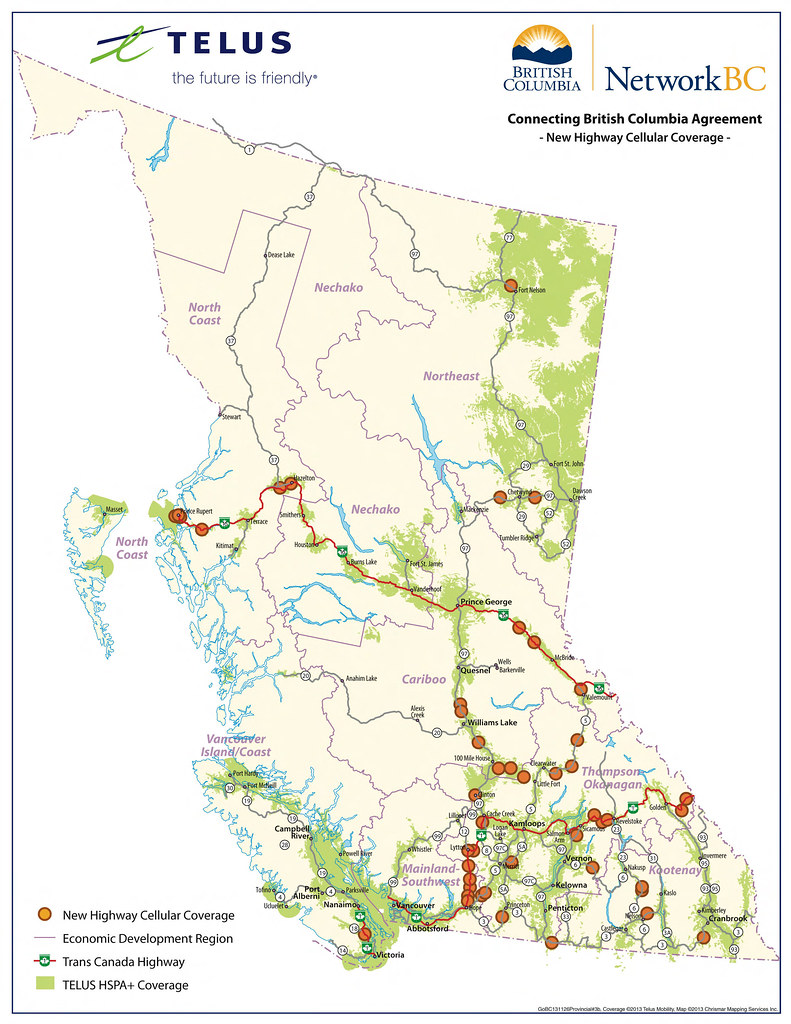
A shuttle bus crash on November 4, 2026, near Mackenzie, B.C., injured 20 people and exposed critical gaps in provincial emergency communications. First responders reported that the crash site lacked any cell service and had poor satellite coverage, which significantly hindered coordination.
This incident serves as a stark reminder that reliable connectivity is a public safety necessity rather than a luxury for remote regions. Launch Len Media argues that the provincial government must prioritize mandatory infrastructure investment to prevent future communication failures during mass-casualty events.
The Reality of Remote Communication Failures
The crash occurred on Highway 39, a route known for its isolation and lack of digital connectivity. According to RCMP Cpl. Jennifer Cooper, the absence of cell service and the weakness of satellite signals made the initial response chaotic. Source: The Globe and Mail.
First responders faced substantial difficulties with radio communications while attempting to manage the scene. This delay in information flow is a recurring problem for those operating in the northern reaches of the province.
Kiel Giddens, the member of the legislature for Prince George-Mackenzie, stated that these connectivity issues are a standard part of life for northern residents. He emphasized that while the medical response was effective, the communication hurdles remain a significant concern.
Ian Tait, a representative for the Ambulance Paramedics of BC, confirmed that his members frequently struggle with radio and cellular reception. He noted that many paramedics still rely on analog radio systems that are prone to failure in remote, rugged terrain.
It’s something that northerners deal with on a regular basis and something that I’m certainly familiar with.
Kiel Giddens, member of the legislature for Prince George-Mackenzie

The Scale of the Infrastructure Gap
The province has said about 38 per cent of B.C.’s highways lack cell service. The mayors of Prince George and Mackenzie have called for better coverage in the north after the crash.
The primary barrier to closing these gaps is not just the cost of equipment, but access to reliable electrical power, which the province cites as a key obstacle to expanding coverage.
Without a stable power source, installing cellular infrastructure requires expensive off-grid solutions, such as solar arrays or battery backups. These technologies increase the cost of deployment significantly, making rural coverage a complex financial challenge.
The provincial government has acknowledged these disparities in its connectivity reports. Despite these acknowledgments, progress remains slow, leaving vast stretches of highway vulnerable to communication blackouts during accidents. Source: Prince George Citizen.
Strategic Options for Connectivity Expansion
Addressing the lack of cell service requires a multi-pronged approach that balances cost with public safety. The following options represent the current strategies being debated by policymakers and industry experts to improve emergency infrastructure resilience.
Another option involves the integration of satellite infrastructure to fill the gaps where terrestrial towers are not feasible. While satellite technology has improved, it currently lacks the bandwidth and reliability of traditional cellular networks for mass-casualty coordination.
Expanding the power grid to support cell tower infrastructure is a long-term, high-cost solution. This approach requires coordination between utility companies and telecommunications providers to ensure that remote towers remain operational during severe weather events.
Public-private partnerships remain a critical tool for accelerating deployment. By incentivizing telecommunications firms to build in low-density areas, the government can shift some of the financial burden away from taxpayers while ensuring faster rollout timelines.
- Deployment of satellite-based emergency communication systems to supplement terrestrial gaps.
- Targeted expansion of electrical power grids to remote highway corridors to support tower operations.
- Mandatory infrastructure requirements for commercial transport routes to ensure driver safety.
- Increased funding for redundant analog and digital radio systems for first responders.
The Debate Over Mandatory Investment
Launch Len Media maintains that the B.C. government must treat cellular coverage as an essential utility rather than a luxury. The Mackenzie crash proves that when seconds count, the lack of communication can turn a manageable accident into a logistical crisis.
Critics of this view argue that the province’s challenging topography makes universal coverage an impossible goal. They point to the extreme costs associated with providing service to sparsely populated, mountainous regions that lack basic power infrastructure.
However, the cost of inaction is measured in human safety. Relying on outdated analog radio systems in an era of advanced digital communication is a policy failure that disproportionately affects those living and traveling in northern British Columbia.
With a large share of the provincial highway network still lacking cell service, a more aggressive funding model appears to be required.
What Travelers and Residents Can Do
If you are traveling through remote areas of British Columbia, you must prepare for the possibility of losing all cell service. Carry a satellite-based emergency beacon or a satellite messenger device, which can send distress signals when traditional networks are unavailable.
Ensure that your vehicle is equipped with a basic emergency kit that includes extra water, blankets, and a first aid kit. In areas without cell tower infrastructure, you may be waiting for help for several hours, making self-sufficiency vital.
Download offline maps and emergency contact information before you leave urban centers. Relying on real-time data or cloud-based navigation can leave you stranded if your signal drops unexpectedly.
Advocate for better connectivity by contacting your local provincial representative. Expressing concern about the lack of cell service on specific highway corridors helps keep the issue on the legislative agenda for future infrastructure planning.
Frequently Asked Questions
How many kilometres of B.C. highways lack cellular coverage?
About 38 per cent of British Columbia’s highways lack cell service, according to the province.
Why is it difficult to install cell towers in remote parts of B.C.?
The primary challenges are the rugged, mountainous topography and the lack of existing electrical power infrastructure to operate the towers.
What is the provincial government doing to address these gaps?
The government has committed $75 million to fund projects aimed at expanding cellular service to an additional 550 kilometres of highway by 2027.