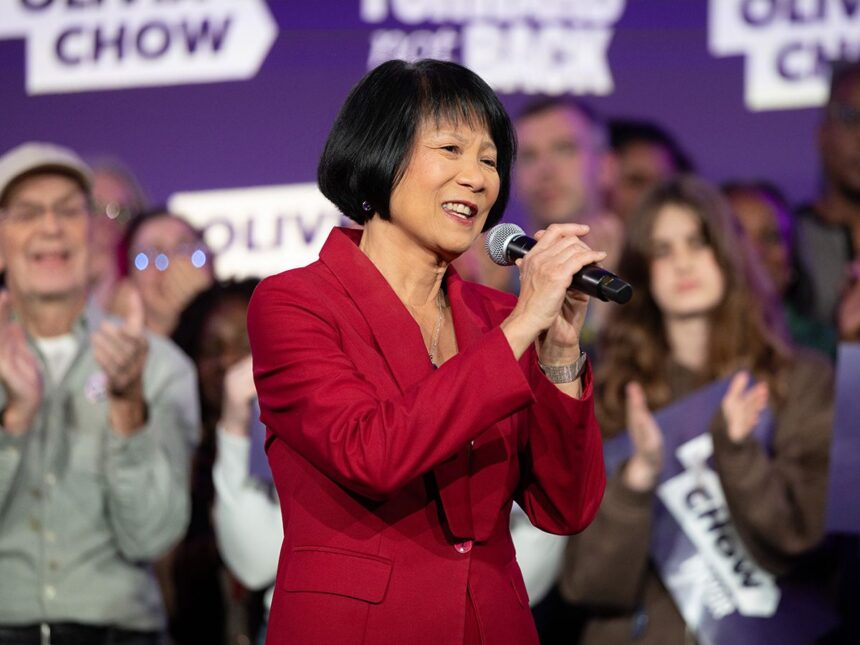
Incumbent Toronto mayor Olivia Chow won re-election on Monday night, defeating city councillor Brad Bradford by more than 10 percentage points. Chow secured 532,201 votes, representing 54.16% of the total ballots cast in the 2026 municipal election. Northern Ontario 2026 Election Results: New Mayors in North Bay and Timmins
This decisive victory provides Chow with a full four-year term and a clear mandate to continue her progressive, affordability-focused agenda. Launch Len views this result as a strong endorsement of her platform, though the significant support for Bradford suggests a substantial portion of the electorate remains dissatisfied with the city’s current direction.
The outcome concludes a high-stakes campaign that saw voter turnout climb to 45.84%. This surge in participation underscores the intensity of the debate over Toronto’s future, including concerns regarding transit, housing, and public safety.
The results of the 2026 municipal election
The 2026 Toronto mayoral election concluded with Olivia Chow securing 54.16% of the vote. According to official tallies, she received 532,201 votes, which set a new record for the highest number of votes ever cast for a mayoral candidate in the city. Canada Ends Excluded-Family-Member Public Policy on September 10, 2026
Challenger Brad Bradford finished with 404,013 votes, accounting for 41.11% of the total. While he did not win, his performance represented a massive improvement from his 2023 campaign, where he received approximately one percent of the vote. Source: Yahoo News Canada.
The election was part of a broader set of civic contests across Ontario. In Mississauga, Alvin Tedjo achieved a surprise victory in a tight race, while in Hamilton, political newcomer Keanin Loomis defeated incumbent Andrea Horwath.
Voter turnout for the Toronto election reached 45.84%. This figure represents a notable increase from previous municipal elections, suggesting that the competitive nature of the race successfully mobilized the electorate.
Bradford conceded the race on election night. He acknowledged Chow as the undisputed winner and expressed his hope that she would succeed in her second term.
Now that the election is over, the work of coming together begins. I am the mayor of every neighbourhood, every community, every person, every person who calls Toronto home, whatever your background, whatever you believe, whoever you love.
Olivia Chow, acceptance speech, October 2026

The mechanics of the campaign platforms
Olivia Chow’s campaign focused heavily on affordability and social infrastructure. Her platform included a commitment to freeze TTC fares and expand school nutrition programs to support low-income families. IRCC Walks Back Current Employee Restriction on Reciprocal Employment Work Permits
Chow leveraged the strategic advantage of incumbency throughout the race. She maintained a consistent message regarding her record and directed significant debate time toward challenging Bradford’s proposed policy changes.
Bradford ran on a platform centered on crime, congestion, and the cost of living. His campaign slogan, ‘Toronto is not broken, but it is stuck,’ was designed to address public frustration with encampments, transit safety, and traffic.
One of the most contentious points of the campaign was Bradford’s proposal to turn Toronto Water into a corporate utility. Chow argued that this move would lead to privatization, while Bradford maintained it was a necessary step for fiscal reform.
The race also saw external political influences. Premier Doug Ford’s comments regarding his relationship with Chow created a brief news cycle, which Bradford’s campaign used to argue that Chow was too close to the provincial government.
Top contenders and their policy alternatives
The 2026 election presented voters with two distinct visions for the city. Below are the primary platforms that defined the contest between the two leading candidates. Alberta immigration control referendum signals provincial mandate
Olivia Chow (Incumbent): Focused on social equity and public services. Her key initiatives included maintaining current TTC fare structures and expanding support for school-aged children through nutrition programs.
Brad Bradford (Challenger): Focused on structural reform and fiscal efficiency. His platform included separating the city’s operating and capital budgets and exploring the corporatization of public utilities to manage costs.
The contrast between these two candidates allowed voters to choose between a continuation of the current progressive administration or a shift toward a more conservative, business-oriented management style.
While Chow’s platform resonated with the majority, Bradford’s ability to secure over 40% of the vote demonstrates that his policy alternatives remain a significant force in Toronto politics. Source: Wikipedia.
- Olivia Chow: Prioritized social affordability and public transit accessibility.
- Brad Bradford: Advocated for fiscal restructuring and utility corporatization.
- Transit Policy: Chow supported fare freezes; Bradford focused on congestion management.
- Budgetary Strategy: Bradford proposed separating capital and operating budgets.
- Public Safety: Bradford emphasized addressing encampments and transit-related violence.
Analysis of the mayoral mandate
Launch Len argues that Chow’s victory reflects a clear public mandate for her progressive agenda. By securing over 54% of the vote, she has demonstrated that her focus on affordability aligns with the priorities of the majority of Toronto residents. Trump’s Rhetoric on Canada Is a Strategic Distraction
A fair counterpoint is that Bradford’s 41.11% vote share is the highest for a runner-up in recent Toronto history. This indicates that a substantial portion of the population is dissatisfied with the city’s current direction and desires a more aggressive approach to fiscal and safety issues.
The strength of the opposition suggests that the city remains ideologically divided. While Chow has won the seat, she will likely face continued pressure from the council and the public to address the concerns raised by the 400,000 voters who supported her challenger.
Despite the polarization, the high voter turnout suggests that the democratic process in Toronto is healthy. The engagement of the electorate ensures that the mayor will be held accountable for the promises made during the campaign.
Ultimately, the election confirms that while Toronto voters value social support, they are also closely watching how the city manages its growth and infrastructure. The next four years will be a test of whether Chow can bridge this divide.
What voters can do next
Residents should monitor the upcoming city council sessions to see how the mayor’s platform is translated into policy. Tracking council votes on transit and budget issues will provide insight into the administration’s priorities. Lorne Gunter: Despite Carney’s claims, Canada’s immigration numbers largely unchanged
You can participate in local community consultations regarding the proposed changes to city utilities and transit services. These meetings are the primary venue for providing feedback on municipal projects.
Engage with your local city councillor to express your views on the issues raised during the election. Councillors play a critical role in shaping the legislative agenda and can influence the mayor’s policy implementation.
Stay informed by reviewing the city’s annual budget reports. Understanding how your tax dollars are allocated is the most effective way to hold the municipal government accountable for its promises.
Frequently Asked Questions
What was the final vote count for the Toronto mayoral election?
Olivia Chow received 532,201 votes, while Brad Bradford received 404,013 votes.
How did voter turnout compare to previous years?
Voter turnout reached 45.84%, which was a notable increase compared to previous municipal election cycles.
What is the duration of the mayor’s term?
The mayor serves a full four-year term following the 2026 municipal election.