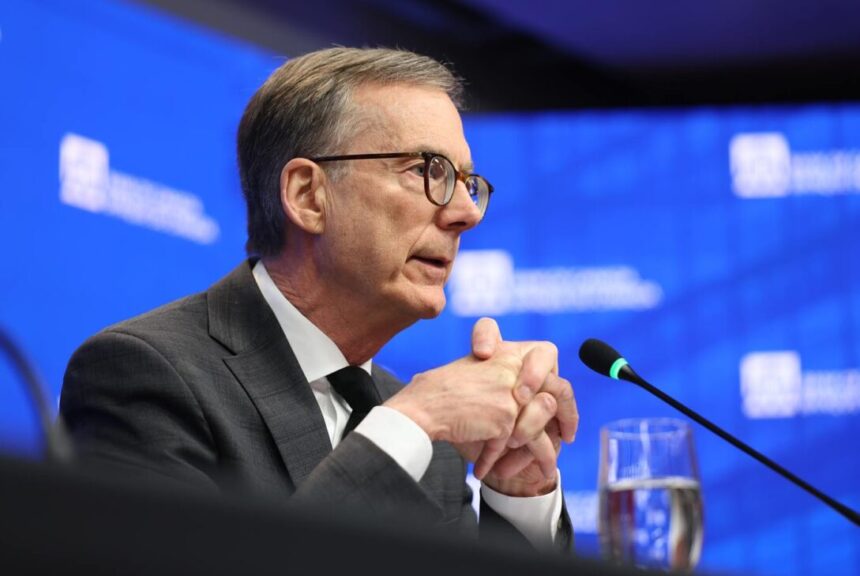
The Bank of Canada faces a pivotal decision this week as it considers raising the overnight interest rate from its current level of 2.25%. Economists remain sharply divided on whether to prioritize inflation control or support a fragile domestic economy. Canadian dollar steadies after seven-day rally
This policy choice will dictate the near-term trajectory for Canadian borrowers and investors. Launch Len maintains that the central bank will likely prioritize preemptive inflation management over current signs of economic weakness to preserve its credibility.
The stakes are high as the country navigates a complex environment of rising energy costs and cooling employment growth. Market participants are bracing for a potential shift in the bank’s risk tolerance regarding price stability.
The path to a potential rate hike
The Bank of Canada has maintained an overnight rate of 2.25% since October 2025. This period of stability is now under intense scrutiny as officials prepare for the upcoming announcement. Bank of Canada says aging population
Annual inflation climbed to 3.1% in September 2026, according to Statistics Canada data. This increase is largely attributed to energy prices rather than broad-based consumer demand. Source: Bank of Canada.
A Reuters poll conducted between October 21 and October 23, 2026, revealed that 56% of the 34 surveyed economists expect a 25-basis-point hike. This represents a significant shift in market sentiment compared to earlier in the year.
The central bank must now weigh these inflation figures against the reality of a cooling economy. The decision will be announced on October 28, 2026, following a period of intense deliberation by the governing council.
More Read

Labour market weakness complicates policy
The economic backdrop for this decision is increasingly precarious. Statistics Canada reported that the Canadian labour market stalled in September 2026, with the economy losing 68,000 positions.
This loss of momentum suggests that the economy may be more sensitive to interest rate changes than previously anticipated. High borrowing costs already weigh on household debt levels across the country.
The contrast between rising headline inflation and falling employment creates a difficult environment for policymakers. If the bank raises rates, it risks further dampening business investment and consumer spending.
Conversely, failing to act could allow inflationary expectations to become entrenched. The bank must determine whether the current energy-driven price spikes will persist long enough to justify a restrictive policy stance.
Expert perspectives on the policy shift
The debate among economists highlights the uncertainty surrounding the central bank’s next move. Different firms have arrived at conflicting conclusions based on the same economic data.
RBC economists Frances Donald and Nathan Janzen have expressed skepticism regarding an immediate move. They noted that while a hike is possible, they have very low conviction in the necessity of such a step. Source: BNN Bloomberg.
In contrast, other market analysts argue that the bank must signal its commitment to price stability. They believe that waiting for broader inflation indicators could lead to a more painful adjustment later.
TD Securities’ Andrew Kelvin has been particularly vocal about the dangers of a premature move. He argued that an October rate hike would be reckless and a needless risk given the uncertain growth outlook.
- RBC Economics: Advocates for patience due to weak growth and labour market stagnation.
- TD Securities: Warns that a hike at this stage is a reckless and unnecessary risk.
- Reuters Poll Consensus: 56% of economists expect a 25-basis-point increase.
- Market Pricing: Some data sources suggest the probability of a hike has reached 83%.
The case for patience remains compelling.
Frances Donald and Nathan Janzen, RBC Economics
Analyzing the bank’s risk tolerance
Launch Len believes the Bank of Canada is likely to prioritize preemptive inflation control. By raising rates now, the bank signals that it will not tolerate inflation drifting above its target range, even if the economy shows signs of fatigue.
This approach suggests a shift in risk tolerance. The central bank appears more concerned about the long-term damage of inflation than the short-term pain of a cooling labour market.
A fair counterpoint is that an immediate rate hike could be premature and unnecessarily restrictive. Energy-driven inflation has not yet broadly permeated the Canadian economy, and growth remains fragile.
However, the bank’s mandate focuses on maintaining price stability over the medium term. By acting now, the bank may be attempting to anchor expectations before inflation becomes a structural problem.
What investors and borrowers should do
If you are a borrower, you should review your debt obligations immediately. Fixed-rate mortgages provide a buffer against potential hikes, while variable-rate products will see immediate impacts if the bank increases the overnight rate. Source: RBC Economics.
Investors should monitor the Canadian dollar for volatility following the announcement. A rate hike typically supports the currency, but a dovish tone from the bank could lead to a rapid reversal.
Diversify your portfolio to account for potential economic slowdowns. Focus on companies with strong balance sheets that can withstand higher borrowing costs and reduced consumer spending.
Keep a close watch on the bank’s official statement for clues about future moves. The language used regarding the labour market will be just as important as the decision on the interest rate itself.
Frequently Asked Questions
When is the next Bank of Canada interest rate announcement?
The next announcement is scheduled for October 28, 2026.
What is the current overnight rate?
The Bank of Canada has maintained the overnight rate at 2.25% since October 2025.
Why are some economists urging patience?
Some economists argue that the economy is too fragile, citing the loss of 68,000 jobs in September 2026 as evidence that higher rates could cause unnecessary harm.