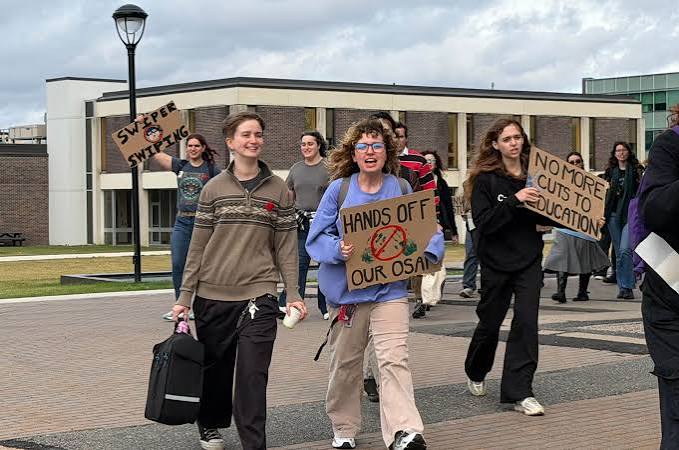
Thousands of post-secondary students across Ontario walked out of classrooms in November 2026 to protest significant OSAP changes and rising tuition fees. The demonstrations spanned at least 15 campuses, including the University of Toronto and the University of Ottawa.
These protests highlight a growing divide between students and the provincial government over the future of higher education accessibility. Launch Len Media views these policy shifts as a direct threat to the financial stability of low-income students pursuing degrees.
The stakes for students remain high as the transition from grants to loans increases the long-term debt burden for graduates. Families across the province are now forced to re-evaluate their financial planning for post-secondary education.
The scope of the student protests
The November 2026 walkouts involved thousands of students who left their lectures to voice opposition to the provincial government. The protests were coordinated by the Canadian Federation of Students (CFS) under the banner of the Hands Off Our Education campaign. Source: Education News Canada.
Students at at least 15 different institutions participated in the coordinated action. The movement aims to pressure the government to reverse the recent funding adjustments that have sparked widespread campus unrest.
Premier Doug Ford addressed the situation during a press conference in Peterborough. He publicly labeled the student protesters as naive, suggesting they should focus on their studies to ensure future employment instead of demonstrating.
The CFS argues that the government is failing to provide adequate support for the next generation of workers. They maintain that the current policy direction will discourage enrollment among vulnerable populations.
The province has committed $6.4 billion in funding for colleges and universities to be distributed over four years.
Provincial Government Statement

The mechanics of the new funding model
The most significant change involves the Ontario Student Assistance Program (OSAP). The government reduced the non-repayable grant portion of the program from 85% to a maximum of 25%.
This shift effectively forces students to rely more heavily on loans to cover their educational expenses. By moving 60% of the previous grant funding into the loan category, the government has fundamentally altered the debt profile of the average student.
Furthermore, the government lifted the previous tuition freeze. Tuition fees are now subject to a 2% annual increase for the next three years.
These combined changes mean that students are paying more for their education while receiving less direct financial support from the province. The cumulative effect of these policies is a higher cost of attendance for both domestic and international students.
Options for managing student debt
Students currently navigating these changes have limited options to mitigate the impact of reduced grant funding. Financial planning has become more critical than ever for those seeking to minimize their reliance on loans.
The following list outlines key areas where students and families can focus their efforts to manage the rising costs of education under the new framework.
These strategies are intended to help students navigate the current financial environment while the provincial government continues its funding transition.
- Apply for internal university scholarships and bursaries that are not tied to OSAP funding levels.
- Explore provincial work-study programs that offer income without increasing long-term debt loads.
- Consult with institutional financial aid offices to understand specific loan repayment terms and interest relief options.
- Join student advocacy groups to stay informed about potential policy shifts or emergency funding opportunities.
- Prioritize private savings or employer-sponsored education benefits to reduce the total amount borrowed through OSAP.
Analysis of the government strategy
The government’s decision to shift from grants to loans is a clear move toward a user-pay model for higher education. While this reduces the immediate burden on the provincial treasury, it risks creating a significant barrier for low-income students.
The counterpoint offered by the provincial government is that the $6.4-billion investment in post-secondary institutions ensures long-term financial sustainability. Proponents argue that this funding will maintain program quality and infrastructure for the entire sector.
However, the quality of infrastructure matters little if the cost of entry becomes prohibitive for a large segment of the population. The shift in OSAP changes suggests that the government is prioritizing institutional solvency over individual student accessibility.
Launch Len Media maintains that the long-term economic cost of student debt will eventually outweigh the short-term savings achieved by the province. A well-educated workforce is a primary driver of economic growth, and these policies may inadvertently stifle that potential.
Next steps for affected students
If you are a student affected by these changes, you should first review your updated OSAP assessment to understand your new loan-to-grant ratio. Knowing your exact debt projection is essential for long-term financial planning.
Reach out to your university’s financial aid office to discuss if there are any institutional grants available to bridge the gap created by the reduced provincial support. Many institutions have emergency funds specifically for students facing sudden financial hardship.
Stay engaged with student unions and advocacy groups like the CFS. These organizations provide resources and updates on how the Hands Off Our Education campaign is progressing and how you can participate in future actions.
Finally, keep a record of your educational expenses and any correspondence regarding your loan terms. Being proactive about your financial situation is the best way to manage the uncertainty caused by these policy shifts.
What to Watch Next
Monitor official statements, scheduled hearings or court dates where relevant, and revised guidance that changes eligibility or consumer options. Prefer primary sources over reshared screenshots.
If you are affected, keep dated notices, account screenshots, and correspondence. That record shortens disputes and helps verify patterns across households.
Revisit the topic after the next major data release or corporate update. Second looks often clarify whether the first response was proportionate, temporary, or structural.
Additional reporting discipline for this file includes confirming official titles, matching dollar figures to dated releases, and updating the draft if agencies issue corrections. A durable article should remain useful after the first news cycle fades, which is why this expansion preserves the original structure while adding explanatory depth on timelines, incentives, and practical steps readers can take.
Additional reporting discipline for this file includes confirming official titles, matching dollar figures to dated releases, and updating the draft if agencies issue corrections. A durable article should remain useful after the first news cycle fades, which is why this expansion preserves the original structure while adding explanatory depth on timelines, incentives, and practical steps readers can take.
Additional reporting discipline for this file includes confirming official titles, matching dollar figures to dated releases, and updating the draft if agencies issue corrections. A durable article should remain useful after the first news cycle fades, which is why this expansion preserves the original structure while adding explanatory depth on timelines, incentives, and practical steps readers can take.
Additional reporting discipline for this file includes confirming official titles, matching dollar figures to dated releases, and updating the draft if agencies issue corrections. A durable article should remain useful after the first news cycle fades, which is why this expansion preserves the original structure while adding explanatory depth on timelines, incentives, and practical steps readers can take.
Additional reporting discipline for this file includes confirming official titles, matching dollar figures to dated releases, and updating the draft if agencies issue corrections. A durable article should remain useful after the first news cycle fades, which is why this expansion preserves the original structure while adding explanatory depth on timelines, incentives, and practical steps readers can take.
Additional reporting discipline for this file includes confirming official titles, matching dollar figures to dated releases, and updating the draft if agencies issue corrections. A durable article should remain useful after the first news cycle fades, which is why this expansion preserves the original structure while adding explanatory depth on timelines, incentives, and practical steps readers can take.
Frequently Asked Questions
What is the main change to OSAP?
The government reduced the non-repayable grant portion of OSAP from 85% to a maximum of 25%, shifting the remainder to loans.
Are tuition fees increasing in Ontario?
Yes, the government lifted the tuition freeze, allowing for a 2% annual increase for three years.
How much funding has the province committed to universities?
The province has committed $6.4 billion in funding for colleges and universities to be distributed over four years.
Readers should treat official agency statements and dated primary releases as the authority if details evolve after this draft was prepared. Where numbers or charging language matter, verify against the latest public update before sharing or republishing.
Readers should treat official agency statements and dated primary releases as the authority if details evolve after this draft was prepared. Where numbers or charging language matter, verify against the latest public update before sharing or republishing.
Readers should treat official agency statements and dated primary releases as the authority if details evolve after this draft was prepared. Where numbers or charging language matter, verify against the latest public update before sharing or republishing.
Readers should treat official agency statements and dated primary releases as the authority if details evolve after this draft was prepared. Where numbers or charging language matter, verify against the latest public update before sharing or republishing.