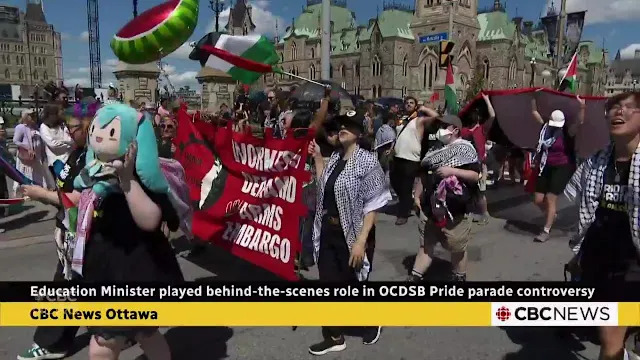
In July 2026, the Ottawa-Carleton District School Board (OCDSB) faced intense public scrutiny after initially deciding not to participate in the Capital Pride parade. Education Minister Paul Calandra reportedly played a significant behind-the-scenes role in the resulting OCDSB Pride parade controversy.
This intervention raises critical questions about the balance of power between provincial authorities and local school boards. LaunchLen Media views this as a potential overreach that threatens the autonomy of elected trustees in Ontario.
The Timeline of the OCDSB Pride Parade Dispute
The controversy began in July 2026 when the Ottawa-Carleton District School Board announced it would not register for the upcoming Capital Pride parade. The board cited the timing of the event, noting it occurred outside the standard school year, according to reports. Source: CBC News.
This decision sparked immediate backlash from community members and former trustees. Critics warned that the absence of the board would negatively impact vulnerable students and staff who rely on the district for visible support.
The OCDSB has a long history of participation in the event, having marched in the parade every year since 2011. The only previous interruption to this streak occurred in 2024, according to historical records.
Following the public outcry and reported behind-the-scenes discussions involving Minister Paul Calandra, the board reversed its decision. The OCDSB confirmed it would indeed participate in the parade, aligning with its long-standing tradition.

The Mechanics of Provincial Influence
The involvement of the Ministry of Education in local board decisions is a sensitive matter in Ontario. While the province holds broad authority over education policy, the day-to-day operations of school boards are typically managed by elected trustees.
Minister Calandra has previously maintained a hands-off approach regarding specific denominational issues. For instance, he has stated he cannot interfere in flag-flying policies for Catholic school boards, citing the unique legal status of those institutions.
However, the OCDSB situation suggests a different application of provincial influence for public boards. By engaging in private discussions, the Minister effectively signaled that the board’s initial decision was unacceptable to the provincial government.
This dynamic highlights the complex relationship between the Ministry and local boards. It also draws parallels to the broader debate surrounding supervised school boards, where the province has taken more direct control over governance structures.
Options for Addressing Board Autonomy
The tension between provincial oversight and local governance remains a central theme in Ontario education. Stakeholders often look for ways to balance these competing interests while maintaining school safety and inclusivity.
One approach involves strengthening the role of elected trustees to ensure they can make independent decisions without fear of provincial reprisal. This requires clear legislative boundaries that define when a Minister can intervene in board operations.
Another option is the formalization of communication channels between the Ministry and school boards. By establishing transparent protocols for feedback, the government could avoid the perception of backroom pressure during public controversies.
Finally, community members can engage through public board meetings to hold trustees accountable. This ensures that decisions regarding participation in community events reflect the values of the local constituency rather than external political pressure.
- Advocate for clear legislative limits on provincial interference in local school board decisions.
- Support the independence of elected trustees to ensure local representation remains the primary driver of policy.
- Demand transparency in communications between the Ministry of Education and school board administrators.
- Participate in local school board meetings to provide direct feedback on cultural and community engagement policies.
Analysis of Provincial Overreach
The involvement of Minister Calandra in the OCDSB Pride parade controversy represents a concerning trend toward centralization. When provincial ministers intervene in local board decisions, it undermines the democratic mandate of elected trustees.
Proponents of the Minister’s actions argue that he has a fundamental responsibility to ensure all school boards maintain inclusive environments. They suggest that if a board fails to uphold these standards, the province must act to protect student well-being.
However, this justification is problematic because it lacks a consistent standard. If the Minister can intervene in the OCDSB’s parade participation, it sets a precedent for intervention in any board decision deemed politically sensitive.
The inconsistency is further highlighted by the Minister’s refusal to intervene in Catholic school board policies. This selective application of authority suggests that political expediency, rather than a uniform commitment to inclusivity, may be driving these decisions.
Ultimately, the autonomy of local school boards is essential for a healthy education system. Allowing trustees to make decisions that reflect their specific communities is a cornerstone of the Ontario education model.
The controversy went all the way to the top, landing with Ontario’s Education Minister Paul Calandra.
Arthur White-Crummey, CBC News
Next Steps for Concerned Citizens
If you are concerned about the balance of power between the province and your local school board, you should start by reviewing the board’s governance policies. Understanding these documents will help you identify when provincial influence might be overstepping established boundaries.
You can also contact your local trustee to ask about their experience with provincial communications. Trustees are often the first to feel the pressure of behind-the-scenes interventions and can provide insight into how these dynamics affect their work.
Engaging with local parent councils is another effective way to stay informed. These groups often have direct lines to the board and can mobilize community support when local autonomy is threatened.
Finally, monitor provincial legislative updates to see if new policies are being introduced that further restrict the power of local boards. Staying informed is the best defense against the erosion of local decision-making authority.
Frequently Asked Questions
Why did the OCDSB initially refuse to participate in the Pride parade?
The board cited that the event fell outside the official school year calendar, which they argued made participation difficult.
Did Minister Calandra publicly order the board to change its decision?
No, reports indicate that the Minister played a behind-the-scenes role in the controversy rather than issuing a formal public directive.
How does this intervention compare to the Minister’s stance on Catholic school boards?
The Minister has previously stated he cannot interfere in denominational issues for Catholic boards, such as flag-flying policies, which contrasts with his involvement in the OCDSB matter.