Retirees weighing whether to start their Canada Pension Plan (CPP) benefits in December 2026 or wait until 2027 face a critical choice between immediate liquidity and long-term financial stability.
LaunchLen Media views delaying CPP as the superior strategy for most individuals, as the guaranteed, inflation-indexed increases provide essential longevity protection that private investments struggle to replicate.
Understanding the mechanics of these pension decisions is a cornerstone of effective retirement security.
The mechanics of the underwater period
When a retiree chooses to delay their CPP start date, they enter a temporary period known as being underwater. This occurs because the individual misses out on monthly payments they would have received had they started earlier. Source: The Globe and Mail.
According to a 2026 analysis by former actuary Frederick Vettese, a retiree delaying by just one month might be underwater by only one month of payments. However, the higher monthly amount received later eventually compensates for this lost income.
For example, a retiree waiting until June 2027 instead of starting in December 2026 might be underwater by $8,700 initially. This deficit remains until the individual reaches age 72, at which point the cumulative benefits surpass the early-start scenario.
The decision to wait depends heavily on the individual’s ability to cover expenses through other income sources during the delay. Without alternative funds, the underwater period can create significant financial strain.

Longevity and the catch-up phase
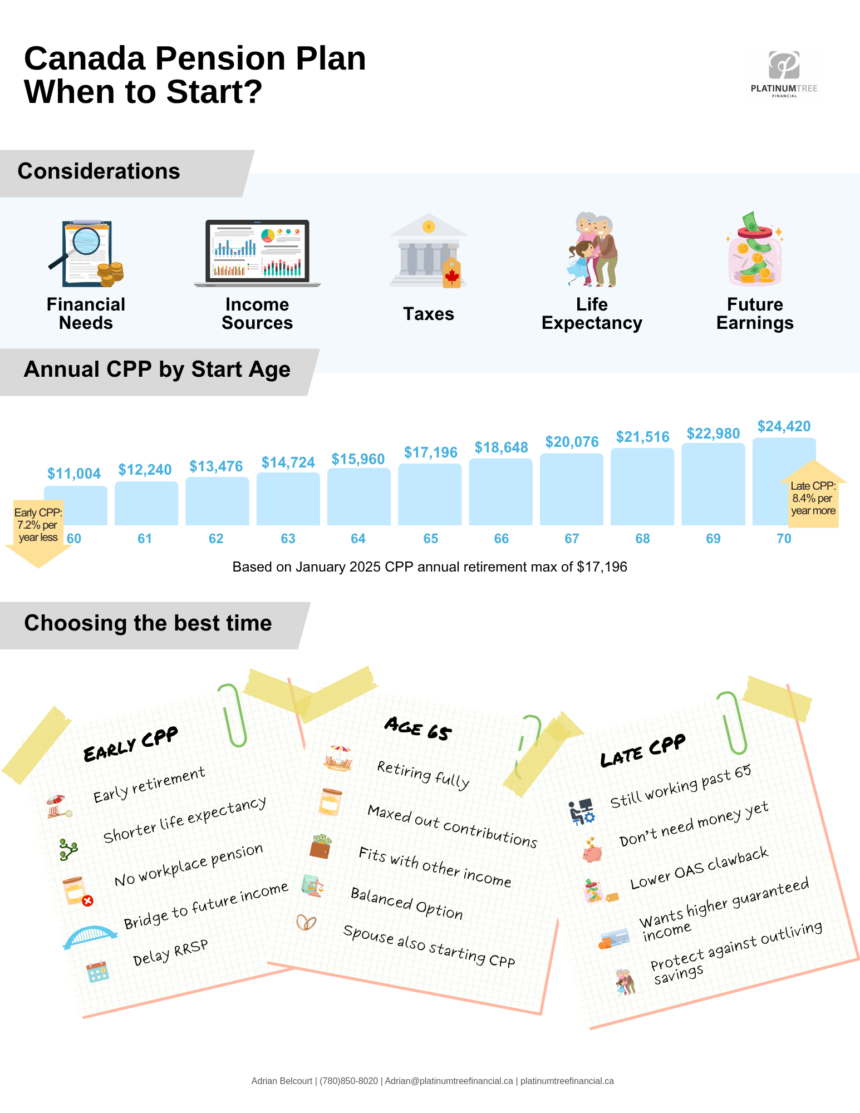
The primary advantage of delaying CPP is the permanent, inflation-indexed increase in monthly benefits. By waiting until age 70, retirees can increase their monthly payments by up to 42% compared to the standard age 65 amount, according to data from Moraine Wealth.
This increase acts as a form of longevity insurance. Because CPP benefits are guaranteed for life, they provide a stable income stream that protects against the risk of outliving one’s savings.
Mortality tables suggest that many retirees have a high probability of surviving well into their 80s. For these individuals, the long-term gains from waiting significantly outweigh the short-term loss of early payments.
As noted by Vettese, the probability of living until age 83 is approximately 75% for many retirees. By that age, the cumulative gain from waiting can exceed $15,000 compared to starting early.
Strategic options for pension optimization
Retirees have several options when determining their CPP start date, each with distinct financial implications. Choosing the right path requires aligning your pension strategy with your overall retirement planning goals.
The following options represent the primary strategies for managing CPP benefits: Source: Canada.ca.
1. Start at age 60: This option provides immediate liquidity but results in a permanent 36% reduction in lifetime benefits. It is generally only recommended for those with severe health issues or an urgent need for cash flow.
2. Start at age 65: This is the standard age for CPP. It serves as the baseline for all calculations regarding early or late commencement.
3. Delay until age 70: This strategy maximizes the monthly benefit amount. It is highly effective for those with other sources of income, such as RRSPs or TFSAs, who want to ensure long-term retirement security.
4. Coordinate with tax planning: For high-income earners, drawing CPP while still employed can push them into higher tax brackets. Delaying benefits allows for a more tax-efficient withdrawal strategy later in life.
In general, people should still be thinking of starting their CPP pensions at a later age, perhaps as late as 70. The exact age depends on one’s personal circumstances.
Frederick Vettese, former chief actuary of Morneau Shepell
Analyzing the counterpoint
While delaying is mathematically superior for many, it is not the correct choice for everyone. A fair counterpoint exists for individuals with shorter life expectancies or those who lack alternative income sources.
For retirees who require immediate funds to manage high-interest debt or basic living expenses, starting CPP early may be a necessity rather than a choice. In these cases, the immediate liquidity provided by the pension is more valuable than the long-term increase.
Additionally, some investors believe they can generate higher net returns by investing their early CPP payments in the market. While this is possible, it involves market risk that the guaranteed, inflation-indexed CPP does not carry.
LaunchLen Media maintains that for the average retiree, the certainty of the CPP increase is a safer bet. The risk of market volatility often makes the guaranteed pension increase a more reliable component of a retirement plan. Source: Moraine Wealth.
Steps to secure your retirement income
To determine the best start date for your situation, you must first assess your total projected retirement income. This includes private savings, employer pensions, and other government benefits.
Review your current tax bracket to see if drawing CPP will trigger higher marginal rates. If you are still working, deferring your pension can prevent unnecessary tax leakage.
Consult with a financial advisor to run a projection based on your specific life expectancy and health status. Using tools like the PERC retirement calculator can provide a clearer picture of your long-term outcomes.
Finally, ensure you have a bridge strategy. If you choose to delay your CPP, verify that your RRSP or TFSA withdrawals can cover your expenses until you reach your target start age.
Frequently Asked Questions
What happens if I start my CPP at 60?
Starting CPP at age 60 results in a permanent 0.6% monthly reduction in your benefit, totaling a 36% decrease compared to the age 65 amount.
Is it ever better to start CPP early?
Starting early may be beneficial for individuals with shorter life expectancies or those who need immediate liquidity to manage debt or essential living costs.
How does inflation affect my CPP decision?
CPP benefits are indexed to inflation, meaning they maintain purchasing power over time. This makes them a highly reliable income source compared to private investments that may be subject to market volatility.