More than a century after it opened on farmland in Guelph’s east end, the former Ontario Reformatory is now protected as a heritage conservation district, while the city works through plans for the surrounding Guelph Innovation District. Here is what official records and local reporting say about the site’s past and where things stand today.
A reform experiment on the Eramosa River
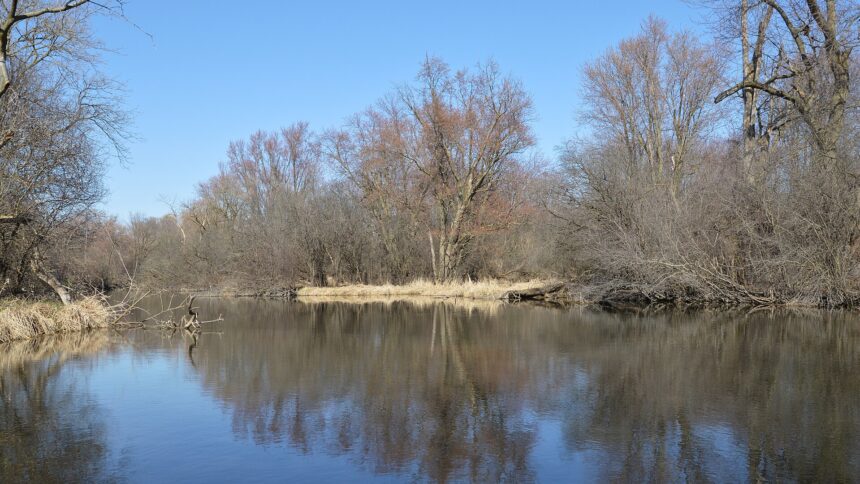
The Ontario Reformatory opened on September 25, 1911, on 1,000 acres of farmland along the Eramosa River, a site chosen for its fertile soil, water supply and an operating limestone quarry, according to the Guelph Arts Council’s Doors Open Guelph profile. Provincial Secretary William Hanna wanted to replace punishment with humane treatment and useful work, especially for young men, and the first 14 prisoners and two guards lived in an old farmhouse while they built the prison around them (Guelph Arts Council).
The City of Guelph describes the “OR” as an innovative correctional facility for the first half of the 20th century. A 2023 heritage study prepared for the city by WSP says the institution was intended to show a new idea in corrections: labour and vocational training as the main purpose of a prison.
Who designed it
The city’s heritage study states that Hanna engaged Ontario architect John M. Lyle in 1909 to design the Reformatory’s buildings, and notes that Lyle also designed Toronto’s Royal Alexandra Theatre (WSP heritage study for the City of Guelph). The Beaux-Arts administration building, with its tower and imposing entrance, was built between 1911 and 1915 (Guelph Arts Council).
Lyle’s involvement was relatively short. The same study says his relationship with Hanna was tense and that he left the project within a couple of years. By 1915, provincial architect James Govan was responsible for new buildings and changes to older ones (WSP heritage study).
Farm, quarry and workshops
Work was at the centre of the institution. Infrastructure Ontario’s 2016 community update on the former Guelph Correctional Centre calls it one of the first self-sufficient prison farms in Ontario, with farming, manufacturing, landscaping, metal work and dry cleaning part of the daily routine.
The heritage study lists an abattoir, woodworking shop, woollen mill, tailor shop, mattress factory and laundry, along with the farm, as places where inmates worked at the institution’s peak. It also notes that in 1912 the Farmer’s Advocate called the Reformatory the “greatest” of the provincial farms (WSP heritage study). Stone from the on-site quarry was used for the cell blocks, which were built by prisoners (Guelph Arts Council).
Much of that work is still visible. Infrastructure Ontario points to culverts built by prisoners in the 1920s, two ornamental pedestrian bridges, including one with “OR” set in pebbles at each end, and a stone wall built from stones found on the property (Infrastructure Ontario).
A military hospital, then decades of change
From 1917 to 1921 the site served as the Guelph Military Convalescent Hospital, known to its residents as Speedwell, where returning soldiers received therapy and trade training. Prisoners returned in 1921 (WSP heritage study).
The heritage study says Ontario announced in 1972 that most farming at its correctional centres would end, which eliminated most farm operations in Guelph. From 1970 until it was decommissioned, parts of the site ran as the provincial Guelph Correctional Centre (City of Guelph). The city and its heritage study give 2001 as the year it was fully decommissioned, with inmates moved to the Central North Correctional Centre in Penetanguishene (WSP heritage study). Guelph Museums gives 2003.
The institution’s record was not only one of reform. Guelph Museums’ 2025 exhibition, Darkness and Light: Inside the Ontario Reformatory, guest curated by P. Brian Skerrett, described a place that moved from reform intentions to being “one of Canada’s most notorious prisons.” Its materials included a photograph of inmates rioting in 1952 in protest of living conditions (Guelph Museums). The exhibition was extended to July 13, 2025, after drawing more than 5,000 visitors, GuelphToday reported.
Layers of heritage protection
The Province identified part of 785 York Road as a Provincial Heritage Property of Provincial Significance in 2008. The City of Guelph designated the property under Part IV of the Ontario Heritage Act in October 2021 (WSP heritage study). That came after Infrastructure Ontario said in 2016 that the province intended to sell the property (City of Guelph).
Council approved the heritage conservation district study’s boundary on March 21, 2023. It then passed By-law (2026)-21192 on May 12, 2026, designating the Ontario Reformatory Heritage Conservation District and adopting its plan. The bylaw took effect June 22, 2026. The city notes that it is not in full force on any part of 785 York Road that remains under provincial ownership (City of Guelph).
The final plan records that at a February 10, 2026 meeting, council directed staff to remove mentions and provisions for residential development from the plan, and the plan was updated to drop residential use as an option in its adaptive reuse areas (By-law (2026)-21192 and HCD Plan).
The Guelph Innovation District next door
Infrastructure Ontario’s 2016 update said about 70 of the remaining 263 provincial acres were designated cultural heritage, including 11 heritage buildings. About 144 acres were floodplain and roughly 49 acres were available for redevelopment, all within the Guelph Innovation District Secondary Plan (Infrastructure Ontario).
Elsewhere in the district, council voted unanimously at its September 15, 2026 meeting to defer an application for Blocks 1 and 2 so the applicant can gather more information on land-use compatibility between new housing and nearby industries (City of Guelph). GuelphToday reported that staff had recommended partial refusal of the Fusion Homes proposal, which is expected to create 4,724 dwelling units and more than 4,600 jobs.
Some residents want a different future for the Reformatory lands. Members of the public told the city they support making the lands a national urban park (HCD Plan), a goal also pursued by the group Urban Park Guelph (GuelphToday).
Sources
- City of Guelph, Ontario Reformatory Heritage Conservation District: https://guelph.ca/city-government/planning-and-development/community-plans-studies/heritage-conservation/ontario-reformatory-heritage-conservation-district-study/
- City of Guelph / WSP, Ontario Reformatory HCD Study Report (Feb. 2023): https://guelph.ca/wp-content/uploads/Ontario-Reformatory-HCD-Study-Report-Final-Feb-17-2023-AODA-Compliant.pdf
- City of Guelph, By-law (2026)-21192 and HCD Plan: https://guelph.ca/wp-content/uploads/2026-21192.pdf
- City of Guelph, Guelph Innovation District deferral (Sept. 16, 2026): https://guelph.ca/2026/09/council-decision-allows-time-for-vital-information-on-proposed-guelph-innovation-district-development/
- Infrastructure Ontario, Former Guelph Correctional Centre community update (2016): https://www.infrastructureontario.ca/48e1fb/contentassets/4494ff3c1776434c9d809cc8b803f1c9/gcc—pamphlet.pdf
- Guelph Arts Council, Ontario Reformatory, 785 York Rd: https://guelpharts.ca/doors-open-2021/ontario-reformatory-785-york-rd/
- Guelph Museums, Darkness and Light: Inside the Ontario Reformatory: https://guelphmuseums.ca/event/darkness-and-light-inside-the-ontario-reformatory/
- GuelphToday, museum exhibit extended (May 15, 2025): https://www.guelphtoday.com/local-news/museum-exhibit-highlighting-guelphs-former-reformatory-extended-10667145
- GuelphToday, Guelph Innovation District (Sept. 19, 2026): https://www.guelphtoday.com/local-news/must-read-hurdle-remains-before-guelph-innovation-district-plans-can-move-forward-12797380