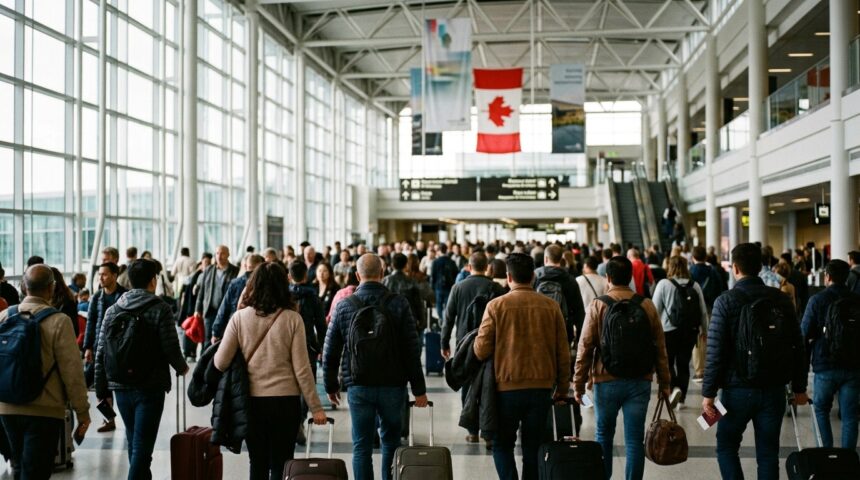
Canada’s shift toward a highly selective, skills-based immigration model is a necessary evolution to ensure long-term economic sustainability. The nation has reached a point where the sheer volume of arrivals must be balanced against infrastructure capacity and labor market alignment. This transition represents a fundamental change in how the country views its demographic future. While the policy aims to prioritize those who can immediately contribute to specific sectors, the stakes are high for the thousands of families who built their futures on the expectation of more open pathways. The current news cycle highlights the friction between these new, rigid requirements and the aspirations of international students who find themselves caught in the middle of a systemic recalibration.
What happened
The Canadian government has officially pivoted toward a restrictive and highly targeted immigration strategy for the 2026 to 2028 period. Under this new framework, the target for permanent residents is set at 380,000 per year. This adjustment follows a period of intense public debate regarding housing affordability and service strain. A central component of this strategy is the In-Canada Workers Initiative, which is designed to transition 33,000 temporary skilled workers into permanent residents across 2026 and 2027. This initiative specifically targets individuals already contributing to the Canadian economy. Simultaneously, the government has tightened the intake for international students. The 2026 target for study permits is 408,000, which is a significant decrease from the 485,000 permits issued in 2024. Data from the first seven months of 2026 shows that new international student arrivals have plummeted by 80% compared to the same timeframe in 2024. On the diplomatic front, Prime Minister Mark Carney and Prime Minister Narendra Modi have moved to reset relations. The two leaders have accelerated negotiations for the Comprehensive Economic Partnership Agreement, with a goal to conclude the deal by the end of 2026. To support these commercial ambitions, Minister of International Trade Maninder Sidhu is leading a delegation of nearly 300 Canadian businesses to India in October 2026 to explore new bilateral trade opportunities.
More Read

Why this matters
The shift toward a skills-based immigration model is not merely a bureaucratic adjustment; it is a vital strategy for Canada to maintain economic stability. By focusing on individuals who possess the specific skills required by the labor market, Canada can better integrate newcomers into the workforce without exacerbating existing housing and infrastructure crises. This approach ensures that the immigration system functions as a tool for economic growth rather than a source of social strain.
However, a fair counterpoint exists. Critics argue that these abrupt policy changes and the sharp reduction in student permits create significant uncertainty and financial hardship for thousands of Indian families. Many of these families invested their life savings into education pathways that were previously advertised as reliable routes to residency. The sudden closure of these doors feels like a betrayal of trust to those who followed the rules as they existed at the time of their application.
Despite this, the argument for a skills-based model holds because the alternative is a system that fails both the newcomers and the existing population. An unsustainable rate of growth leads to public backlash, which ultimately harms the social cohesion necessary for a successful immigration system. By prioritizing quality over quantity, Canada is attempting to build a sustainable model that can survive the long term. The reset in diplomatic relations with India suggests that both nations recognize the need to move past the 2023 freeze and focus on mutually beneficial economic outcomes, even as the immigration landscape becomes more challenging for individual applicants.
What readers should do
For those currently navigating the Canadian immigration system or planning a future move, the new reality requires a proactive and highly informed approach. The era of assuming that a student permit is a guaranteed path to permanent residency is over. Applicants must now prioritize programs that align with the specific skills the Canadian government identifies as essential. To manage this transition effectively, consider these steps:
- Verify your eligibility against the latest, updated IRCC criteria before submitting any application.
- Focus on the In-Canada Workers Initiative if you are already in the country and possess specialized skills.
- Maintain a secondary plan that does not rely solely on Canadian residency, given the volatility of current permit caps.
- Monitor the progress of the Comprehensive Economic Partnership Agreement, as it may influence future labor mobility between India and Canada.
- Consult with authorized immigration consultants who are well-versed in the 2026 policy changes to avoid common pitfalls.
As noted by the government in its recent policy updates, the focus is on maximizing the contributions of those already in the country. If you are an international student, ensure your chosen field of study is in high demand, as this will be a primary factor in future residency considerations. The government is moving toward a system that rewards those who fill critical gaps in the economy. Being aware of these priorities is the best way to navigate the current environment.
Frequently Asked Questions
Are the new immigration targets permanent?
The target of 380,000 permanent residents annually is set for the 2026 to 2028 period. These levels are subject to review based on economic indicators and infrastructure capacity.
Why did the number of international student arrivals drop so sharply?
The drop is a direct result of the government’s decision to cap study permits at 408,000 for 2026, down from previous years, to reduce pressure on housing and public services.
What is the status of the trade agreement between India and Canada?
Prime Minister Mark Carney and Prime Minister Narendra Modi are actively negotiating the Comprehensive Economic Partnership Agreement, with both sides aiming to conclude the deal by the end of 2026.